At twenty to seven on a spring morning the pools at the eastern end of the Turia riverbed are dead flat, and the loudest thing in the whole complex is a runner's footfall on the bridge overhead. By nine the water is corrugated, the first coaches are unloading at the aquarium, and the white concrete has gone from silver to glare. The City of Arts and Sciences has two versions of itself, and the version most visitors photograph is the worse one.
What the light actually does here
Every building here is a white shell standing over shallow water, so the place works on reflection, and reflection is a wind problem rather than a light problem. The pools go glass-flat before roughly 08:00 and then the breeze gets up and ruins them for the rest of the day. That single fact decides your itinerary more than any opening time.
Sunrise in Valencia runs from about 06:45 in June to about 08:15 in late December, which makes winter the civilised season for this walk. You can eat breakfast first and still be in position. Blue hour at the other end lasts around twenty-five minutes after sunset, and it is the only window where the floodlights and the sky are the same brightness. Miss it by fifteen minutes and you get black sky and blown-out white walls.
None of the best of this costs anything. The esplanades, the pool edges, the bridges and the riverbed underneath are public and unticketed at any hour. Tickets only buy you interiors, and the interiors are a different visit entirely.
Walking in from the west before sunrise
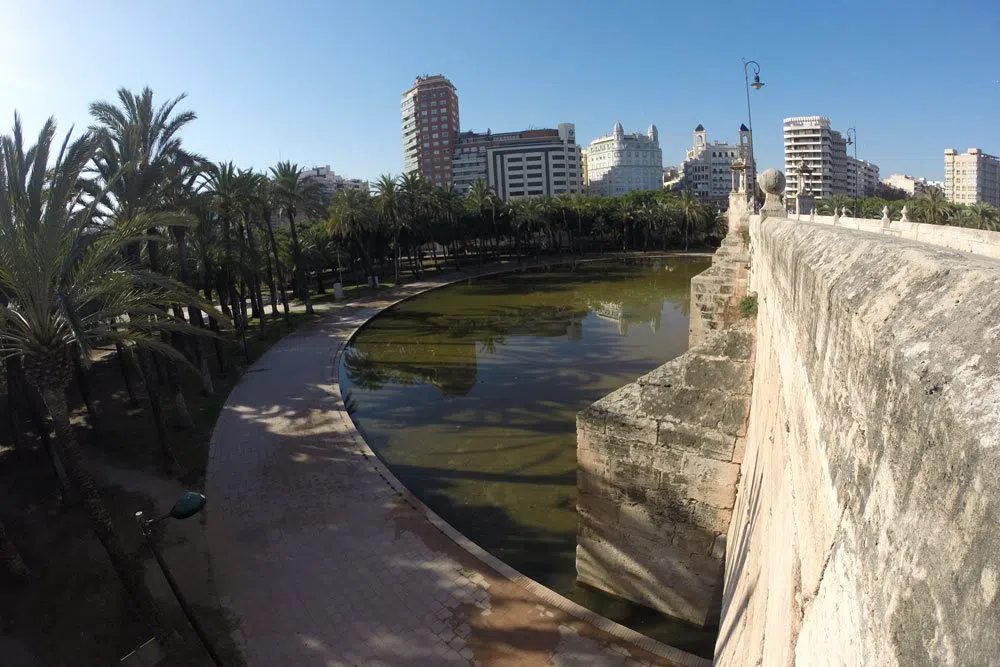
Jardí del Túria, Trams XII–XVI (the drained riverbed, running east through Quatre Carreres) is the approach, and it is the point rather than the commute. Coming from the west at first light, the buildings arrive above the treeline one at a time (the opera house first, then the arches, then the eye of the planetarium) instead of landing on you all at once from a car park. The park is free and always open, the eastern trams are busy with runners and dog walkers well before sunrise, and the city has been progressively lighting the bridge underpasses. Stick to the eastern trams in the dark; the far western end is quieter and less lit, and there is no reason to start out there.
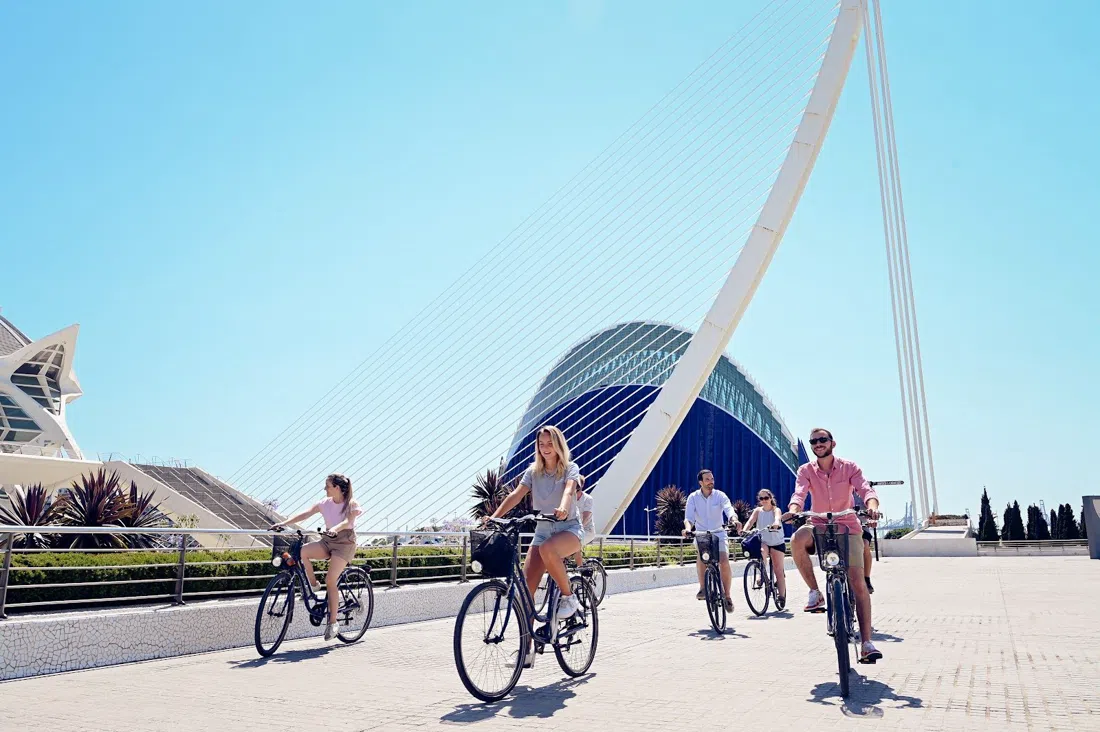
If you would rather roll than walk, Valencia Bikes (old town, at the riverbed's western end) has been renting since 2004 and is the oldest operation in the city. Rental is roughly €10–€15 a day, tandems and kids' bikes included, so a family or a group of eight can move as one unit, which the riverbed handles far better than a pavement does. Their guided three-hour tour covers the Turia and the complex for around €44 an adult and is a good orientation ride, but be clear about what you want: guided tours do not run at 06:30. For the silent hours, take the rental the evening before and set your own alarm. Nine kilometres of flat riverbed will put you at the complex long before the first coach.
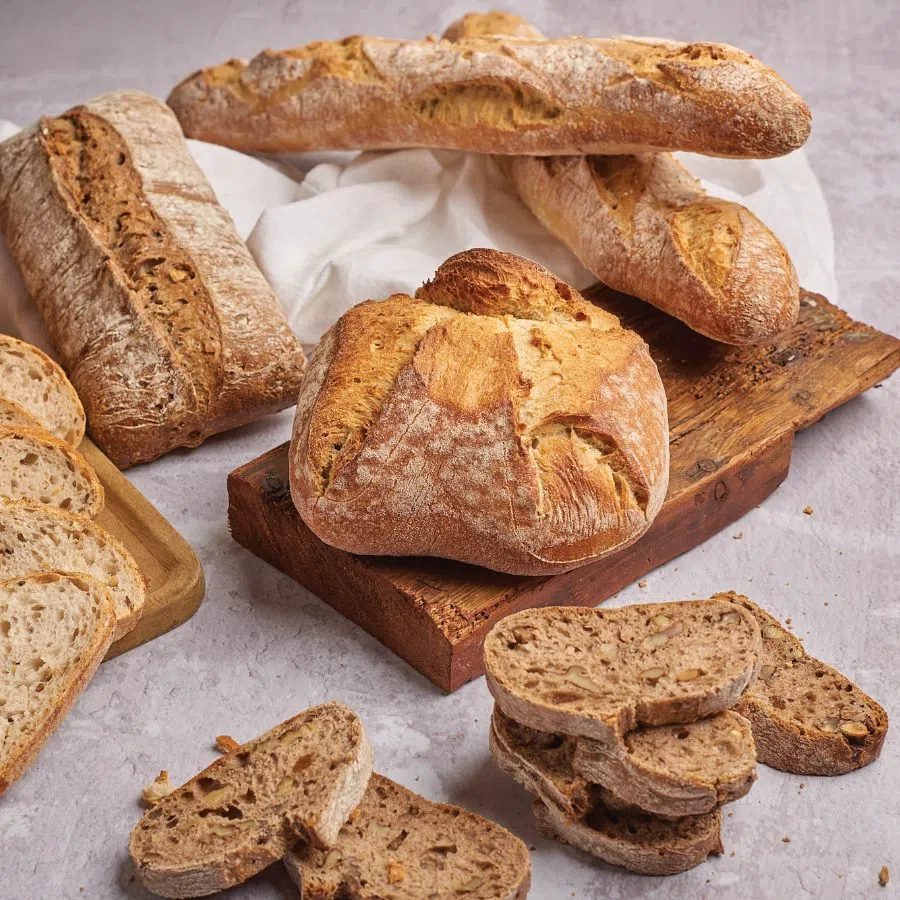
Nothing inside the complex serves coffee before the museum cafés open at 10:00, which catches people out. Panaria (Carrer de Menorca, Penya-roja) opens at 07:00 and sits on the walking line down to the bridges. Coffee and a pastry cost around €3–€6, counter service, no reservations, fine for a few people and hopeless for twenty. Take it away rather than sitting in; you have a narrow window and the pool does not wait.
The two bridges that do the work
Pont de Montolivet (Quatre Carreres) is an ordinary road bridge and nobody photographs the bridge itself, which is why it is the best sightline in the complex. Stand on the deck at sunrise and the opera house comes back at you symmetrically off flat water. It is public, unrestricted and open at all hours, so a group of any size can stand there at 07:00 without asking anyone's permission.

Pont de l'Assut de l'Or (Quatre Carreres) is the white harp with the single mast, and it does two jobs. Walk the deck for the wide angle that takes in the whole complex end to end, then drop down into the riverbed and stand underneath it. The underside at dusk, backlit, is the frame most visitors never take because they never leave the deck. Free, 24 hours, no restriction on numbers.
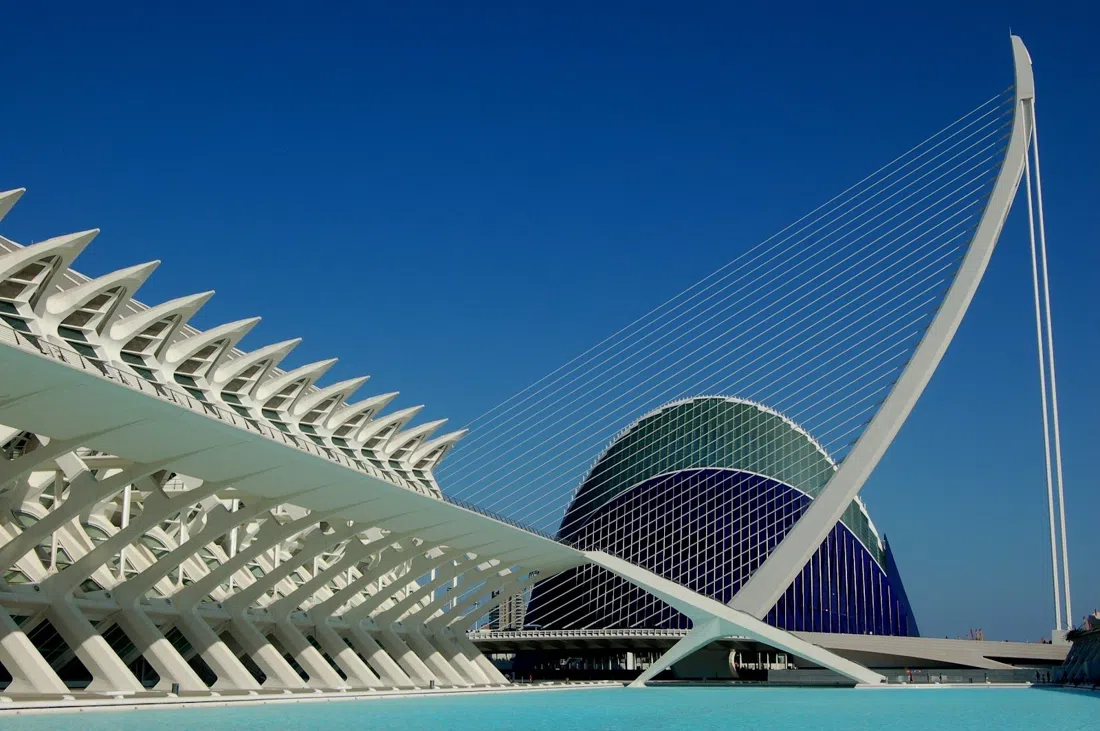
Glass water and the rib colonnade
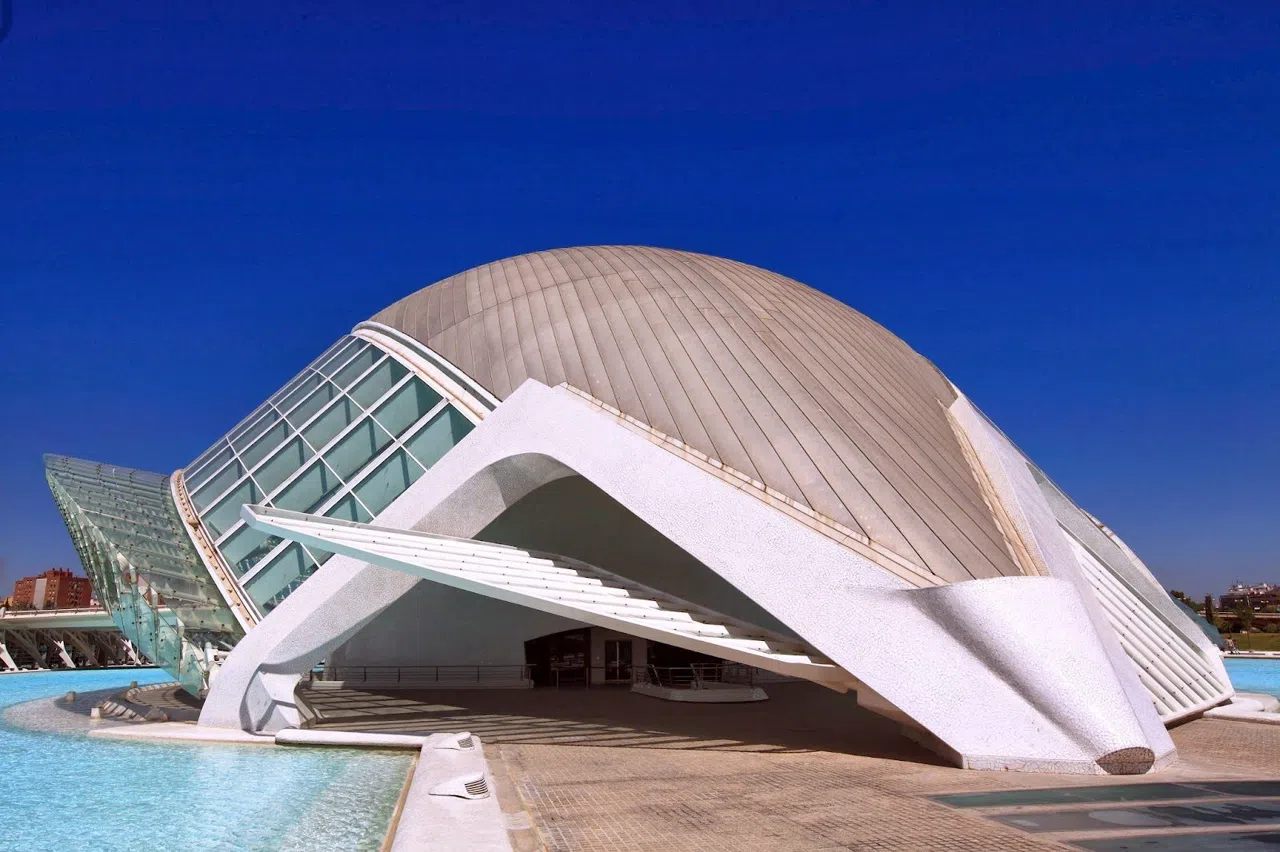
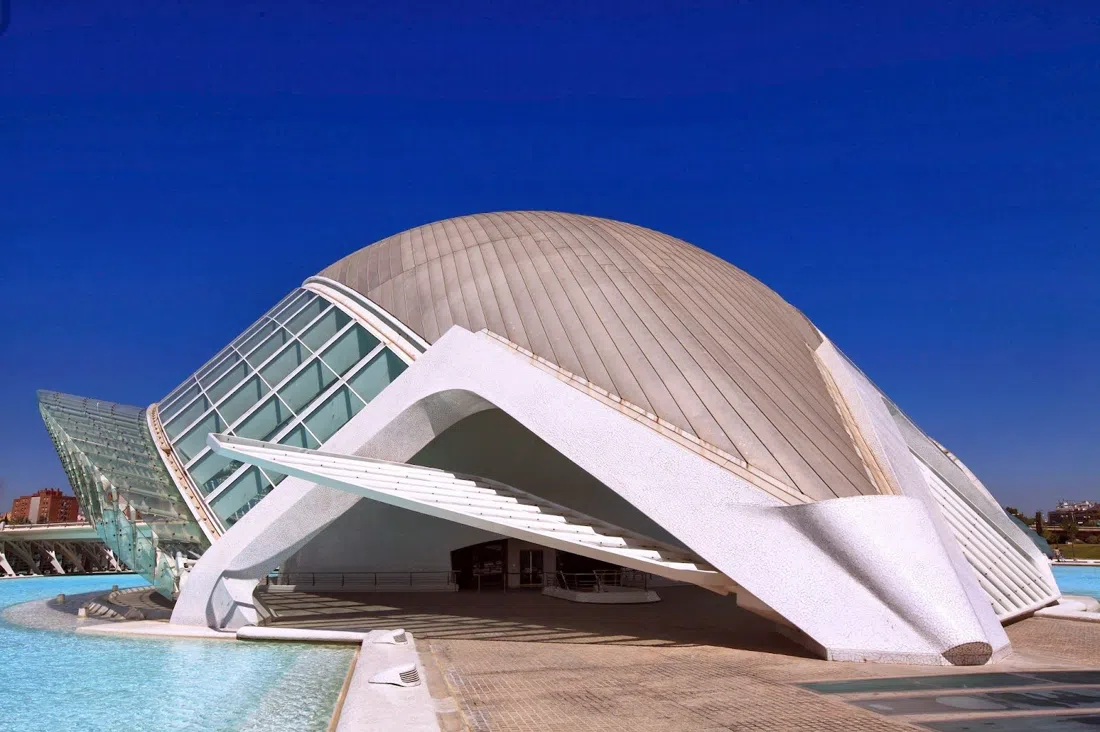
L'Hemisfèric (Quatre Carreres) is the eye over the long pool and the single most photographed object in the city. It is also the one that changes most between dawn and dusk, because it is the building sitting in the most water. The esplanade around the pool is public and unticketed at any hour. You do not need a ticket, you need to be there before 08:00. Dome sessions inside run €8.70 adult and €6.70 reduced, with group rates bookable in advance, but the film is a mid-afternoon activity with children rather than a reason to be here at dawn. Treat them as two separate visits.
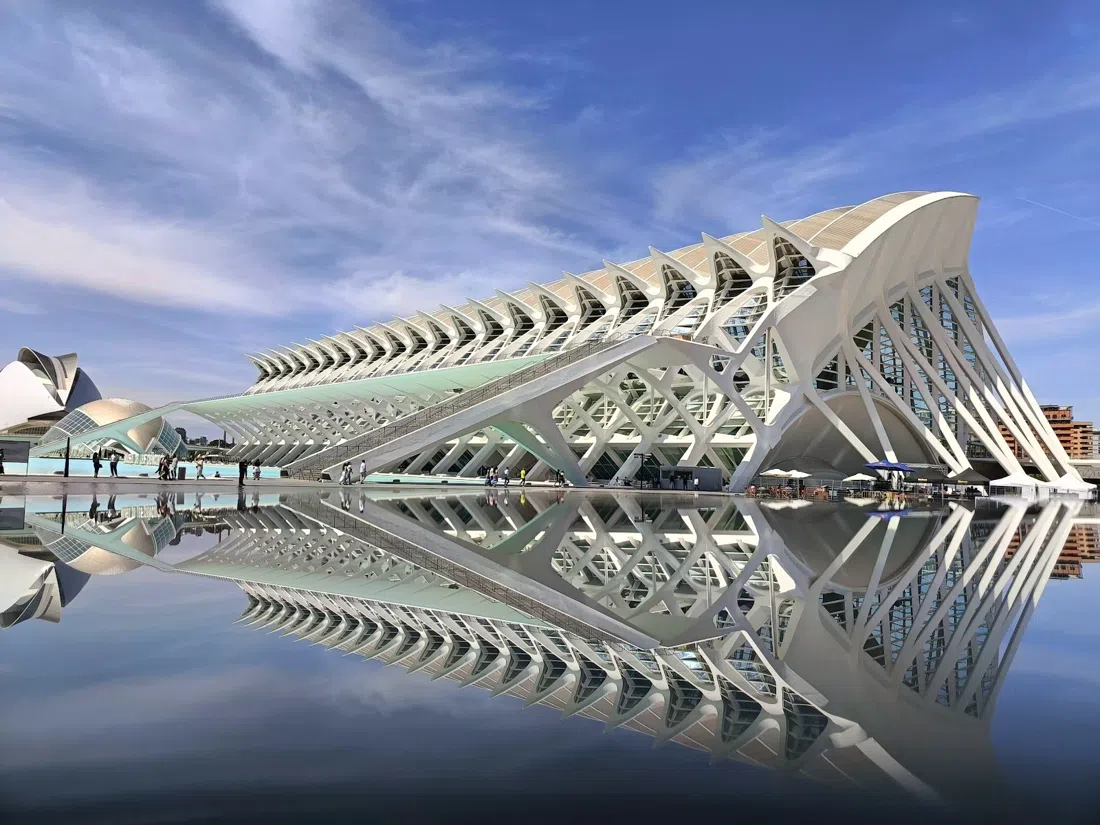
Museu de les Ciències Príncipe Felipe (Quatre Carreres) is the long whale-ribbed hall down the middle of the complex, and its exterior is the reason to come early. The rib colonnade running the length of the building is the best walk-through architectural shot in Valencia and it costs nothing before the doors open at 10:00. Inside, entry is €9.00 adult and €6.90 reduced, school and tour parties around €5.90 a head with advance booking, open daily and closed only on 25 December. The interior is a hands-on science museum built for families, so if you came for Calatrava you can skip it without regret and spend the money on the aquarium instead.
What is worth a ticket once the doors open
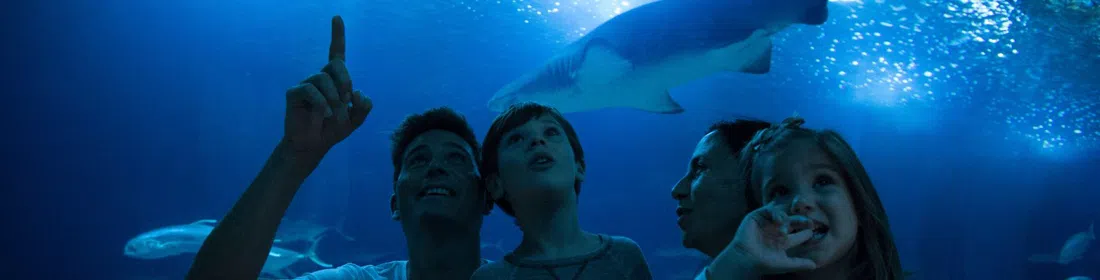
L'Oceanogràfic València (Quatre Carreres) is Europe's largest aquarium and the one building here whose interior comfortably beats its exterior. It is roughly €35 adult on the gate, less booked online or as part of a combined complex ticket, open 10:00–19:00 and extended to 22:00 on Fridays and Saturdays in July and August. That summer late close is the only way to be inside it after dark, and it is worth structuring a trip around. Groups and school parties are taken with pre-booked slots; on a July Saturday, pre-booking is not optional if you want the late session.
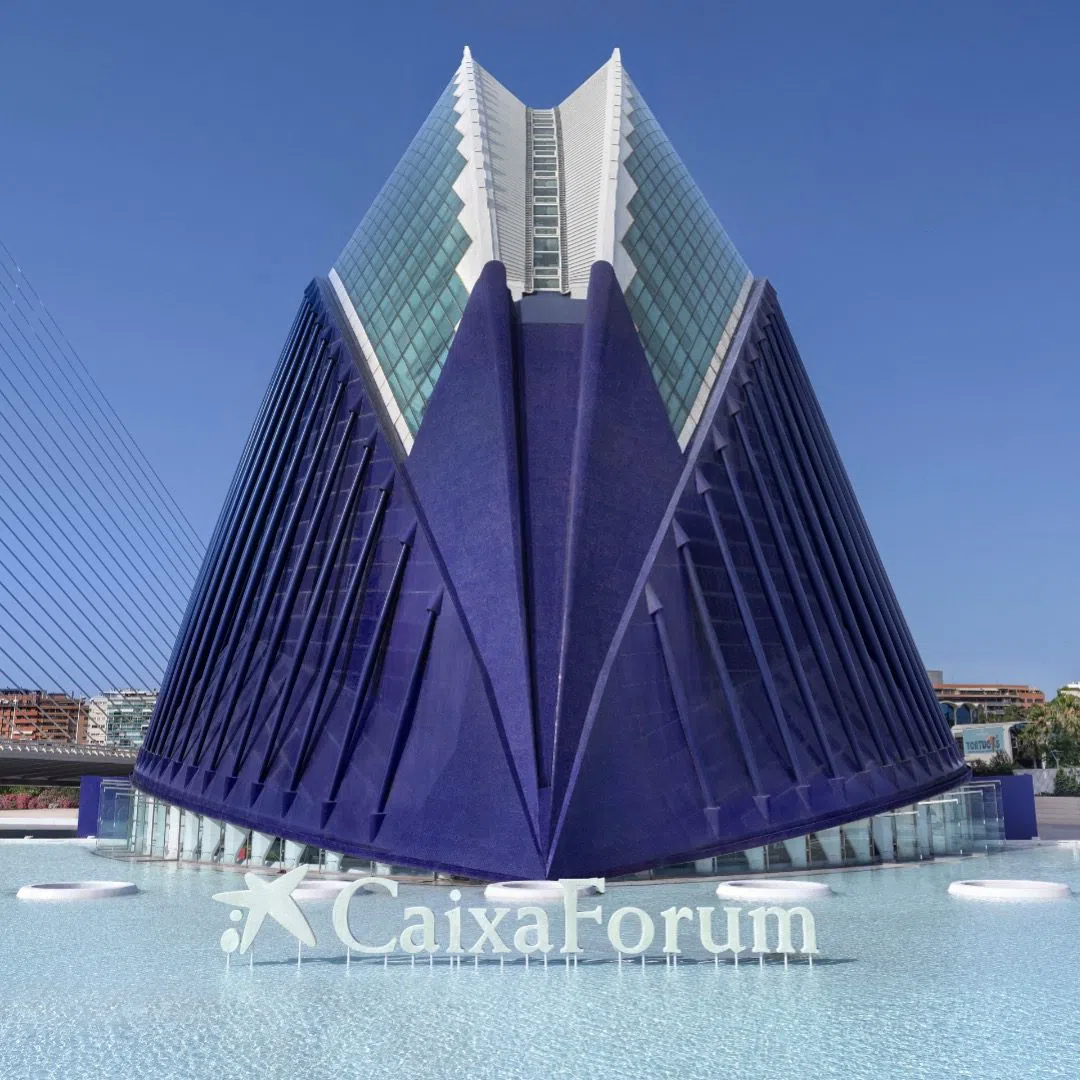
CaixaForum València (inside the Àgora, Quatre Carreres) is the blue cone that stood empty for a decade and now holds art and science exhibitions. Entry is low, typically around €6 an exhibition, with wide free and reduced access, and it runs 10:00–20:00 daily, with the ticket desks closing thirty minutes before the building. It is the only way to see that cathedral-scale blue interior from within. It is also your wind plan: if you get to the pools at 07:30 and the water is already broken, stop shooting, have breakfast, and give the morning to this instead.
Blue hour from the deck and from above
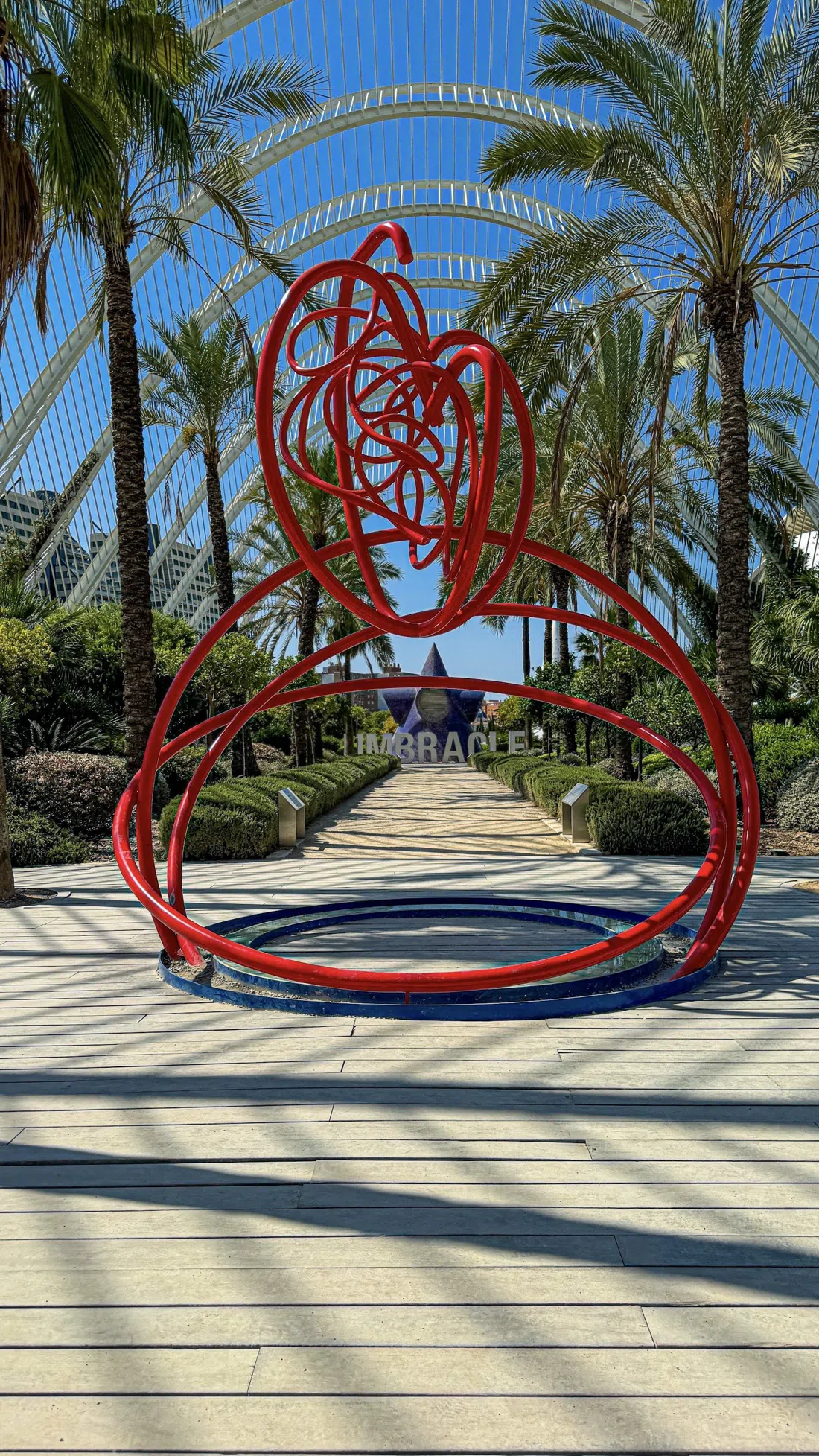
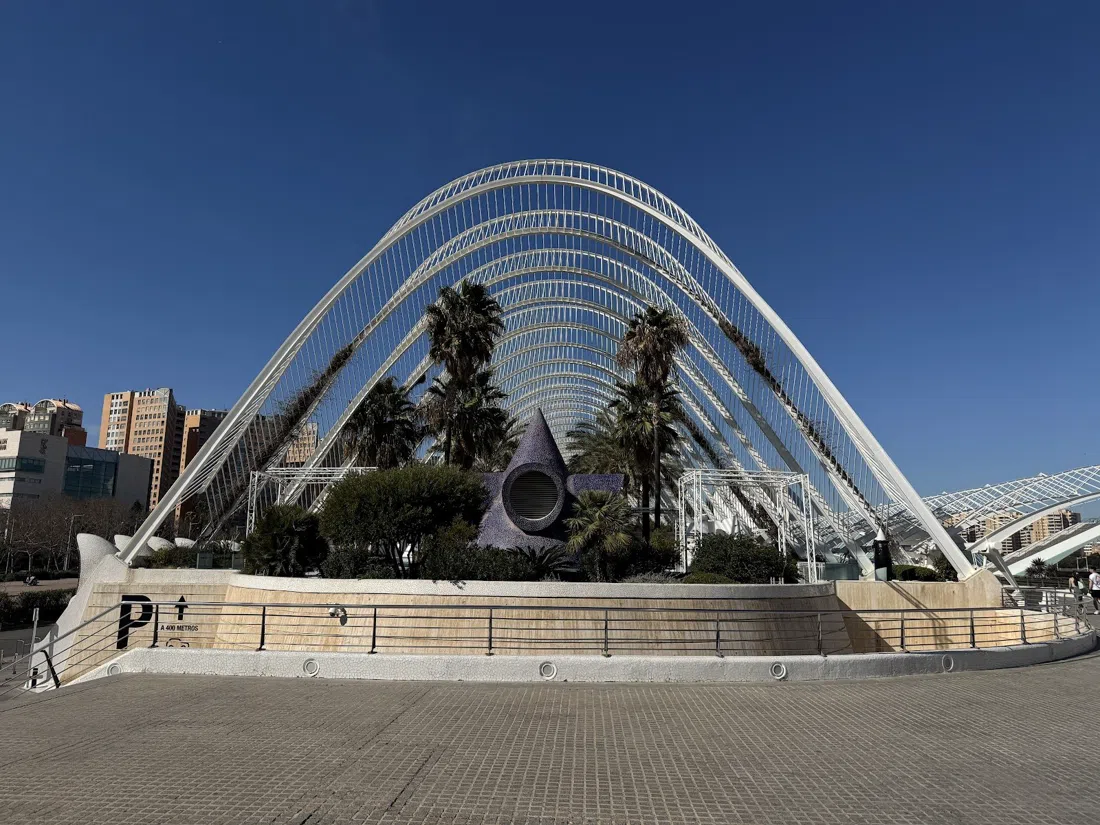
L'Umbracle (Quatre Carreres) is the open-air promenade of white arches on the raised deck along the northern edge, free, with no door policy at all, and it is the only part of the complex a group can simply walk into together. Hours are generally 10:00–22:00, longer in summer and for events. The elevated deck is the best vantage over the whole complex at blue hour, and the arches read as pure rhythm once the day crowds have gone.
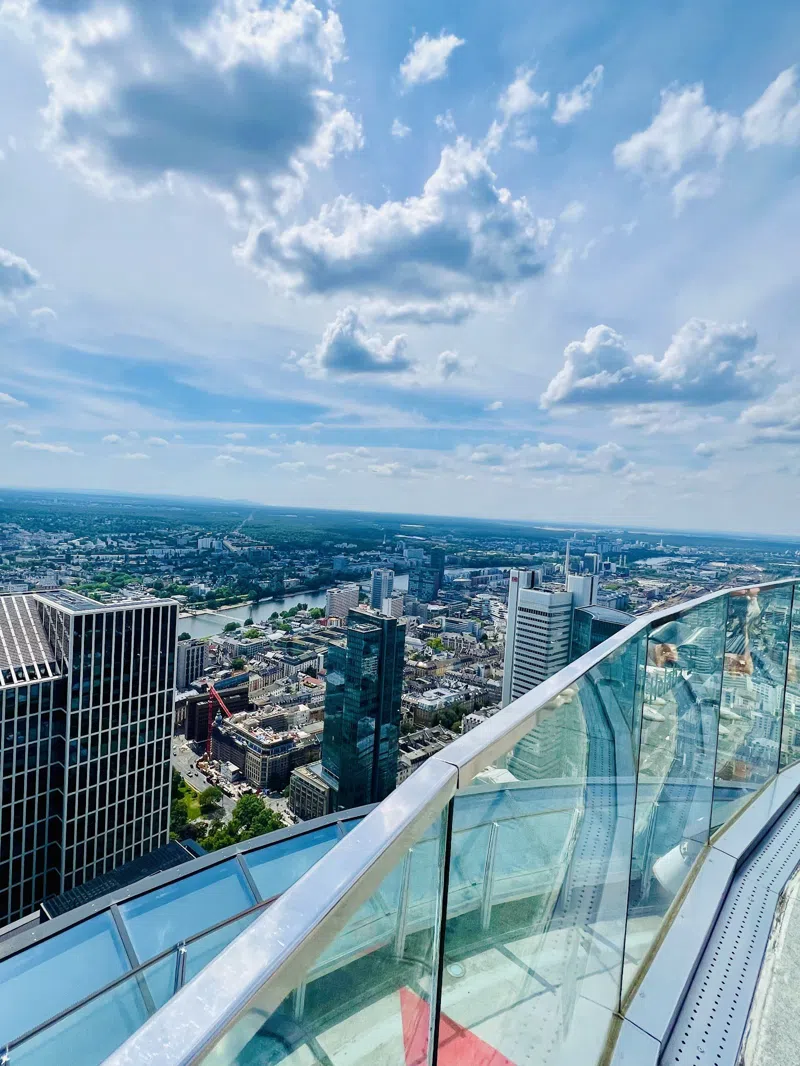
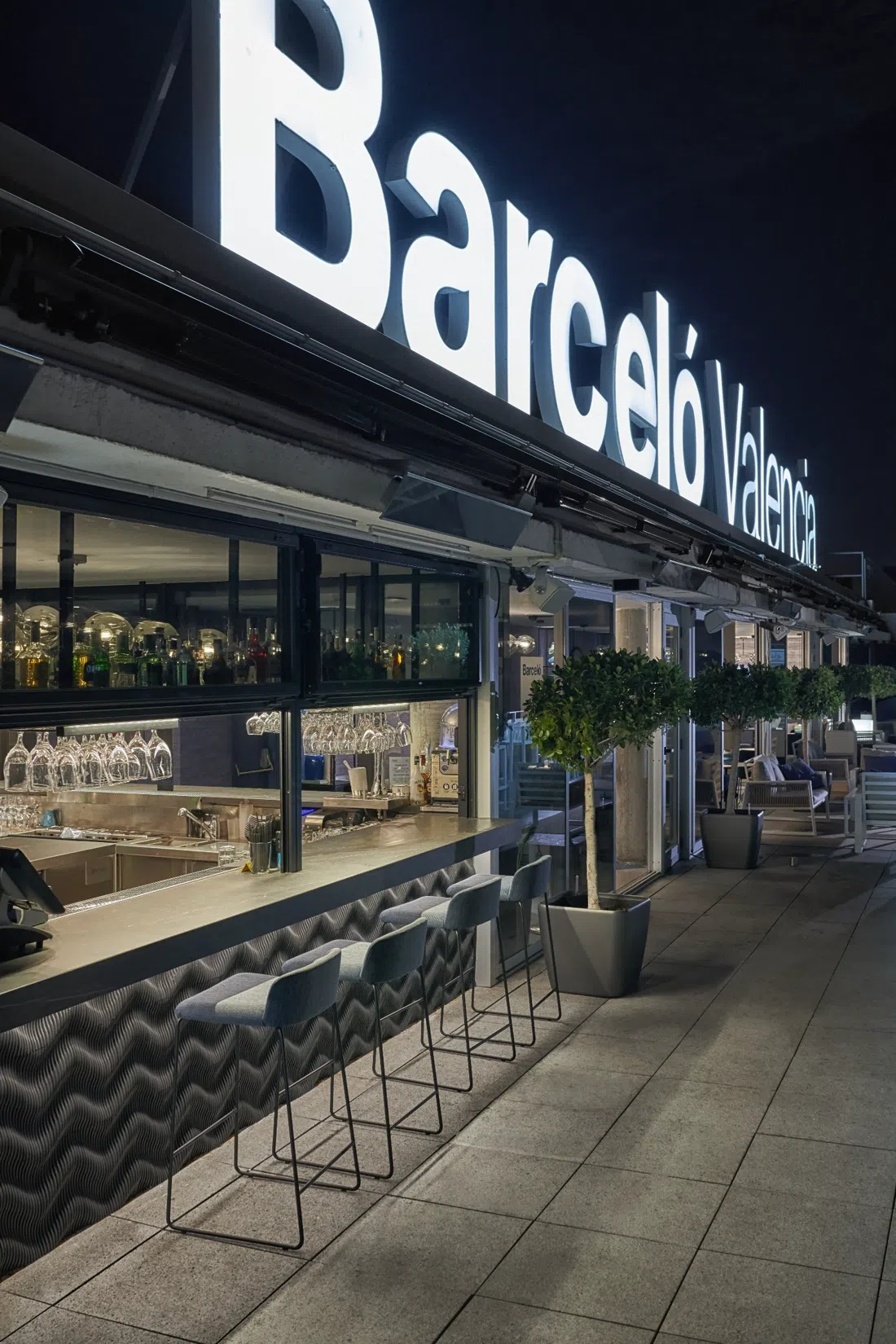
270º Terrace at Barceló Valencia (Penya-roja, five minutes' walk north) is the only easy elevated view of the complex, and from up there the buildings stop being architecture and read as sculpture, particularly at the moment the floodlights switch on. Open to non-residents, takes groups, cocktails around €12–€16. Seating is limited and sunset is the one hour everyone wants it, so reserve. If you turn up at 20:30 in August without a booking you will be standing.
Dinner timed to the floodlights
Restaurante Submarino (inside L'Oceanogràfic, Quatre Carreres) puts you at a table ringed by an aquarium wall. Dinner service is 21:00–23:30, lunch menus from around €40 and dinner from around €55, booking essential on 960 627 679, and they take groups and private events. The trade is that you are underwater, so you see none of the architecture while you eat. What you get instead is the arrival and the walk out: you go under in the last of the light and come back up into a complex that is dark and lit. It suits couples and set-piece dinners; it is not a casual drop-in.
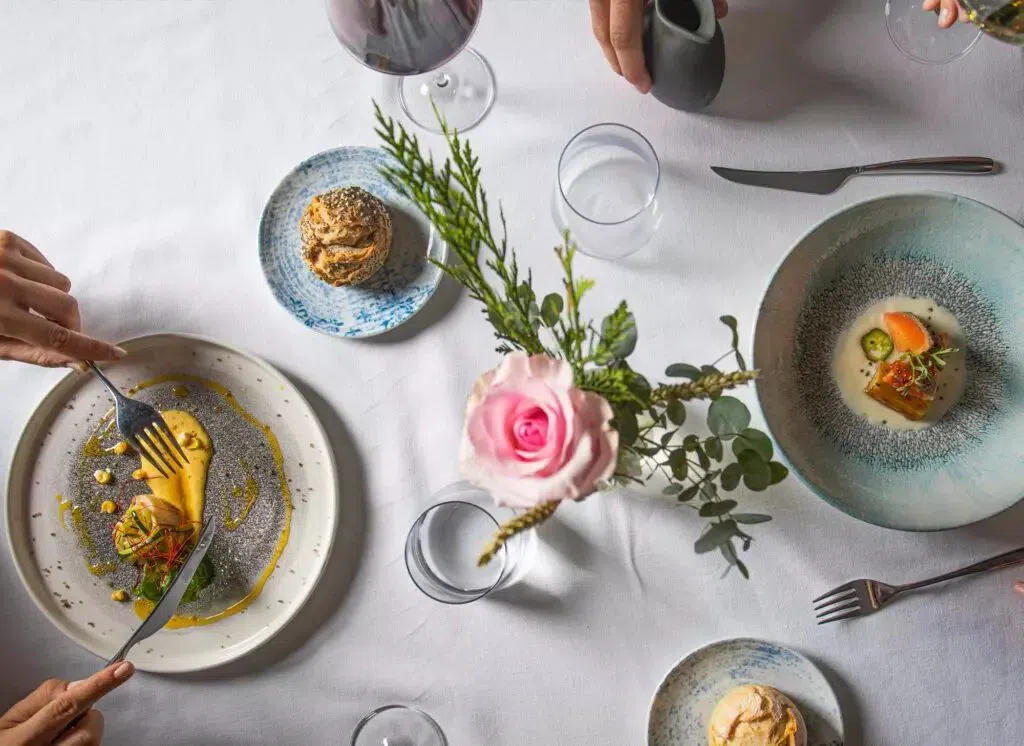
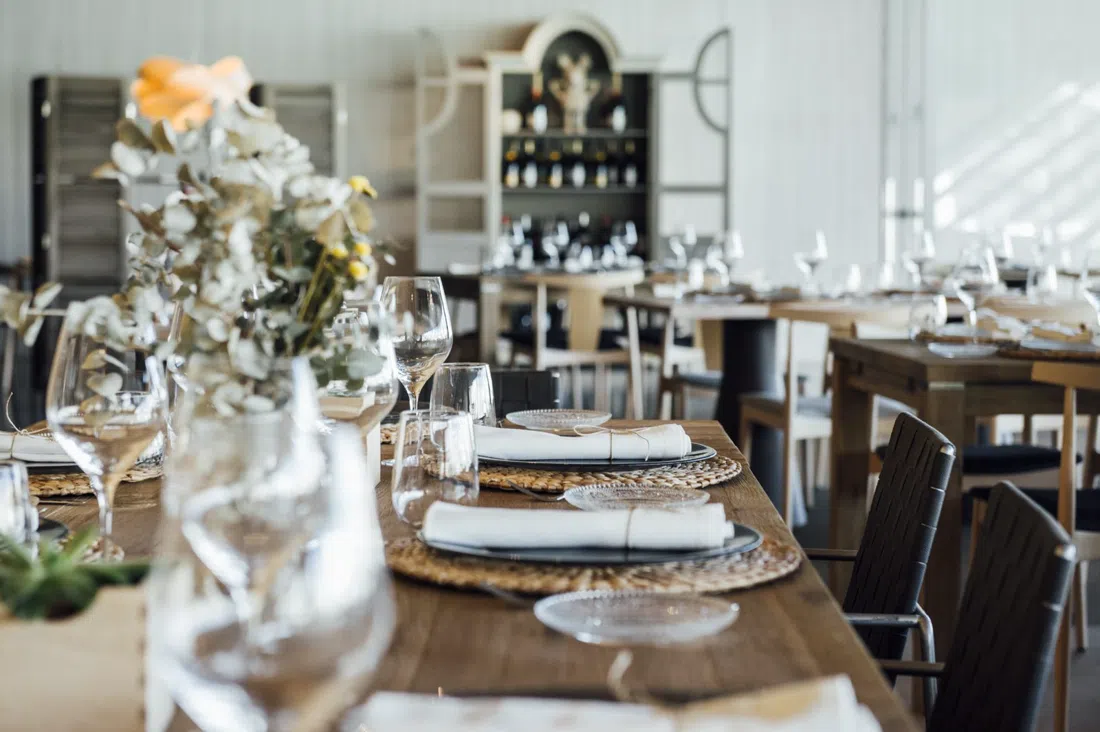
Contrapunto Les Arts (inside the Palau de les Arts, Quatre Carreres) is Pablo Ministro's kitchen in the opera house and the closest table to the architecture. Mediterranean à la carte, mid to upper mid prices, Guía Repsol listed, open daily, reservations on 675 365 474. It is explicitly set up for groups, business meals and pre-opera parties, which makes it the easier booking of the two for six or more people. Take the terrace as the floodlights come up even if you are not eating a full meal.
The opera night and the club night
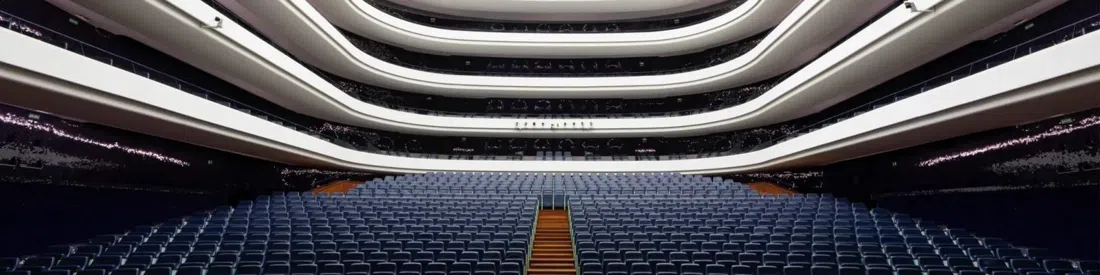
Palau de les Arts Reina Sofía (Quatre Carreres) is free to look at from outside and, for one evening, the honest excuse to still be here when the complex lights come on. The 2026–27 season opens on 2 October with a new 'Carmen', followed by 'Lohengrin', 'La clemenza di Tito' and 'Simon Boccanegra'. Tickets run from around €20 to well over €150, groups can book performances and pre-arranged guided tours, and there is a free open-doors day each September if you only want to see inside the shell.
Mya & L'Umbracle Terraza (inside L'Umbracle, Quatre Carreres) is here as a warning rather than a recommendation, because the contemplative arcade and the loudest club in Valencia are physically the same structure. Entry is roughly €15–€25 with a drink and tables cost considerably more; queues build after 01:00–02:00 and guest list or a table booking is strongly advised. It is very group-friendly and draws Erasmus and stag and hen crowds, which is fine if that is the night you came for. If it is not, remember that the silent version of that deck exists at dawn, not at 03:00 on a Saturday.
Hiring the technique instead of learning it
Blue-hour and dawn frames here are long exposures on a tripod, and if that sentence means nothing to you, the €65–€150 that Valencia Photo Tours (Academy for Photographers, run by Louis Alarcon) charges is the shortcut. They run private and small-group architecture and night-photography walks daily and can be reached on +34 658 153 646, and the value is not local knowledge so much as somebody setting your camera while the twenty-five minutes of usable sky is running out. Skip it if you are shooting on a phone and happy with that. Modern phone night modes handle the floodlit exteriors perfectly well, and you do not need a workshop to stand on a public bridge.
Practical notes
Getting there. On foot or by bike down the Turia riverbed from the centre is both the pleasantest and, before dawn, the most reliable route. Allow 40–50 minutes walking, 20 by bike. Metro line 10, the small tram-metro running east from Alacant, has stops named for the complex and the aquarium, but it does not run early enough for a June sunrise; in June, walk or ride. Taxis at 06:15 are easy to get and cheap by European city standards.
Cash and cards. Cards work everywhere including the bakery counter and the bridges cost nothing, so you can do the entire dawn walk without a euro on you. Carry a little cash only if you plan a late night at the club.
Timing in one line. Be on Pont de Montolivet 20 minutes before sunrise, at the Hemisfèric pool by sunrise, walking the museum ribs by 08:00, indoors somewhere ticketed from 10:00, back on the Umbracle deck 30 minutes before sunset, eating by 21:00.
Budget. A full free day is possible: bridges, riverbed, pool esplanade and the Umbracle deck cost nothing. A realistic paid day is about €60–€70 a head: coffee €5, one interior at €9 or €35, a rooftop cocktail at €14, dinner from €55 if you go underwater. The two ends of the day, the ones this article is about, are the free part.
Where to sleep. Staying on the Penya-roja side puts you within a ten-minute walk of the bridges, which matters when the alarm goes at 06:00. Compare rates with a Valencia hotel search, and if you are building the rest of the trip around this, the wider Valencia guide covers the old town and the beach.
One honest warning. Check the wind forecast the night before. If it is blowing over about 15 km/h at 07:00, the reflections are gone, and the whole reason to set that alarm has gone with them. Sleep in, do CaixaForum and the aquarium, and try the dusk half instead. It is far less weather dependent, because the floodlights do not care about the water.