The doors on Plaça del Mercat go up at half past seven, and for the first two hours the Mercado Central belongs to people buying dinner. Light drops through the coloured glass of the main dome onto fishmongers hosing down ice, trolley wheels knock across the tiled floor, and the loudest sound is Valencian shouted over a counter rather than a guide's microphone. Come back at eleven and it is the same magnificent building with three times the people in it, which is why, in September, the only sensible plan here is an early one.
What the market actually is
Mercat Central de València, the Mercado Central, on Plaça del Mercat in the Ciutat Vella, is not a museum with a food court attached. It is the city's main working food market: 250-plus stalls across 14 trading sections, selling fish, shellfish, meat, charcuterie, fruit, dried goods, spices and flowers to people who will cook them that day. The hall around them is what pulls visitors in, all iron, glass, tiled domes and stained glass, with a floor plan that opens up above your head the moment you stop looking at the stalls. But the stalls are the point of the place, and they behave like a business, not an exhibit.
Entry is free. There is no ticket, no timed slot, no queue at the door and nothing to reserve. You walk in off the square, and you can walk back out two minutes later if you want to.
The line that ruins more Valencia mornings than any other: it opens Monday to Saturday, 07:30 to 15:00, and it is closed on Sundays and on public holidays. Not reduced hours. Closed. If your one free morning is a Sunday, plan a different building and keep reading to the end of this piece, because there is a good answer for that.
What you do inside is simple and rewards slowness. Walk one full lap of the perimeter, then cut through the middle. Look up at least three times: under the central dome, over the fish section, and at the tilework where the roof meets the walls. Buy something small (produce and counter snacks start at a few euros) and eat it standing up. Ask before you photograph a person; nobody minds the building being shot, and plenty of traders mind being shot while they work.
The first hour is the entire trick
The hall is quietest before about 10:00. That is the whole timing advice, and it is worth structuring your morning around. Between 07:30 and roughly 09:00 you are in a trade market: deliveries, restaurant buyers, older locals with wheeled shopping bags, unhurried counters that will actually talk to you. From about 10:00 the visitor flow builds, guided groups start threading the aisles, and by 11:30 in September you are shuffling rather than wandering.
A straight architectural lap takes 20 minutes. A proper look, reading the sections, stopping at the fish, going back for the dome, is 45 minutes. Add a counter breakfast and you are at 90 minutes, the right budget for a first visit. Weekdays are calmer than Saturday, when weekend household shopping stacks on top of everyone else.
One consequence of those hours: do the market before lunch, not after. At 15:00 the shutters come down and the hall is dead. Visitors who arrive at two for a leisurely food crawl get twenty rushed minutes and a lot of closing-up.
Eating in the hall and two minutes outside
Central Bar by Ricard Camarena, inside the market hall itself, is a two-Michelin-star chef's counter operating on market rules: it trades Monday to Saturday on market hours and it shuts with the building at 15:00. There are no reservations, ever. Walk-up only. Reckon on €12 to €20 a head. The practical door reality is about group size: two or three people will slot in; a party of five arriving at 11:30 will not, and will end up split across the counter or waiting outside it. If you want this, come before eleven.
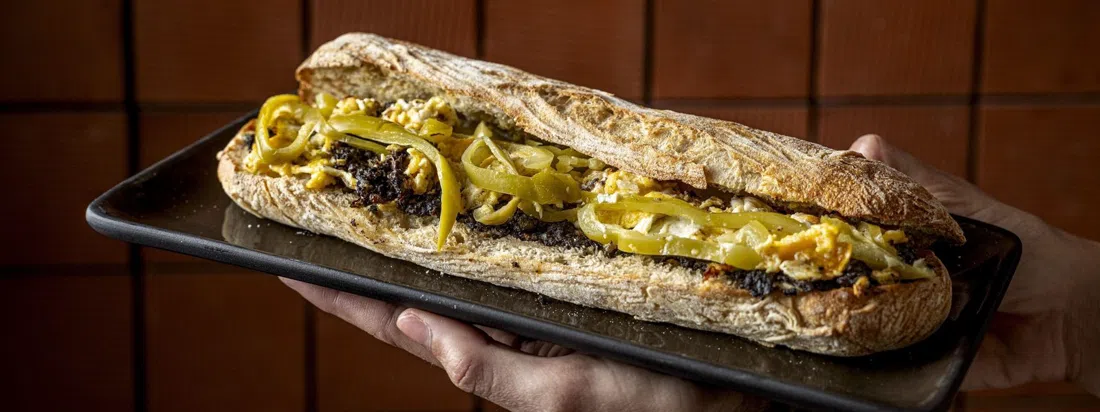
Bar Pilar (La Pilareta), on Carrer del Moro Zeit in El Carme, is two minutes' walk and has been open since 1917. It is small, loud and largely standing-room: fine for walk-ins, fine for a casual four, genuinely awkward for a party of six who want to stand together. €10 to €20 a head. September matters here, because it is the tail of the clóchina season, the small local mussel the bar is known for, so a September visit catches something a February visit does not. Go when it opens rather than at peak, and be ready to eat on your feet with a plate balanced on a barrel.

The square outside carries the history
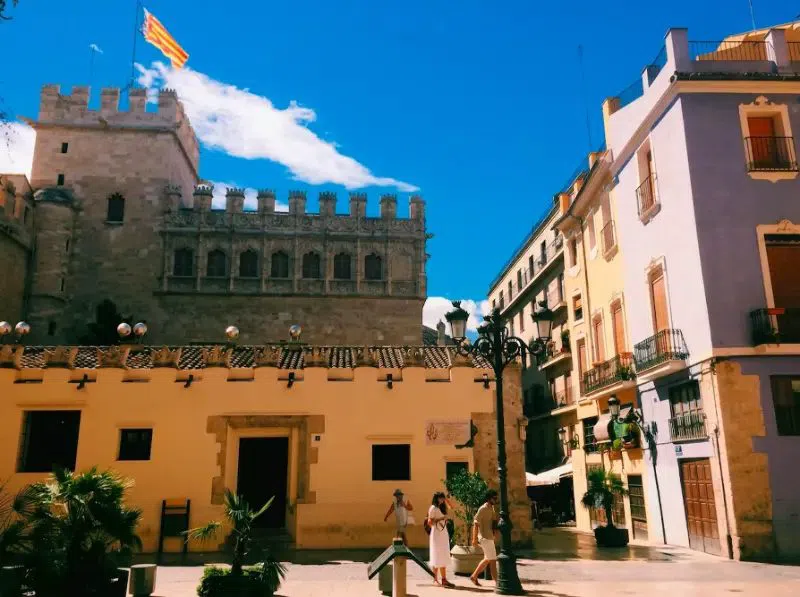
La Lonja de la Seda, directly across Plaça del Mercat from the market doors, is the best-value monument in the city and it is not close. General admission is €2, reduced €1, and it is free on Sundays and local holidays. Entry is by timed one-hour slot, everybody in a group has to arrive at the exact slot printed on the ticket, and large bags are refused at the door, so plan the day so you are not carrying a market haul or a suitcase. An audio guide in seven languages is included. Forty-five to ninety minutes covers it properly: the twisted columns of the trading hall, the orange courtyard, the upper chamber.
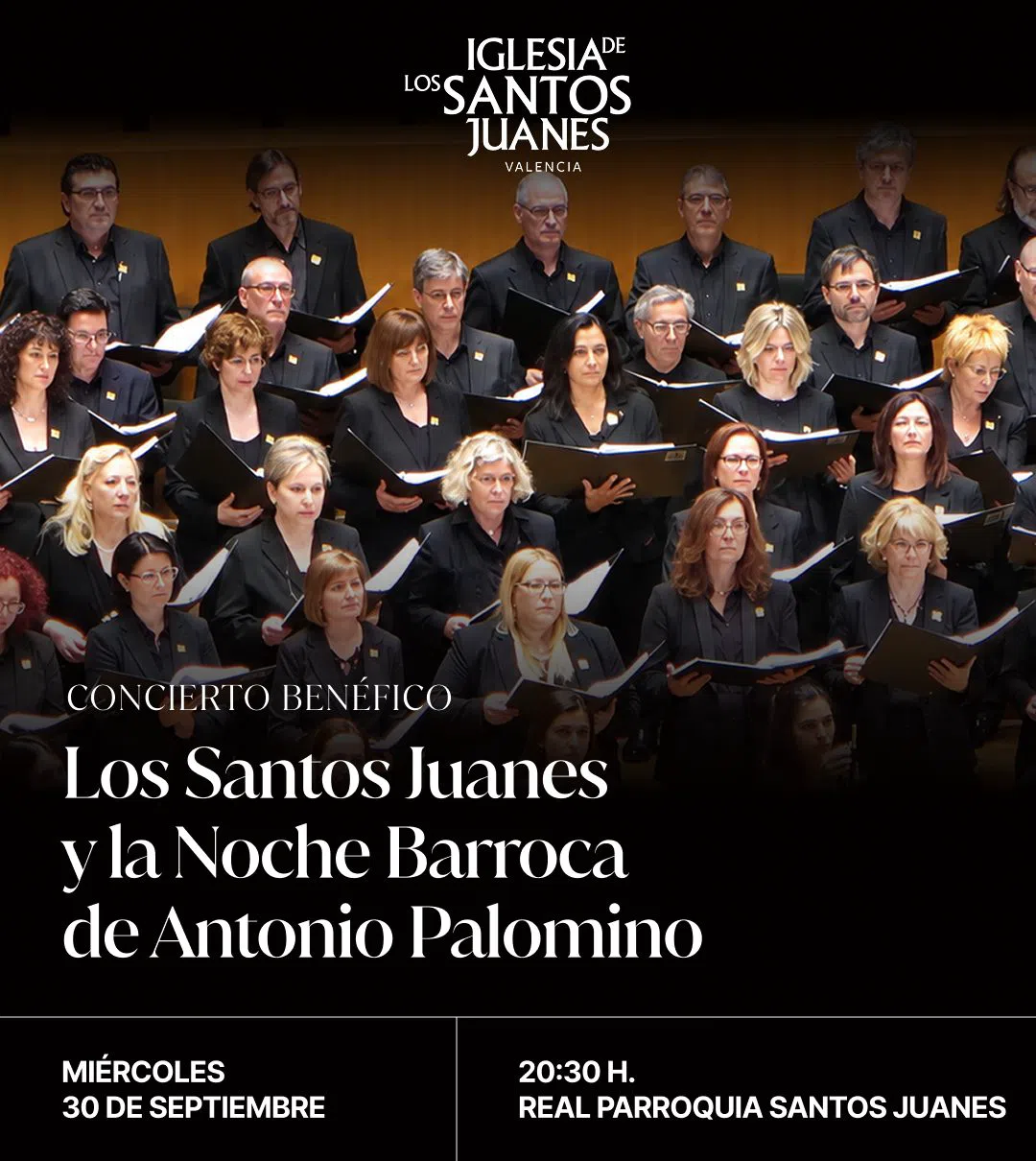
Iglesia de los Santos Juanes, on the same square, is the strongest single history stop within sight of the market doors. Tickets are €15 general, €12 reduced, €18 with a guide, or €32 on a combined ticket with San Nicolás and the Hortensia Herrero centre. There is a guided tour daily at 12:30 and a panoramic tour on Fridays at 19:30; groups and guided visits are arranged in advance through [email protected]. The frescoes were gutted by fire during the Civil War, and the restoration backed by the Hortensia Herrero Foundation, together with a 15-minute 'Barroc' projection, reconstructs what was lost. It is the piece that makes the square legible rather than merely handsome.
The silk trade that paid for the stonework
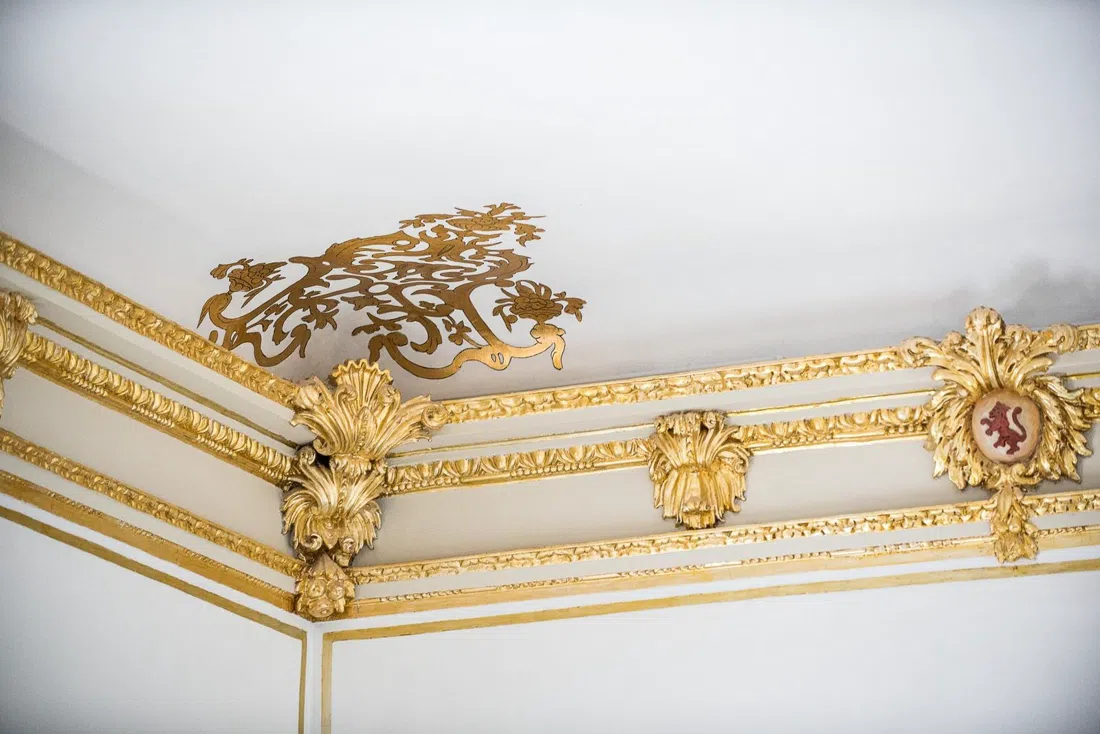
Museo y Colegio del Arte Mayor de la Seda, a short walk into Velluters, is the guild house of the trade that funded the Lonja. Around €9 general, under-12s free, closed Mondays, and group visits and guided slots are bookable ahead at [email protected] or 697 155 299. Doing this turns a market-and-Lonja morning into one continuous story (where the money came from, what it built, who ran it) rather than two attractive buildings visited in sequence.
Iglesia de San Nicolás de Bari y San Pedro Mártir, six or seven minutes' walk from the market in the old-town lanes, is the painted-ceiling stop people call the Valencian Sistine Chapel. €8 including the audio guide. Tourist visits run Tuesday to Sunday only, because Mondays are for worship, with last admission an hour before closing. It pairs naturally with Santos Juanes on the combined ticket if you want both interiors in one day.
Two climbs and one basement
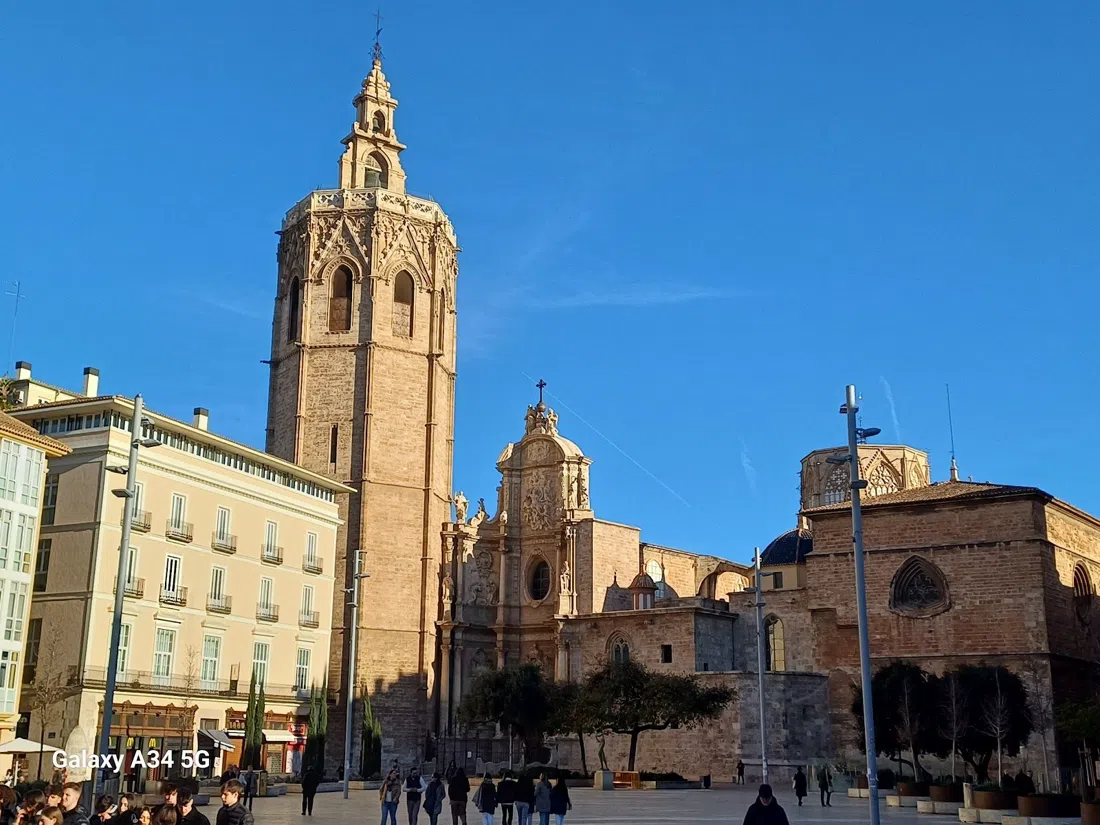
El Miguelete, the cathedral bell tower in La Seu, is the single best vantage for seeing how the market hall, the Lonja and Santos Juanes sit as one block of city. €3 general, €2 reduced, open daily 10:00 to 18:45 through November, ticketed separately at the tower base. The terrace is capped at 50 people, so a large group will wait or be split. Send people up in waves rather than all at once.
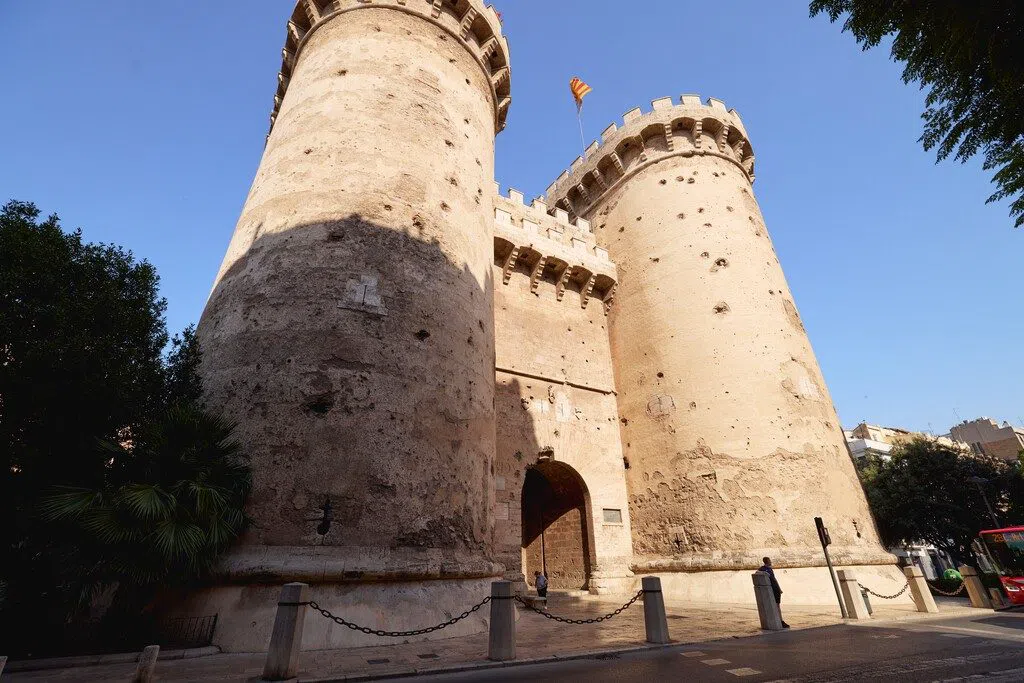
Torres de Quart, on the western edge of El Carme, is the nearest climbable viewpoint to the market and the one that explains the medieval wall the whole market district grew up inside. €2, free on Sundays and holidays, under-12s free, closed Mondays. The stairs are steep and narrow with no lift, and the towers close entirely in rain for safety, a real consideration in a September that can turn heavy without much warning. Allow 30 to 60 minutes.
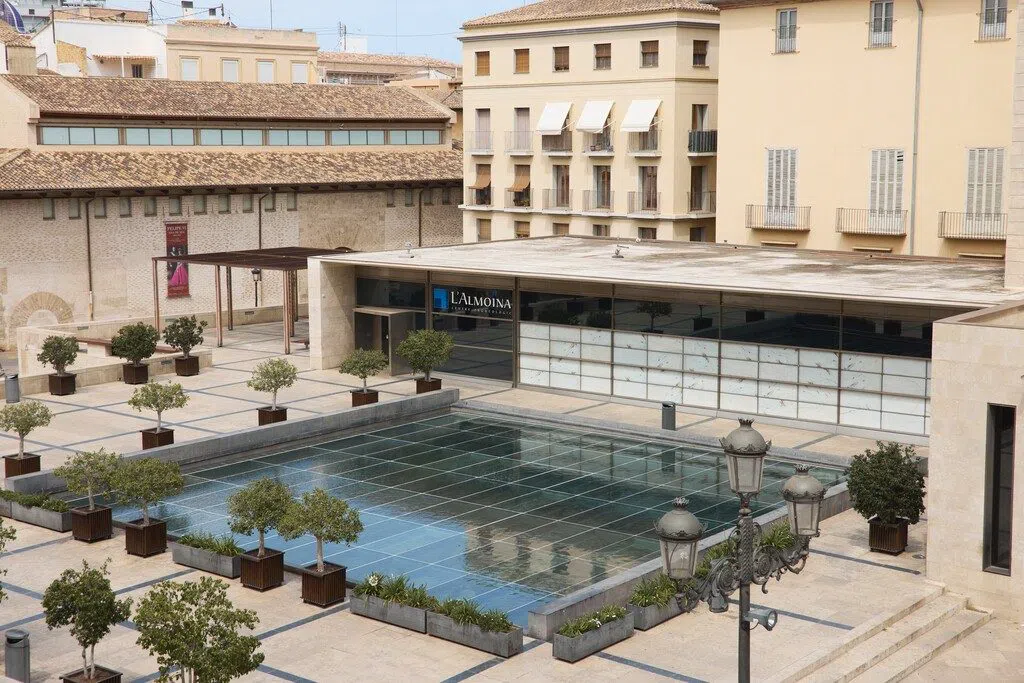
Museu Arqueològic de l'Almoina, five minutes away in La Seu, stacks two thousand years of the city into one basement and is the cheapest way to understand why the market sits exactly where it does. €2, free on Saturdays, Sundays and public holidays, closed Mondays. Groups are fine in the underground galleries.
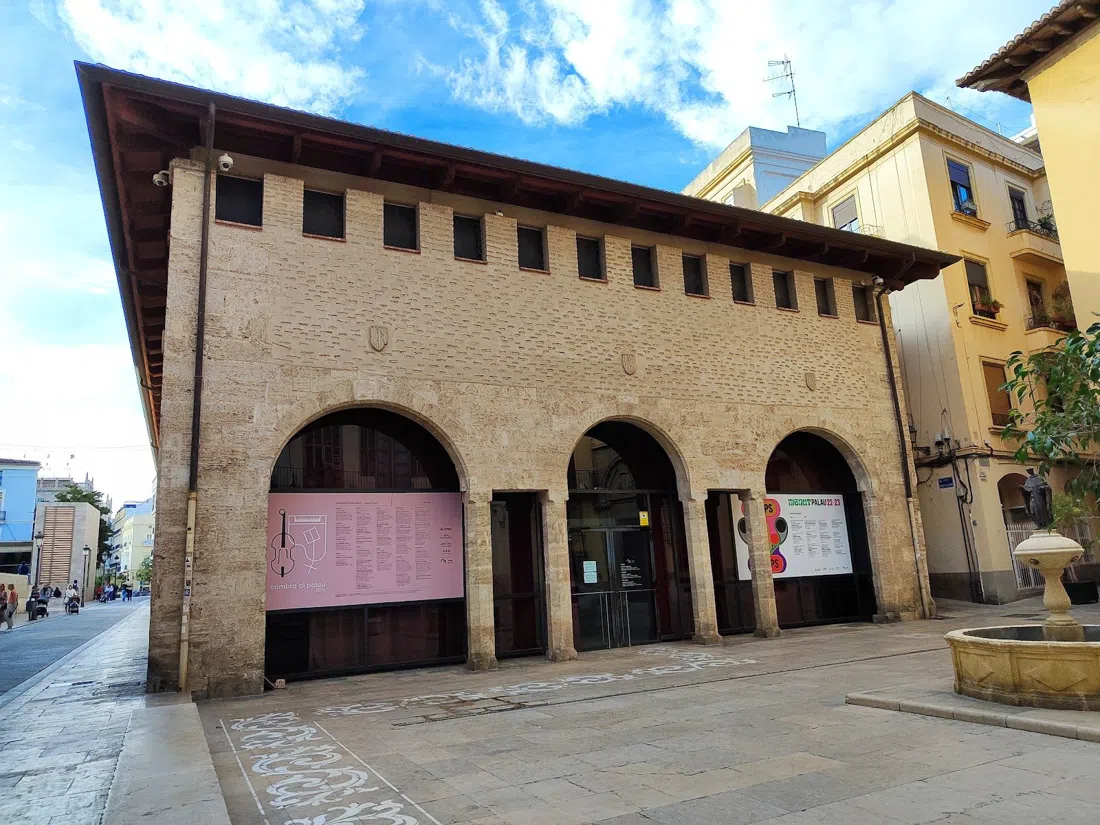
L'Almudí, the medieval granary near the cathedral, is free, closed Mondays, and is the direct ancestor of the building this article is about: the city's grain store before a covered iron market existed. It currently houses the Holy Grail visitor centre, running to 29 October 2026, which makes a September visit good timing.
Where to go when the shutters come down at three
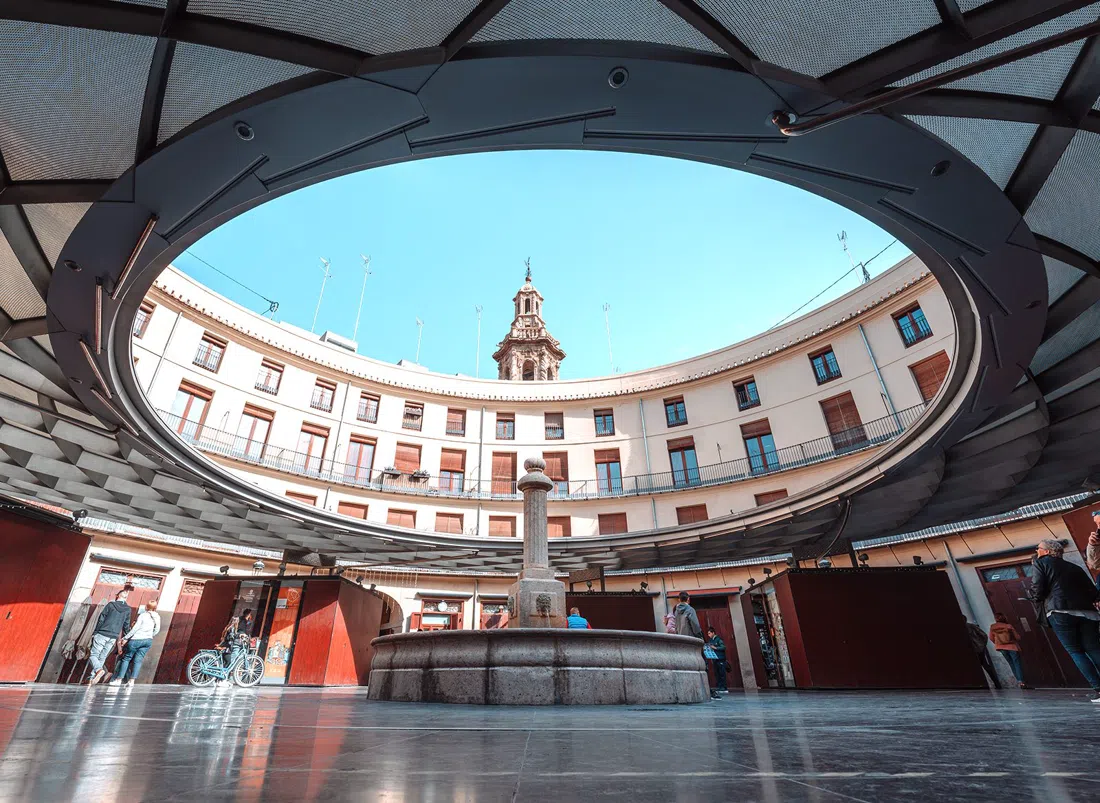
Plaça Redona, three minutes from the market, is the old fish and butchers' quarter reshaped into a circle in the 19th century and fully restored between 2008 and 2012. Free to walk through at any hour, with lace, thread and ceramic stalls from a few euros. The ring is genuinely small and clogs fast, so a group of ten should filter through rather than arrive as a block.
Horchatería Santa Catalina, on Plaça de Santa Caterina, has been trading for roughly two centuries and is the obvious landing spot once the market shuts: it runs all year including holidays and stays open until 21:00. €4 to €8 a head, no bookings, first come first served, but two large rooms over two floors mean it absorbs groups better than most old-town cafés.

Mercat de Colón, in l'Eixample, is the Central Market's modernista sister and the real answer to a dead afternoon or a Sunday. Free to enter, it trades every day including Sundays and runs late: horchata and fartons around €5 to €7, sit-down restaurants €20 to €40. Groups are easy here in a way they are not in the Central Market's aisles.
Two more if you want the craft thread pulled through. Museo Nacional de Cerámica y Artes Suntuarias González Martí, on Carrer Poeta Querol in Sant Francesc, holds Manises ceramics that are the same craft as the tiles on the market's domes and on the Plaça Redona stalls: €3 general, €1.50 reduced, free on Saturday from 16:00 and all day Sunday, closed Mondays, with small rooms that force big parties to split. And the Centro de Arte Hortensia Herrero, also in Sant Francesc, sits over an excavated Roman circus: €12 general, €10 for groups of 10 or more, €15 guided, free on Wednesday afternoons but still requiring a booking, with an English guided tour on Wednesdays at 10:30 and closed Mondays. It is run by the same foundation behind the Santos Juanes restoration.
Turning up versus booking a guided morning
You do not need to pay anyone to enter the central market of Valencia. Walking in free, early, and reading the sections yourself is a perfectly good morning, and for independent travellers it is usually the better one.
A guided option does exist, and it is attached to this page as a card rather than described here. The honest case for it is context and sequencing: somebody who can tell you what the sections were, who still trades there and what the square was before the hall went up, and who has the Lonja timing worked out. The numbers, plainly: the guided experiences here carry 6,601 traveller reviews between them, with the top one rated 5.0 out of 5 from 3,710 reviews; they run seven days a week; prices start from 87 USD per person. The seven-day availability is worth noting given the market itself shuts on Sundays, so check what a Sunday departure actually visits before you book one.
Worth it, and who it suits
Yes, with one condition attached: go early. The Mercado Central at 08:30 is one of the best free hours in any Spanish city, a beautiful building doing the job it was built for, with food you can eat on the spot for a few euros. The same building at 11:45 in September is a pretty, crowded hall where you queue for a counter stool. The verdict turns entirely on the clock.
It suits food-minded travellers, photographers, anyone on a tight budget, and history walkers who will cross the square to the Lonja afterwards, where €2 plus a free market is an absurd morning for the money. It suits couples and pairs best of all, because the good counters are standing-room and walk-up. It suits large groups least: no counter inside the hall takes a party of eight, the aisles are working aisles that must stay clear, and your group will end up in fragments. Big groups should do the hall early, then move to Mercat de Colón or Horchatería Santa Catalina, where the room actually fits them. If you are travelling with someone who cannot stand for an hour, plan a sit-down stop outside the hall from the start.
Best time to go in September 2026
September is the good end of the Valencian year for this particular building: the fierce heat is easing, the mornings are pleasant before nine, and the clóchina season is still running at Bar Pilar rather than being a thing you missed. The light through the dome is best mid-morning, which unhelpfully coincides with the crowds, so take the quiet at 08:30 and accept slightly flatter light.
Build the day like this. In the hall by 08:00 for the trade hour. Counter breakfast before 11:00 while walk-up space still exists. La Lonja on a late-morning timed slot, bag-free. Santos Juanes on the 12:30 guided tour if you want the fresco story. Lunch, then El Miguelete or Torres de Quart in the afternoon, and Mercat de Colón or Santa Catalina once everything around the market has shut.
Avoid Sunday for the market entirely. Check whether any public holiday falls in your window, because the hall closes on those too. Mondays are a quiet trap in the other direction: the market is open, but Torres de Quart, l'Almoina, L'Almudí, the ceramics museum, the Hortensia Herrero centre and the silk museum are all closed, and San Nicolás does not take tourist visits. A Monday market morning is fine; a Monday built around museums is not.
The practical close
Getting there is a walk. The market sits in the middle of the Ciutat Vella and everything in this article is walkable from its doors; the furthest, Mercat de Colón, is about 15 minutes on foot. Àngel Guimerà is the nearest metro station, roughly five minutes away. The streets immediately around the hall are pedestrianised and tight, so a taxi drops you at the edge of the square, not at the door. Don't drive; parking in the old town is a bad trade.
Bring some cash. Most stalls take cards these days, but small counters, a €2 monument ticket and a few euros of fruit are simply faster in coins, and a couple of the smallest traders still prefer it. Budget roughly: market entry free, produce and snacks a few euros, Central Bar €12 to €20, Bar Pilar €10 to €20, La Lonja €2, l'Almoina €2, Torres de Quart €2, El Miguelete €3, González Martí €3, San Nicolás €8, Santos Juanes from €15, Hortensia Herrero from €12, Mercat de Colón €5 to €7 for horchata and fartons. A full, generous day of this comes in under €60 a head, and a lean version under €15.
Timing in one line: in the hall before 10:00, eating before 11:00, everything market-adjacent done before the 15:00 shutdown, afternoons for towers, basements and Colón.
Sleeping inside the Ciutat Vella is what makes the 08:00 start painless rather than heroic. Compare rates on the Valencia hotel search, and if you are still shaping the rest of the trip, the wider Valencia guide covers the districts beyond the old walls.