The Valencia issue
Paella and Sangría in Valencia After the Russafa Market
A three-and-a-half-hour Valencian paella class in Russafa that starts with the market shop and ends at the flat pan and the sangría jug, with an honest verdict on whether it beats just eating the real thing.
By Bram VerhoevenNeighbourhoods, sights and slow days out
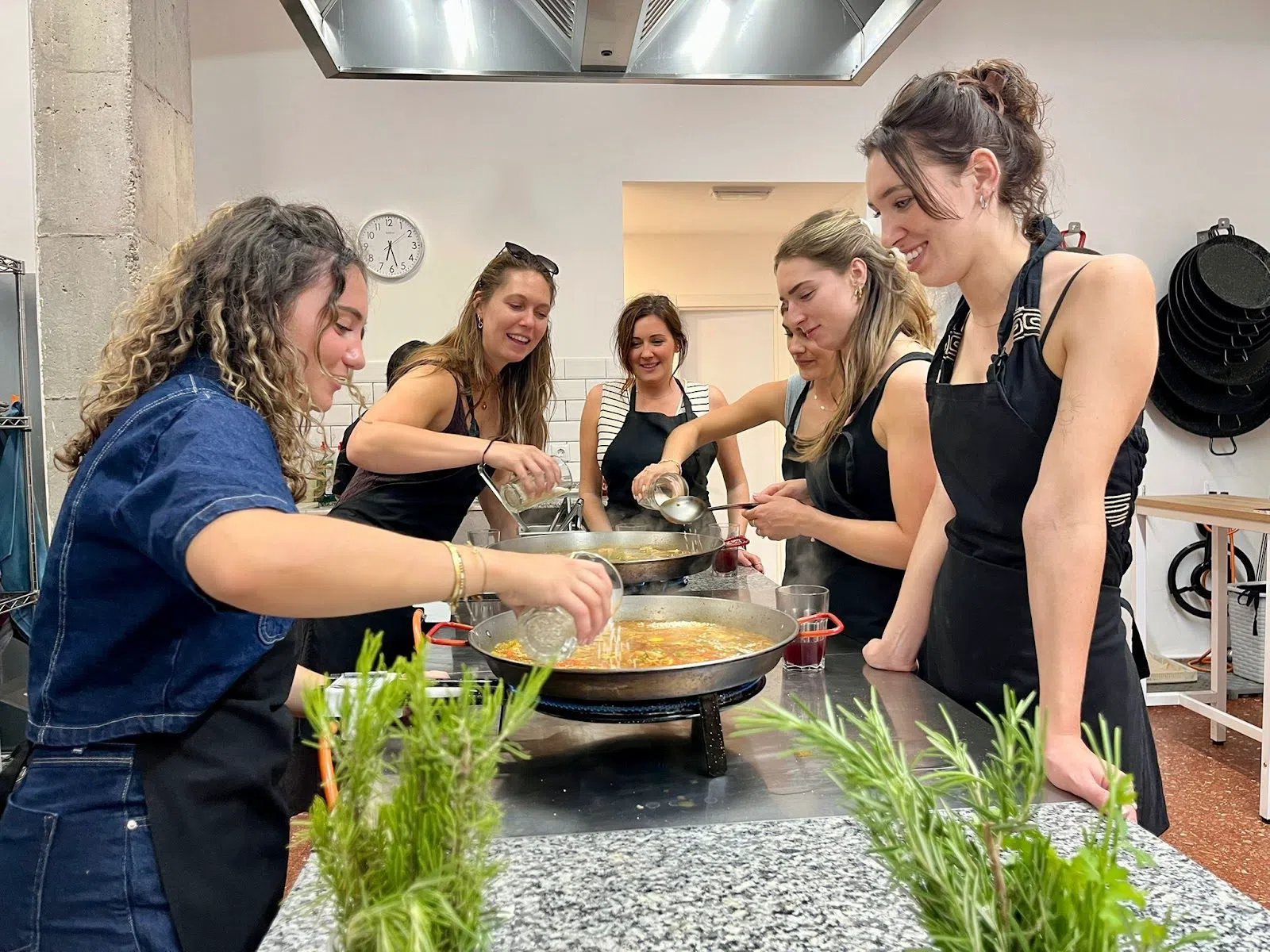
At half eleven on a weekday the aisles of Russafa's market smell of cut tomato and raw rabbit, and your guide is holding two bags of short-grain rice asking which one you think belongs in a paella. Three hours later you are standing over a flat steel pan five streets away, being told politely but firmly to stop stirring. Between those two moments is the most useful cooking lesson in the city, plus a jug of sangría you mixed yourself.
What the class actually is
My First Paella (Russafa) runs two fixed sittings a day, 11:00 and 17:00, and they are not the same experience. The 11:00 class musters on the square outside the parish church on Carrer del Pare Perera 6, walks to the neighbourhood market to buy the day's ingredients, then moves to the school's kitchen on Carrer del Penyagolosa 5. The 17:00 class skips the shop and starts at the kitchen, because the market has already shut. If the market run is the reason you booked, the morning slot is the only one that delivers it. Take the afternoon sitting only if your day genuinely cannot start at eleven.
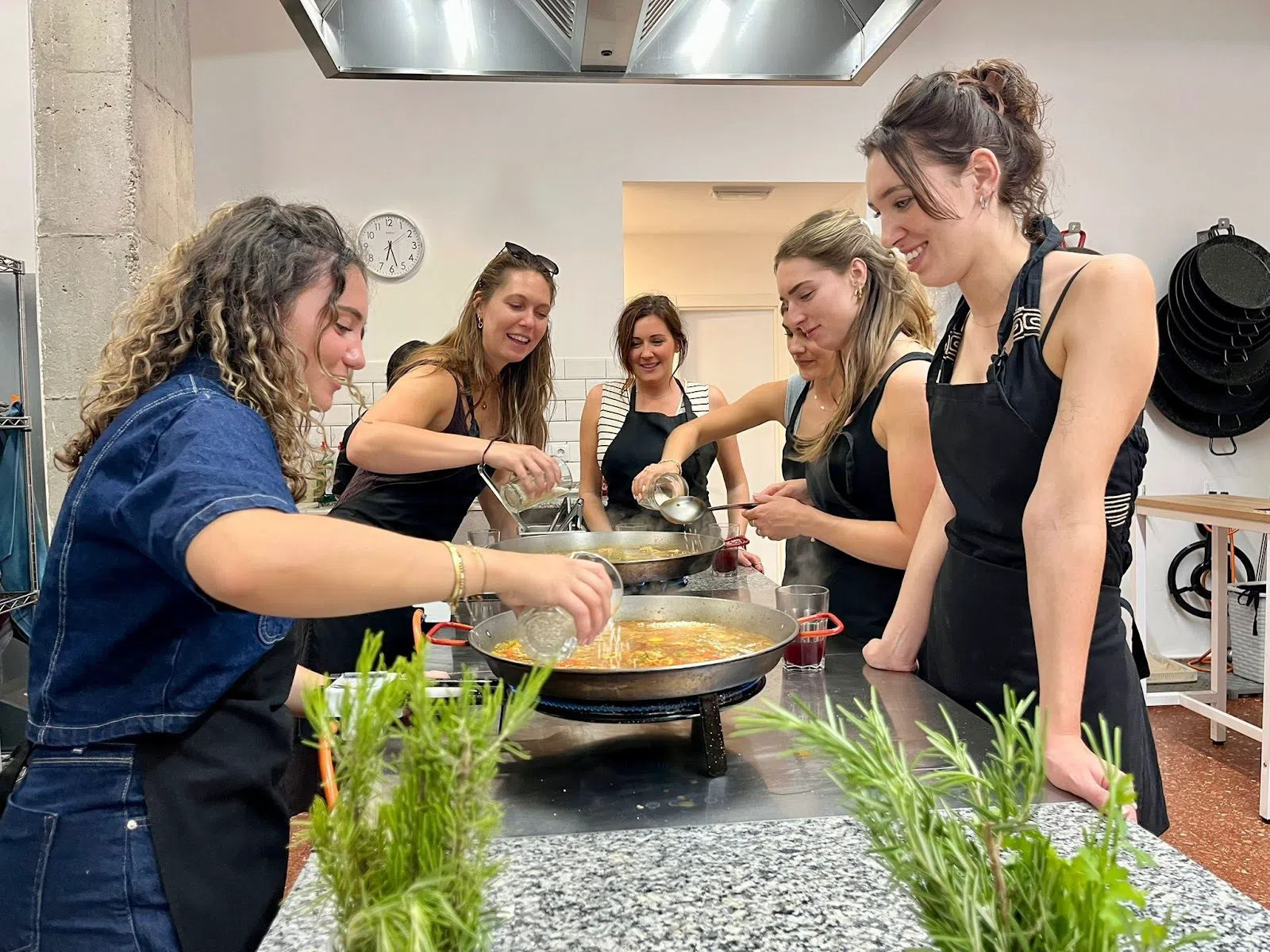
The run time is about three and a half hours either way, and most of that is hands-on rather than watching a chef perform. The school teaches three versions of the dish: the Valencian original with chicken and rabbit, a seafood paella, and a fully vegan vegetable one. Which you cook depends on the sitting and the group, so if you have your heart set on one in particular, say so when you book rather than on the day. The price runs roughly €65-75 per person (from around 74 USD if you are pricing it in dollars) and covers the market shopping, tapas and drinks while you cook, dessert, coffee and the sangría workshop. The sangría half is short and more practical than it sounds: proportions, which fruit does something and which is garnish, and how not to drown decent wine.
The technical content is the part worth paying for. You learn why the pan is wide and shallow rather than deep, how far up the rice the stock should come, what the browned crust on the base is called and how to get it, and, repeated more than anything else all afternoon, that you do not stir a paella once the rice is in. Expect to leave able to repeat it at home on a domestic hob with a bit of fudging, which is more than most cooking classes manage.
Plan your Valencia trip
Live prices from our booking partners.
Free cancellation on many rooms. We may earn a commission when you book.
The market half in Russafa
Mercat de Russafa (Russafa) is a working municipal market rather than a photo set, and that is the whole argument for this particular class. Entry is free, the stalls sell to locals doing their weekly shop, and the ingredients for a paella for four come to roughly €15-25 at the counters. Hours matter: Monday to Friday 07:30-14:00 and Saturday 07:30-15:00, reduced since 22 June 2026 while energy-efficiency works are underway, and closed Sundays. That shortened window is exactly why an afternoon class cannot include the shop.
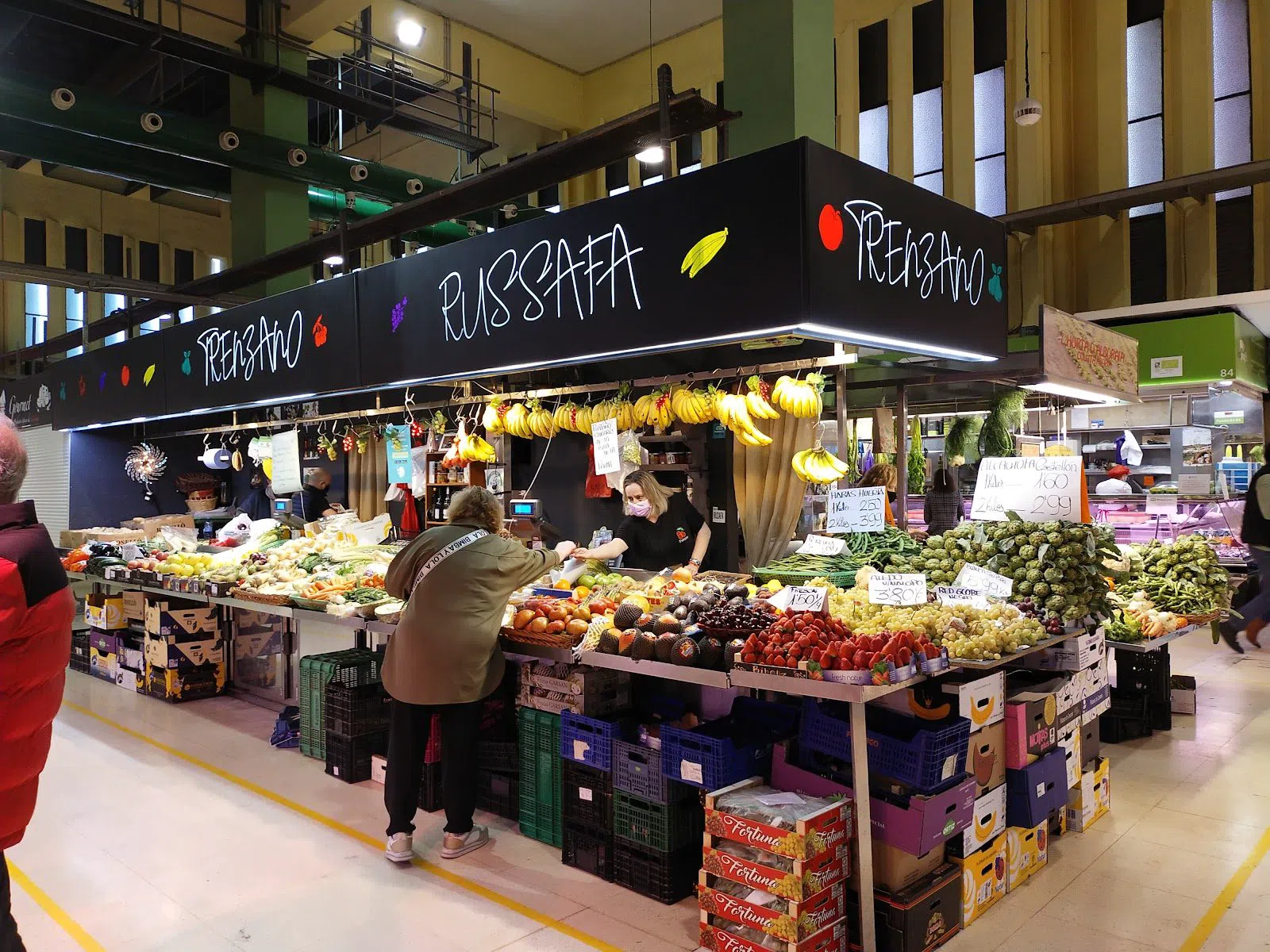
The aisles are narrow. A guided party of a dozen moving through before noon is normal and nobody minds; a larger group should split and regroup. If you are shopping independently, do it early rather than at the end of the morning, when the fish counters are being packed down.
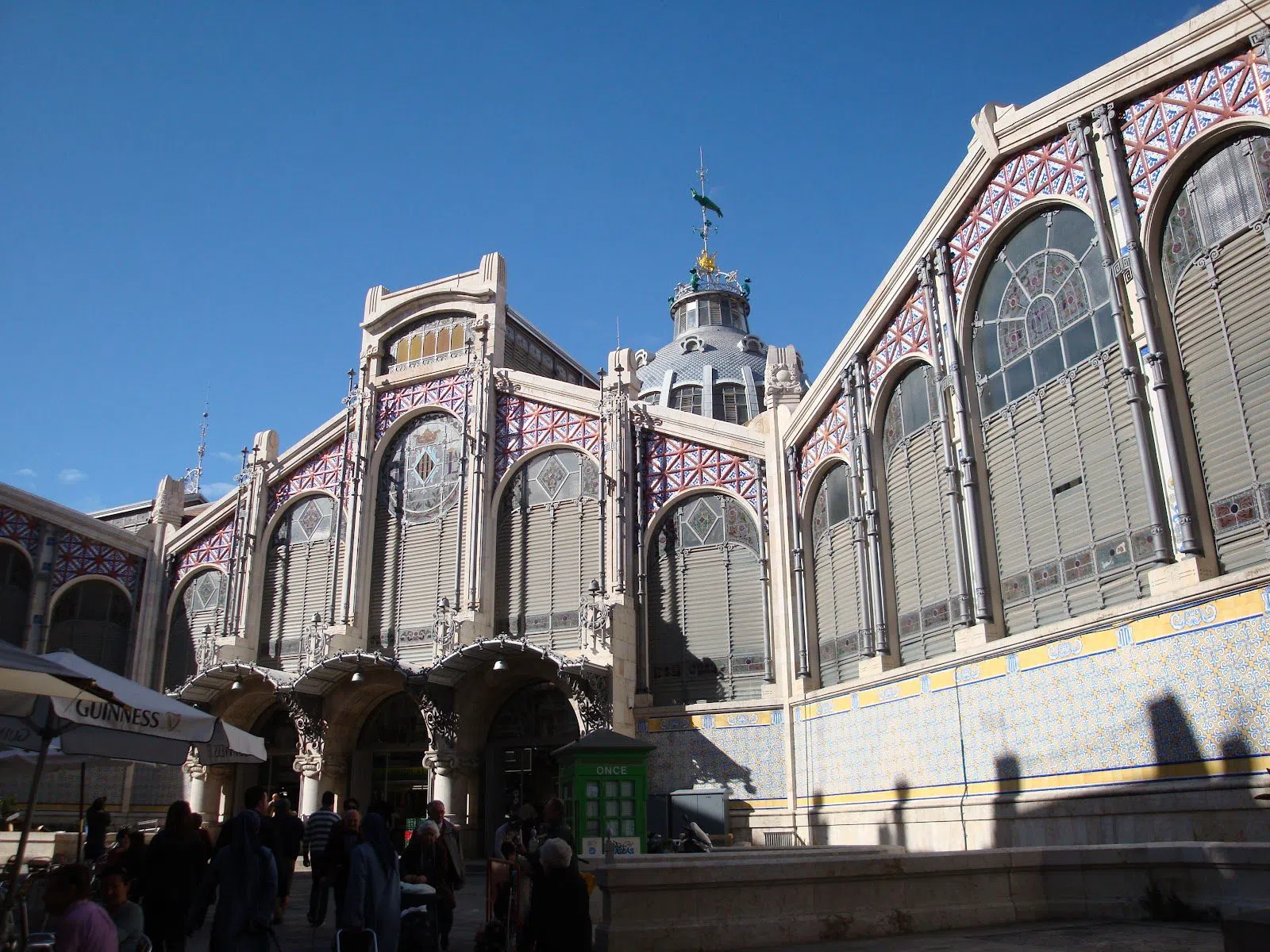
For contrast, Mercat Central de València (Ciutat Vella) is the big modernista food hall, open Monday to Saturday 07:30-15:00, closed Sundays and public holidays, free to walk in. It is magnificent, and it is also where most market-plus-cooking classes do their shopping, so 11:00-13:00 is shoulder to shoulder. Go for the building and the produce on a separate morning. Do not try to bolt it onto a Russafa class day, because you will be rushing past the best bits.
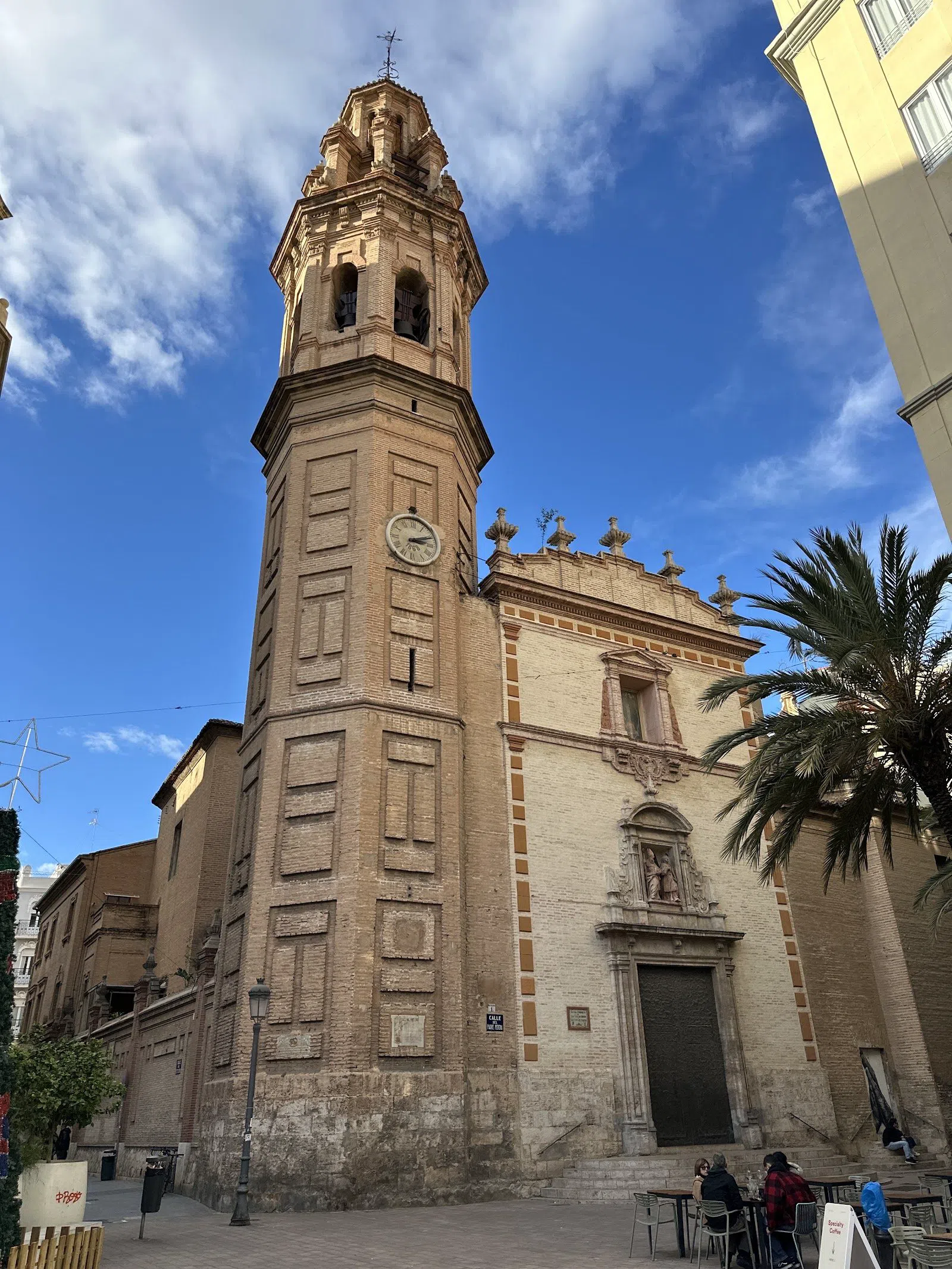
While you wait for your guide, the Església de Sant Valer i Sant Vicent Màrtir (Russafa) is ten minutes well spent. Locals call this baroque parish the cathedral of Russafa, entry is free, and its narrow visiting hours, roughly 10:00-11:30 and 19:00-20:00 on weekdays, happen to overlap the morning muster. Groups should gather on the square outside rather than inside, and nobody should wander in during mass.
How long it takes and when to turn up
Budget four hours door to door for the 11:00 sitting: shop, kitchen, eat what you cooked, coffee, finish around 14:30. That leaves you free in the early afternoon with a full stomach and no appetite for a second lunch, so plan something flat afterwards, a walk, the beach or a museum, rather than another meal.
The 17:00 sitting finishes around 20:30, which is early by local standards and leaves the whole evening intact. It suits anyone arriving on a midday flight, anyone travelling with someone who does not do mornings, and anyone who wants to roll straight into Russafa's bars afterwards.
Booking ahead rather than hoping
This is a scheduled class with a fixed number of aprons, not a venue with a door you can try. There is no walk-up queue to beat and no ticket window; you either hold a place at that sitting or you do not. The class runs six days a week, Monday to Saturday, so Sundays are out and need planning around.
Demand is steady rather than theoretical. Some departures are already fully sold out on 12, 13, 14, 21, 22 and 24 October 2026, plus seven further dates. Other dates remain bookable, but if you are travelling around those days, settle your slot before you settle anything else. A guided booking option is attached to this page; booking direct with the school is equally fine, and it is the route to take if you want a private class, team-building, a family group or exclusive use of the kitchen.
Groups, families and the realities of the room
The standard sittings are mixed groups of strangers, which works better here than it sounds, since you are all holding knives over the same table within ten minutes. The school also takes private bookings, and recent first-hand accounts include a family of six in a single class, so it is not an adults-only proposition. Children who will stand at a counter and chop for an hour will enjoy it; children who will not, will not.
Tell the school about dietary needs when you book rather than at the stove. The vegan vegetable paella is a full recipe, not a sulky side plate, so plant-based travellers are genuinely catered for. Shellfish allergies are worth flagging early for obvious reasons. If step-free access or anything else about the kitchen matters to you, ask direct before paying, since it is a neighbourhood building rather than a purpose-built school.
Eating around the class in Russafa
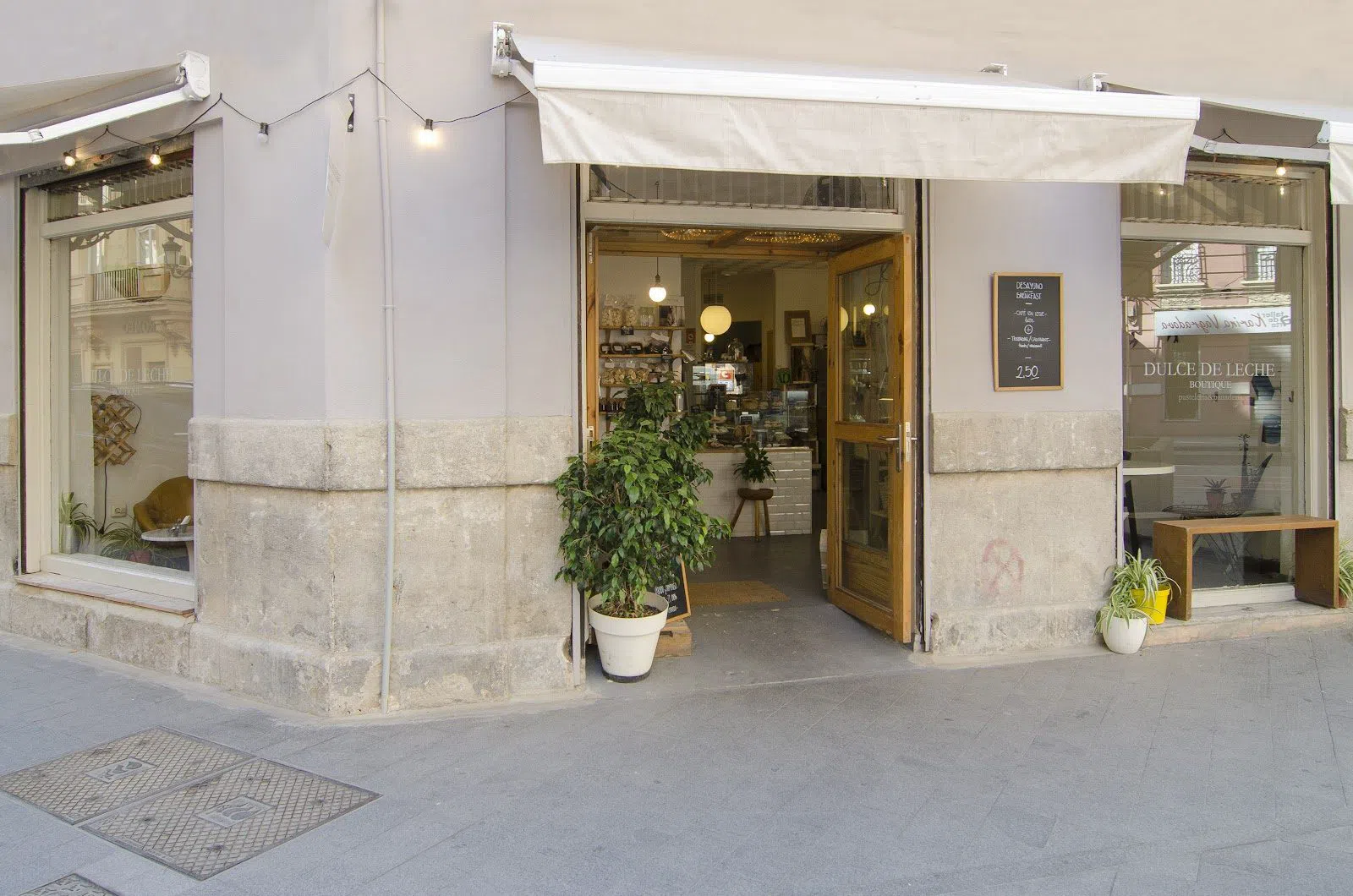
Dulce de Leche (Russafa) is the barrio's default breakfast before an 11:00 start, an Argentine bakery widely credited with the best croissant in the area, €5-12 for pastry and coffee. Tables are small and there are no bookings, so a group of eight will wait at weekend brunch; the takeaway counter copes with any size. The Russafa branch closes on Tuesdays, and there is a second shop on Carrer de Sant Vicent Màrtir if you are caught out.
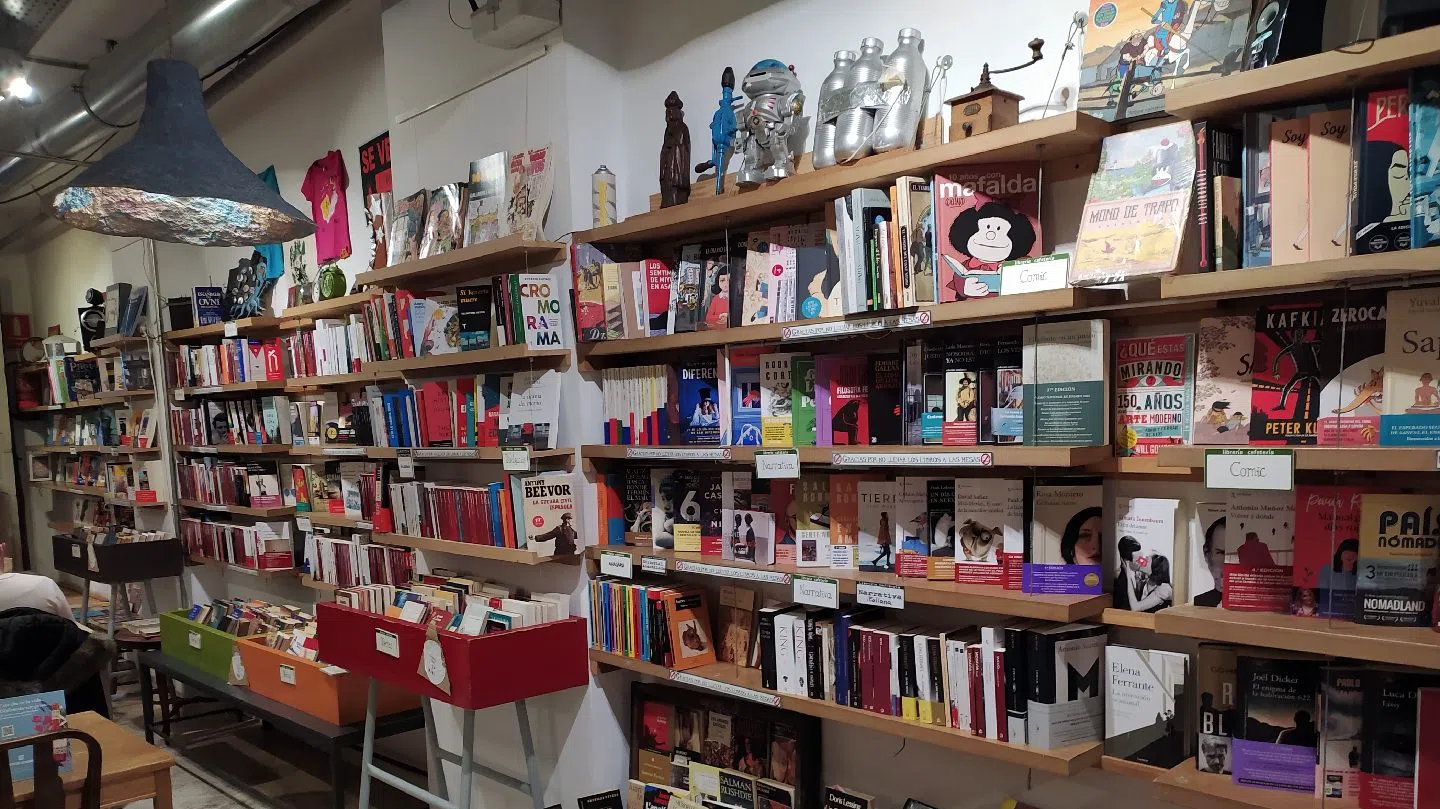
Ubik Café (Russafa) is the obvious landing spot after the 17:00 class, a bookshop café and bar two minutes from the kitchen, open until around 01:30, with concerts, a monthly reading club, language exchanges and workshops. Coffee, craft beer and light plates run €3-12. Walk-in is fine and small groups suit the long tables, but it fills for live music, so call ahead for more than six.
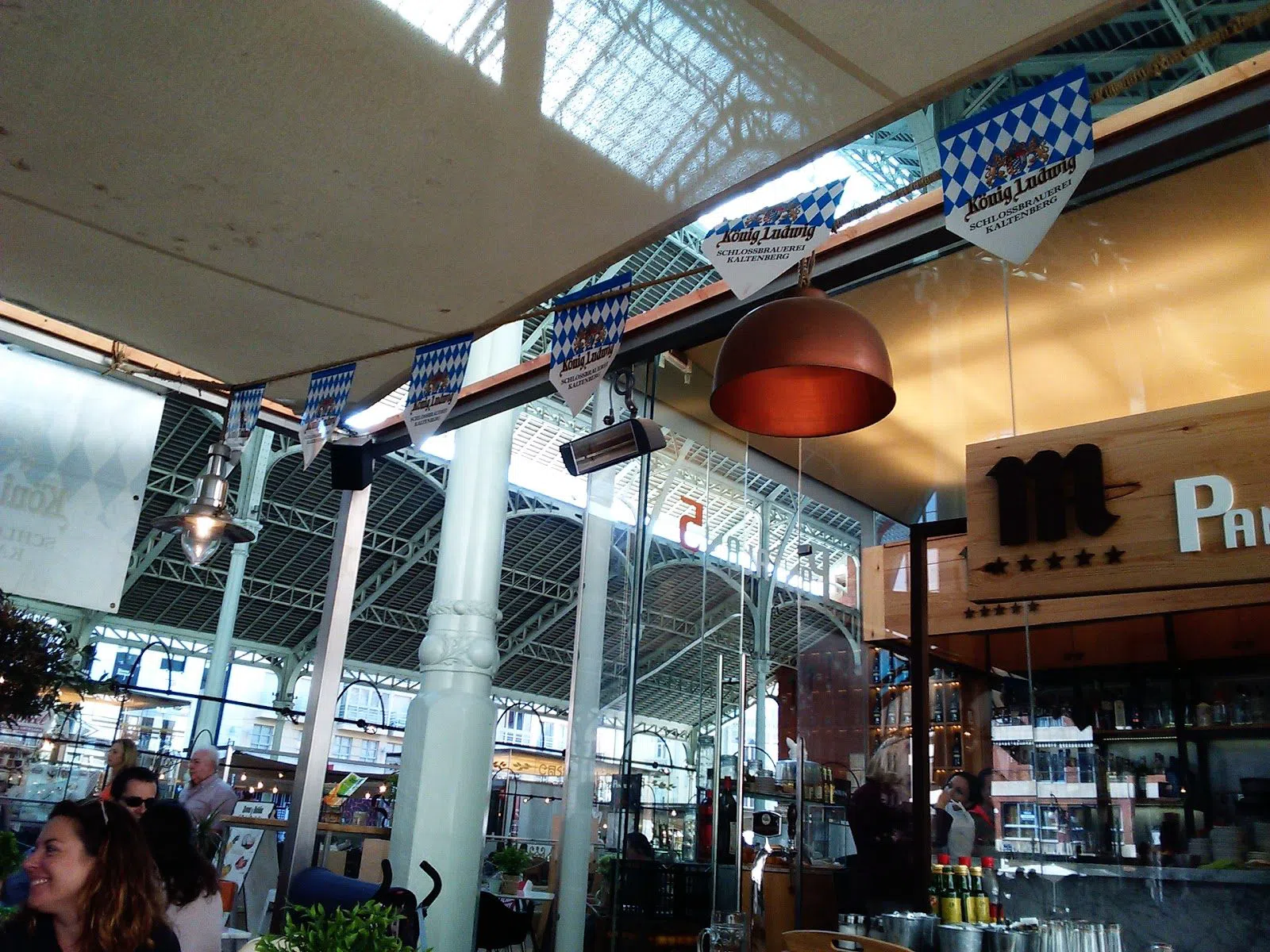
Mercado de Colón (L'Eixample) is ten minutes' walk away and open 07:30 to 02:00, 03:00 on Fridays and Saturdays, which makes it the one food destination that still works properly after an evening class. It is an open-plan hall of separate bars and terraces, so groups are easy and the individual restaurants inside take bookings. Horchata and fartons are €4-8, a sit-down meal €20-40, and both Horchatería Daniel and Casa Orxata inside pour the proper thing.
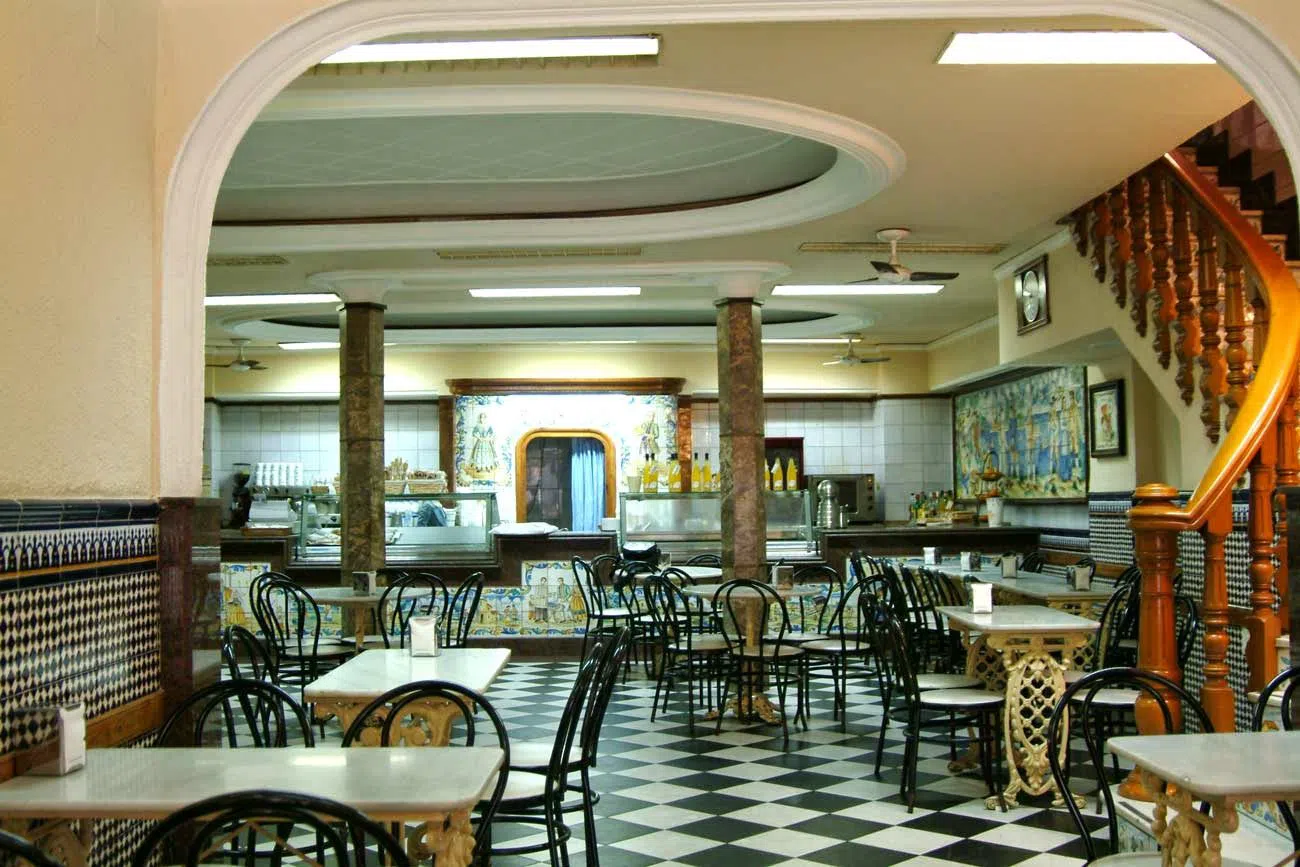
If the markets have shut, Horchatería Santa Catalina (Ciutat Vella) is the reliable fallback, open daily roughly 08:15-21:30, €5-8 for horchata with fartons. Expect to stand at the bar at weekends. Horchata is the one local drink the sangría workshop does not cover, which is reason enough to make the stop.
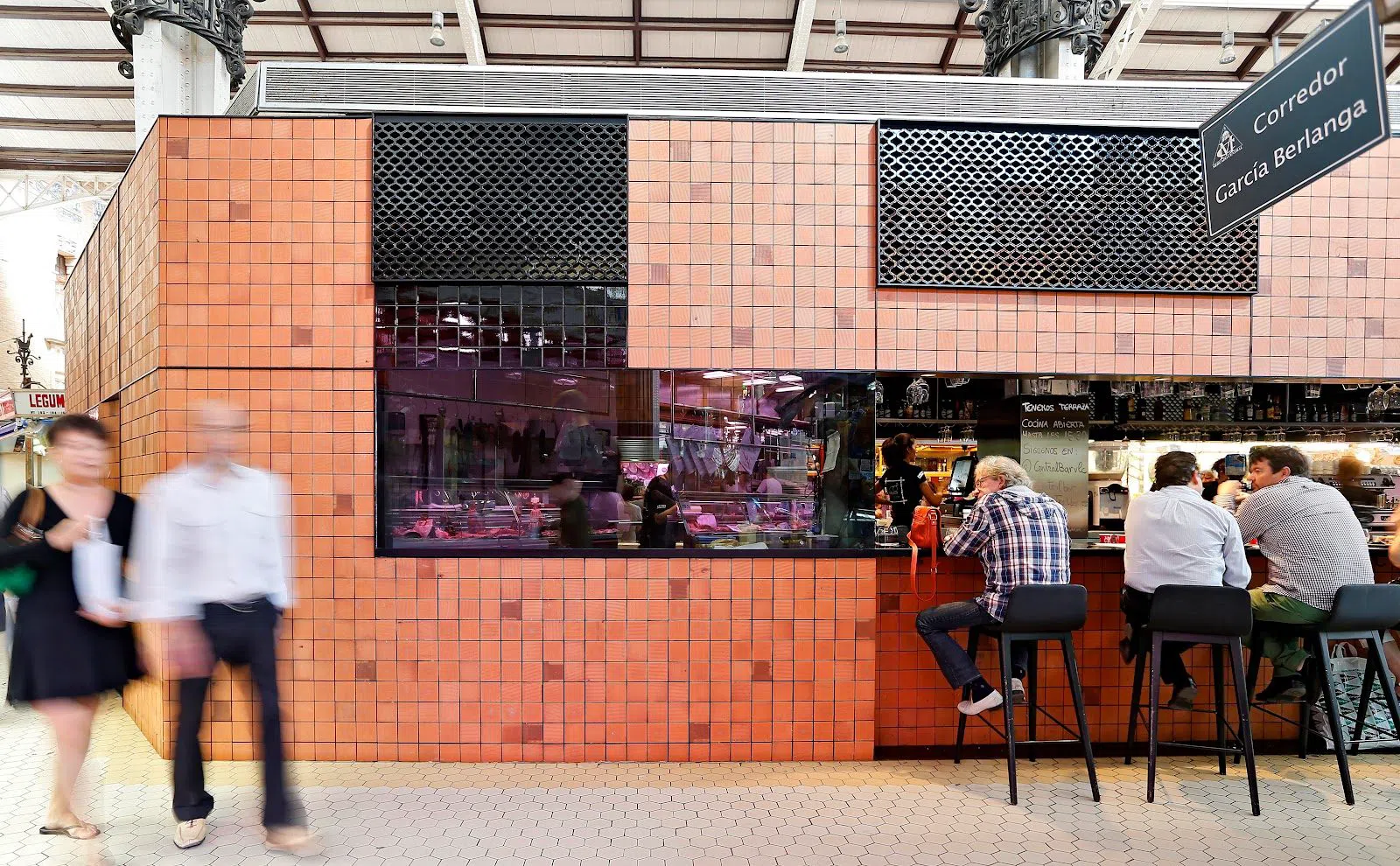
And if a morning in a market has left you wanting one more bite in the old town, Central Bar by Ricard Camarena (inside Mercat Central, Ciutat Vella) is a Michelin-starred chef's counter at market prices, open Monday to Saturday 06:00-15:30. Tapas are €3-10, a decent spread €15-25. It is counter-only with no reservations, so it works for two to four and is hopeless for a large group at peak. Go before noon.
Where to taste what you were aiming for
Casa Carmela (Malva-rosa) is the benchmark: paella over orange wood, lunch only, roughly Tuesday to Saturday 13:00-16:00, around €30-45 per person for paella and a shared starter. Groups are taken by reservation only and the paella order wants placing about 24 hours ahead; walk-ins are usually turned away. It also settles the is-it-worth-it maths in one line, because eating the real thing here costs roughly half what the class costs.
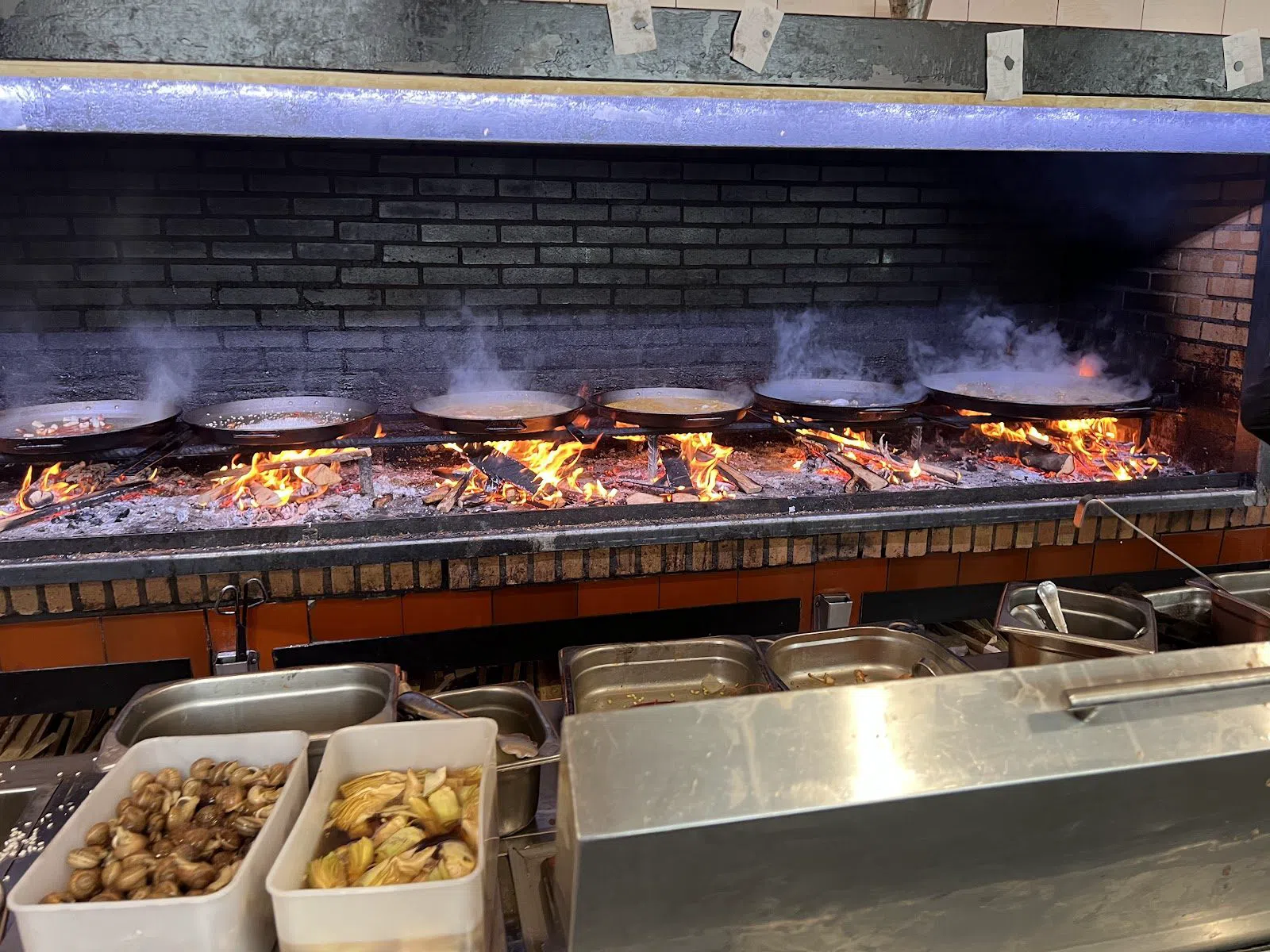
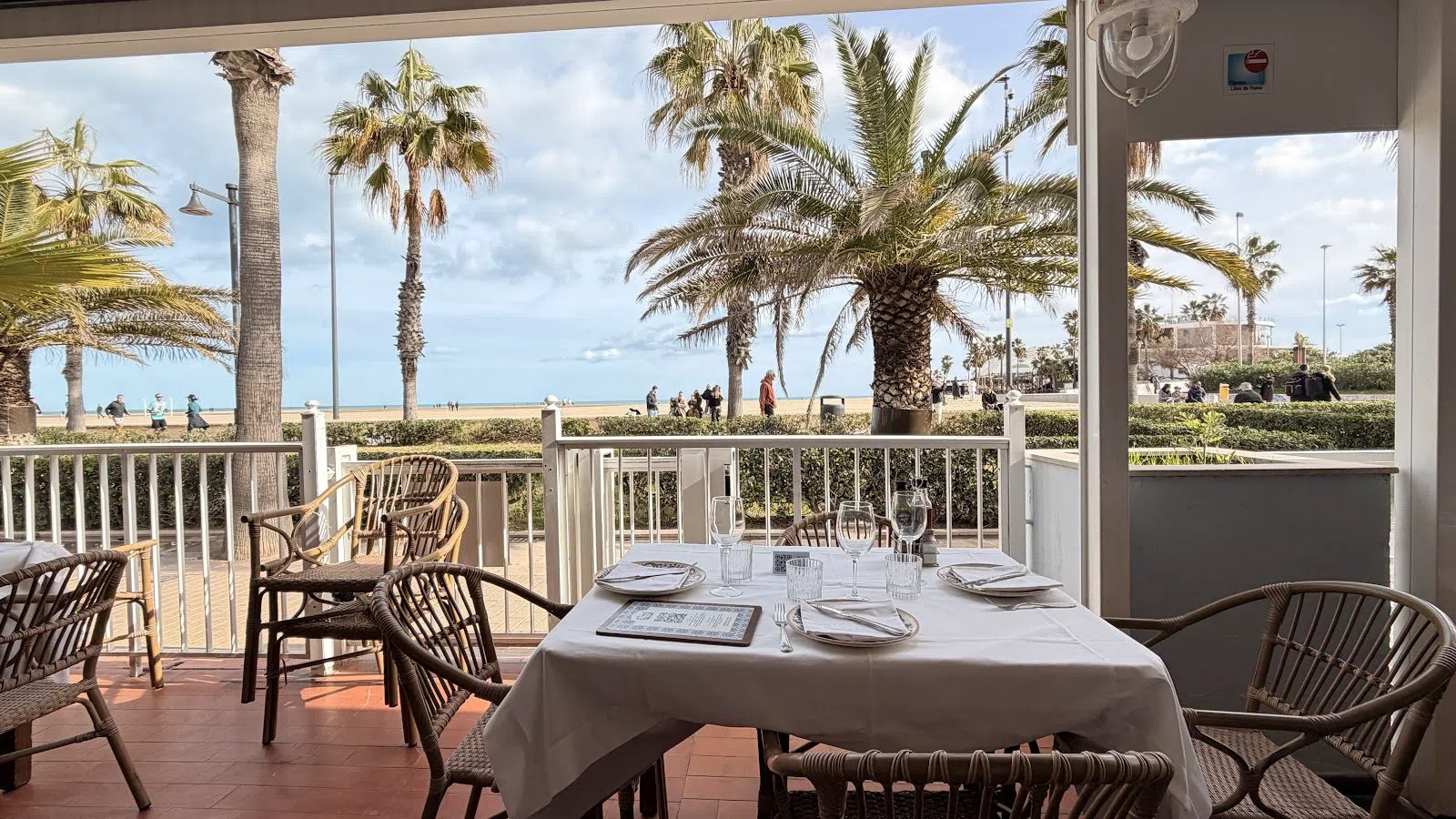
La Pepica (Les Arenes beachfront) is the famous one. Sorolla and Hemingway both ate here, and the house paella was created for Sorolla's table. It is large and group-friendly, takes coach parties and big tables, and runs both services, 13:00-16:00 and 19:30-23:00, a little earlier at weekends. That evening service makes it the rare paella house that survives a 17:00 class. Book ahead in summer; €30-50 per person.
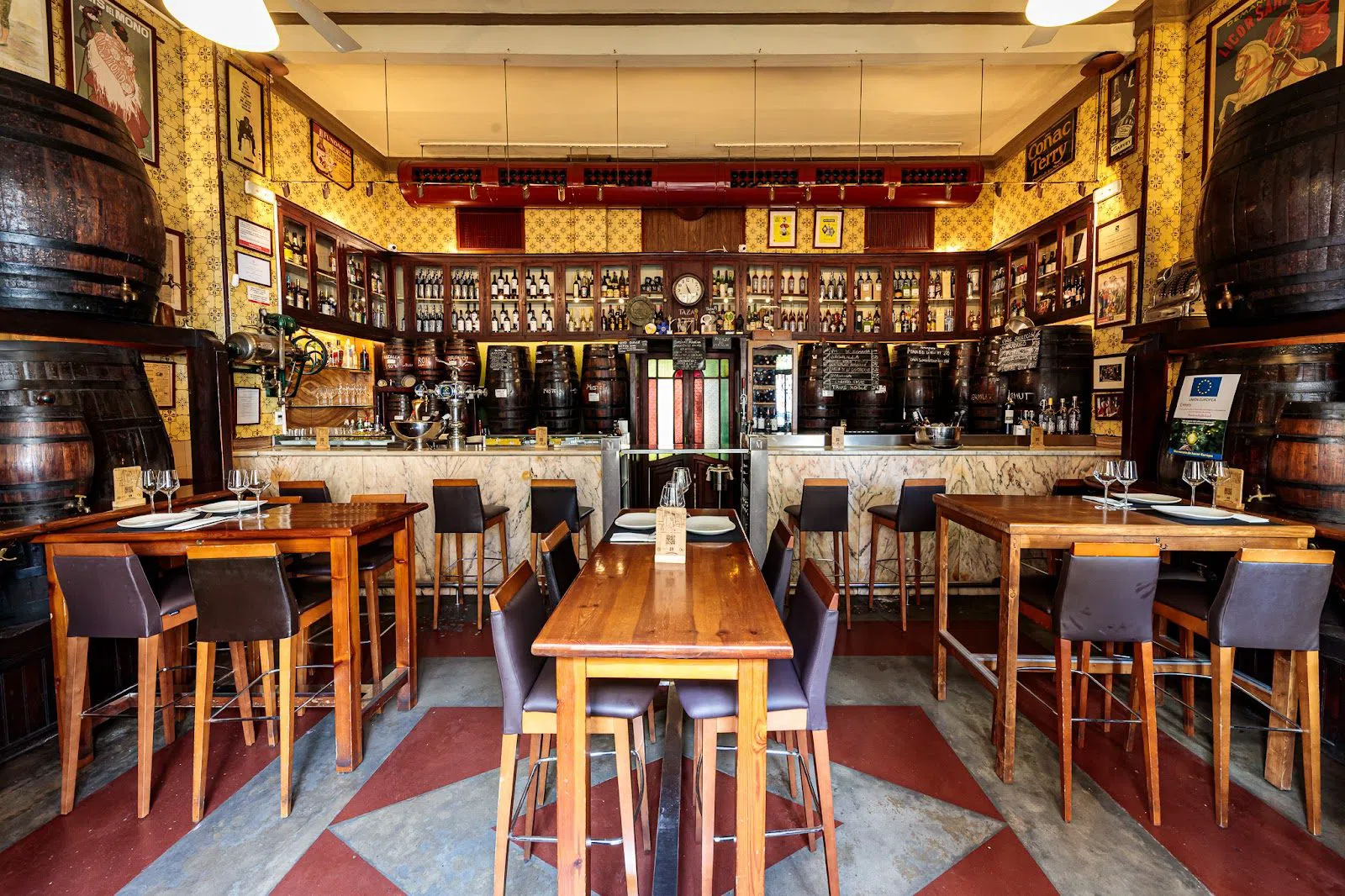
Bodega Casa Montaña (El Cabanyal) has been trading since 1836 and is the city's best wine-and-tapas counter, kitchen roughly 12:30-16:00 and 19:30 to midnight, closed Sunday evening, €25-45 per person. Groups are taken by reservation and there are private rooms, but the front bar is tight, so two at the counter is the ideal shape here.
Going further back than the market
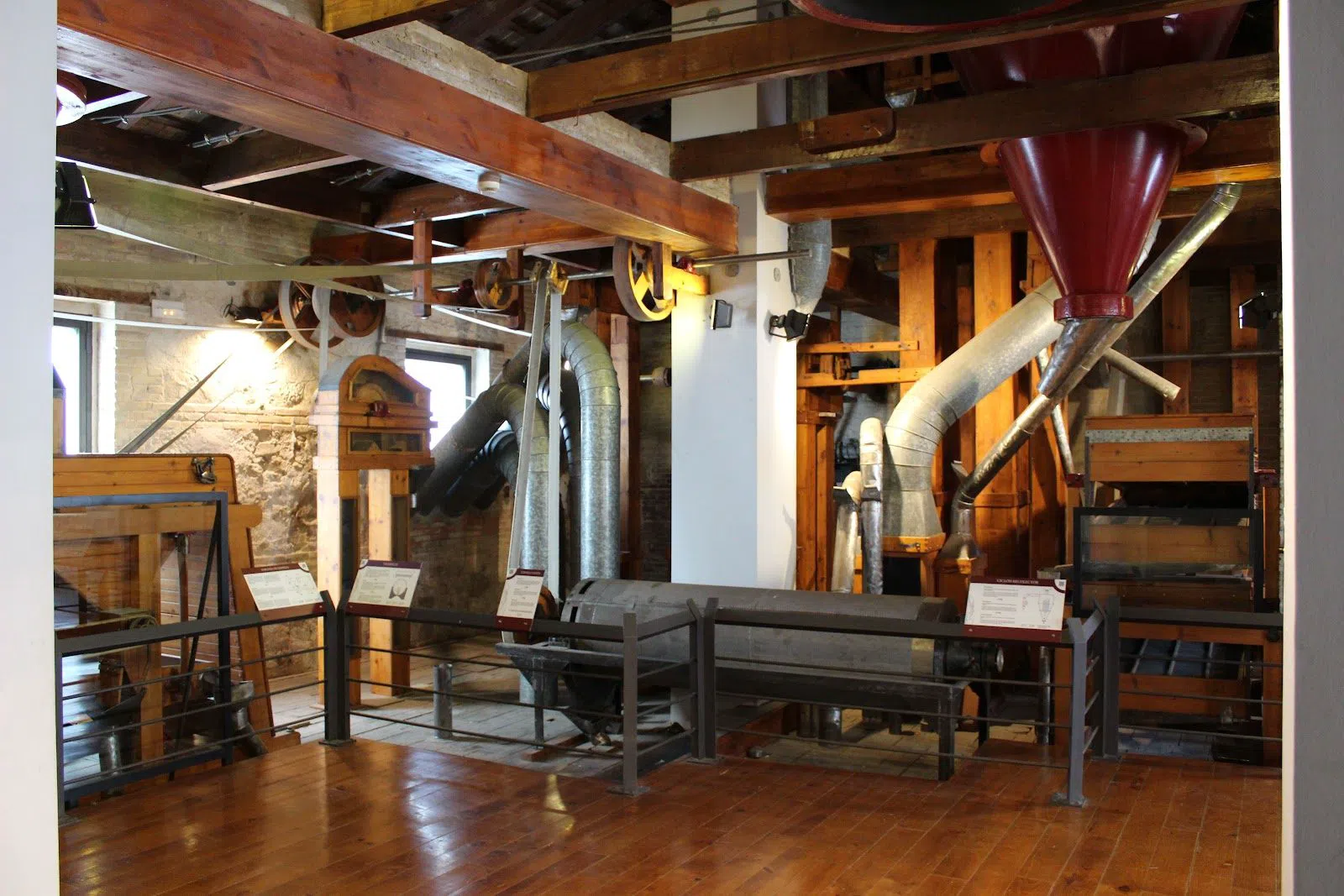
Museu de l'Arròs (El Cabanyal) explains why this city cooks rice at all, housed in a working mill rather than a display case. Carrer del Rosario 3, a couple of euros, twenty minutes is enough. Open Tuesday to Saturday 10:00-14:00 and 15:00-19:00, Sundays and holidays 10:00-14:00, closed Mondays and on 1 and 6 January, 1 May and 25 December. Guided groups of up to about 20 fit; bigger parties get split. It pairs neatly with lunch or tapas in the same district.

El Palmar (Albufera Natural Park) is where the rice actually comes from, and the honest all-in half-day for anyone who wants paella's landscape as well as its recipe. Bus 24 or 25 from Xàtiva costs about €1.50, shared boats take roughly 30 people with no booking needed for daytime departures, and a 30-45 minute ride across the lagoon is €5-8. Paella lunch in the village runs €20-30. Watch the window: the kitchens here are effectively lunch-only, about 13:00-15:30, and they stop when the paella runs out. Do this on a different day from the class, because a morning class ending at 14:30 cannot also make lunch on the lagoon, and sunset boats fill up.
If your date is already gone
Escuela de Arroces y Paella Valenciana (Ciutat Vella) is the straight alternative rather than a variant of the same product, a separate long-established school in the old town that shops at Mercat Central instead of Russafa. It runs three sessions a day, with the 10:00 one including the market visit, and is explicitly set up for groups: friends' trips, stag and hen parties, families and corporate team-building. Roughly €70-100 per person depending on the class; confirm the detail direct.
Is it worth it
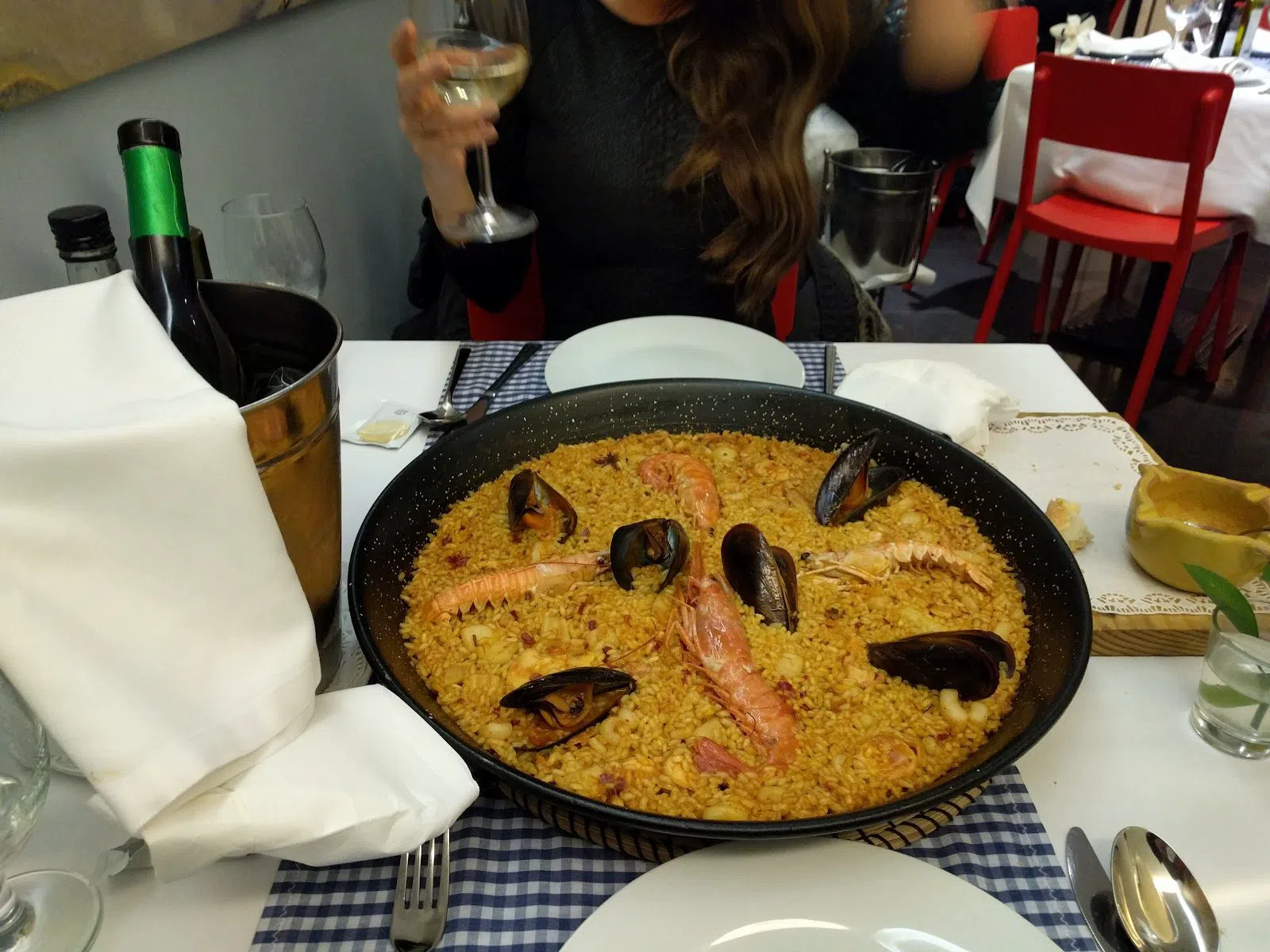
Yes, with one condition: book the sitting that includes the market. The class is good value against a restaurant meal only if you count the lesson as the product, because the food itself costs about half as much eaten properly at a wood-fired paella house. What you are buying is three and a half hours of competence (the rice, the stock, the crust, the no-stirring rule), plus a market walk through a neighbourhood most visitors never shop in, and a drink you can make at home.
It suits curious cooks, couples who would rather do something than queue for something, and families with children old enough to chop. It is wrong for anyone who mainly wants to eat the best paella in the city with the least effort; that is a reservation at a wood-fired kitchen, not an apron. And it is the wrong afternoon for anyone on a tight single day who also wants the lagoon, the old town and the beach.
Best time to go
Tuesday to Friday mornings are the sweet spot: the market is working at normal pace, the aisles are passable before noon, and the class finishes in time for a slow afternoon. Saturday is the liveliest market day and the market stays open until 15:00, but it is also the busiest, so expect a denser shop. Sunday does not work at all, since the market is closed and the class runs Monday to Saturday only.
Season-wise, spring and autumn are the most comfortable, because a kitchen with several open flat burners is hard work in high summer heat. Summer is still fine if you take the 17:00 sitting and accept you will not see the market. Around public holidays, check the market calendar as well as the class calendar, since the market closes on holidays and the shop is the half that makes the morning class worth booking.
Practical notes
Russafa sits immediately south of the main railway station, so it is about ten minutes on foot from Estació del Nord and well served by metro and bus; nothing in this article needs a taxi. Mercado de Colón is a ten-minute walk, Mercat Central around twenty, the Cabanyal addresses and the beach paella houses a short tram or bus ride, and El Palmar is bus 24 or 25 from Xàtiva for about €1.50.
Carry some cash. Market stalls are the one place in a modern city centre where small notes still move faster than a card, and the municipal museum entry is a couple of euros. For timing, work backwards from the sitting: breakfast in Russafa by 10:00, church square by 10:50, class 11:00-14:30.
On budget, a realistic food-and-class day is €65-75 for the class itself, €5-12 for breakfast beforehand, and €5-8 for horchata later, then €30-50 if you add a proper paella lunch at a wood-fired restaurant on a different day for comparison. Stay in Russafa or neighbouring L'Eixample to walk to everything above; compare rates with a Valencia hotel search, and for the rest of the city, beaches, old town and the lagoon, see the full Valencia guide.
Before you go
Which sitting includes the market visit?
Only the 11:00 one. The class runs at 11:00 and 17:00, but Mercat de Russafa closes at 14:00 on weekdays (15:00 on Saturday), so the afternoon sitting goes straight to the kitchen on Carrer del Penyagolosa 5. Book the morning slot if the market shop is the reason you are going.
Can I just turn up, or do I need to book ahead?
Book ahead. Places are limited and the class is scheduled, so you cannot turn up at a door or buy on the spot at a ticket window. Some departures are already fully sold out on 12, 13, 14, 21, 22 and 24 October 2026 and seven further dates; other dates are still bookable.
Does it work for vegans, vegetarians or families with children?
Yes. The school teaches a fully vegan vegetable paella alongside the Valencian chicken-and-rabbit original and a seafood version, so vegans cook a proper recipe of their own instead of a side plate. Flag dietary needs when you book. Families are taken, including private groups, and recent accounts include a family of six in one class. It suits children old enough to stand at a counter and chop.
Is the class better value than just eating paella in a restaurant?
They are different purchases. The class is roughly €65 to €75 per person including the market shop, tapas, drinks, dessert, coffee and the sangría workshop; a paella over orange wood at a benchmark restaurant like Casa Carmela is about €30 to €45 per person. You are paying for the three-and-a-half-hour lesson and the market walk, not for cheaper food.
What can I do on a Sunday, when the class does not run?
The class runs Monday to Saturday and the markets are closed on Sundays, so use the day for what still opens: Horchatería Santa Catalina pours horchata daily from about 08:15 to 21:30, Mercado de Colón trades from 07:30 to 02:00, and the Rice Museum opens Sundays from 10:00 to 14:00. A boat ride and lunch at El Palmar also works, with kitchens serving roughly 13:00 to 15:30.