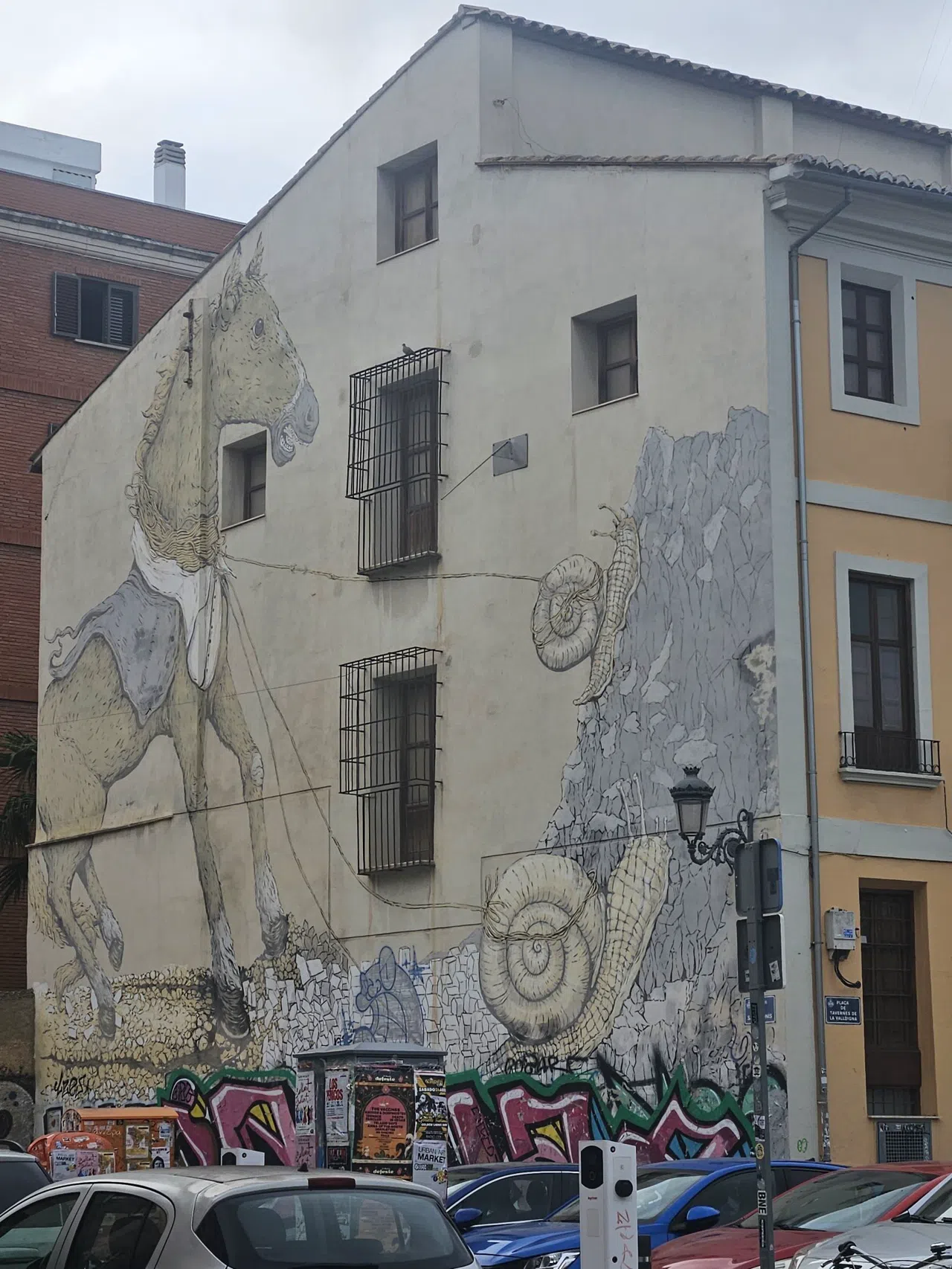

El Carmen doesn't hang its art behind glass. It's painted straight onto stone that's stood since the 14th century, up alleys too narrow for a car, on shutters that roll down every night over someone's actual shop. Turn one corner and a small cartoon ninja is watching from a doorway; turn the next and an entire five-storey wall is given over to a single image. The catch, and the thing that makes El Carmen worth a proper visit rather than a five-minute detour, is that none of it is fixed. Murals here get painted over, replaced, occasionally saved by public outcry — the version of this neighbourhood you photograph in 2026 is not the one your friend saw two years ago, and it won't be the one your friend sees in two more.
Reading the Walls: The Murals and Artists of El Carmen
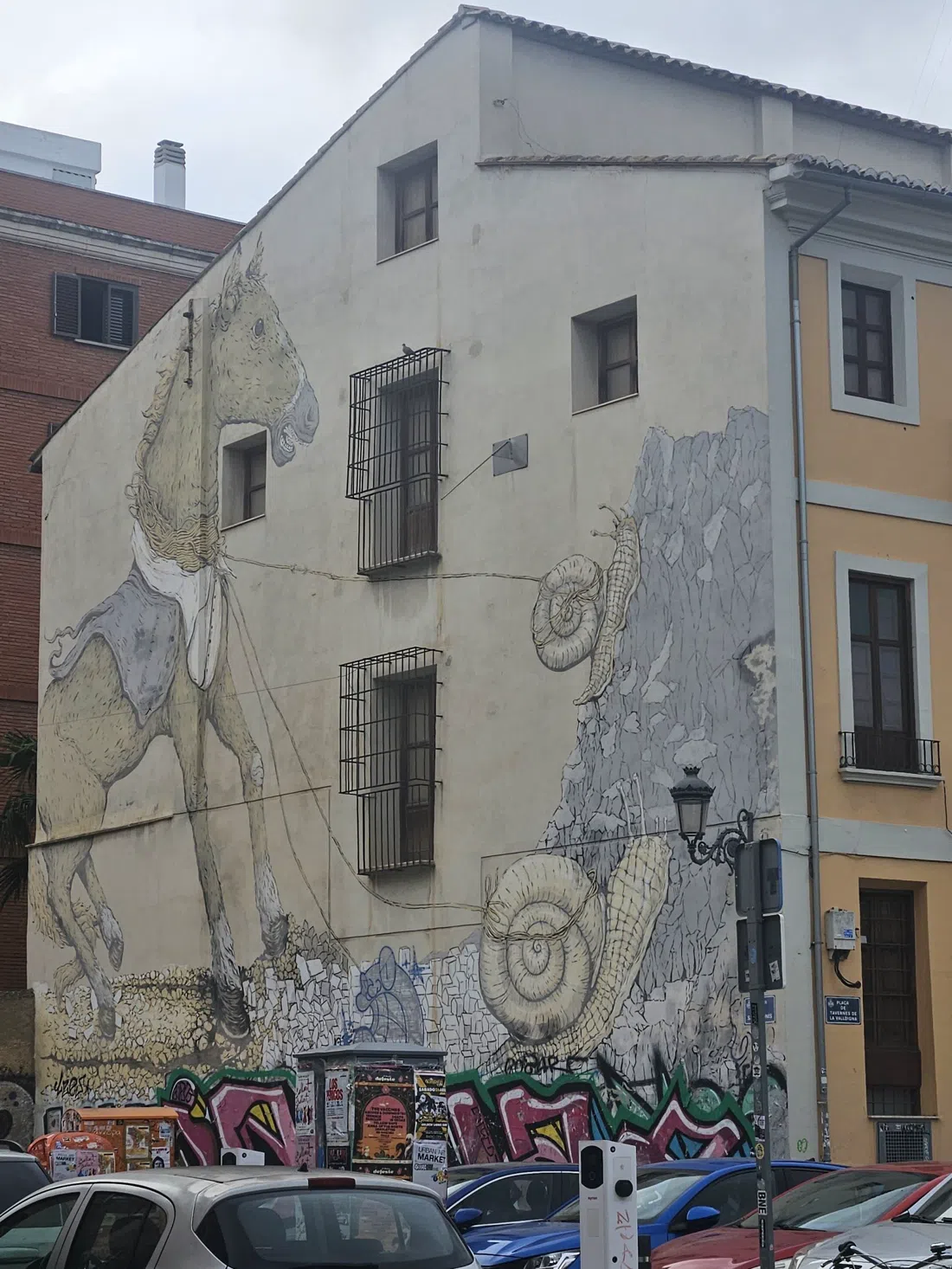
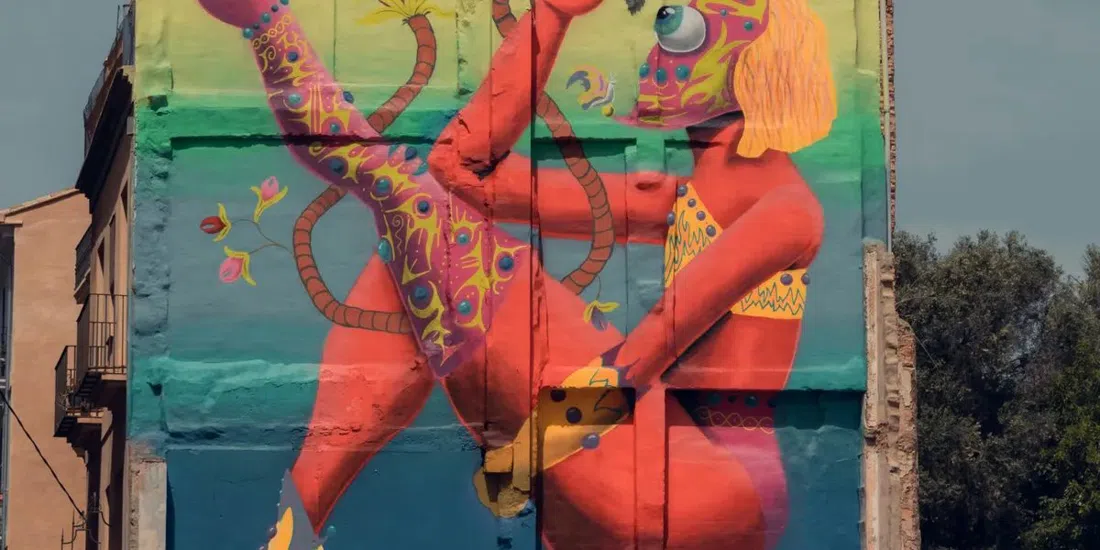
Escif (El Carmen) is the name most worth knowing before you start walking. He's Valencia's best-known conceptual muralist, and unlike destinations where street art calcifies into a fixed "trail," Escif treats his own work as genuinely temporary — pieces get whitewashed, replaced, sometimes fought over. In 2026 one of his murals was nearly painted over by the Diputación, the provincial council, before public pressure intervened and the piece was saved. There's no official map or booking for his work; it's free to view, works for any group size, and the honest way to find it is to walk with your head up, or let a guide who's walked the neighbourhood that week point you to whatever's current.
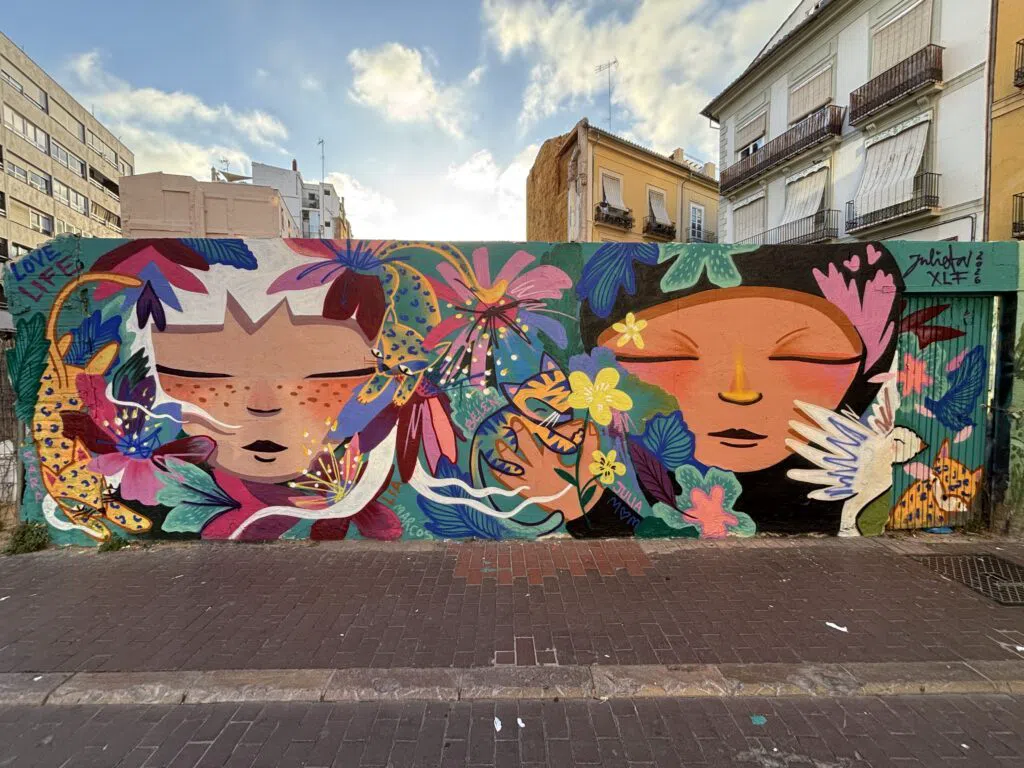
A more reliable stop for planning purposes is the Julieta XLF mural on Carrer del Moro Zeid, one of the most photographed single walls in the district. It's free, open-air, and as of 2026 still intact and undisturbed — a naive, kawaii-influenced piece that's a deliberate contrast to the heavier, more political work found elsewhere in the neighbourhood. Because it's a known fixed point rather than something that might have moved on, it's a sensible first or last stop to anchor a self-guided walk around.
Keep watching side walls and doorways as you go and you'll start spotting David de Limón's ninja trail (El Carmen) — a small, deadpan cartoon figure that's become the neighbourhood's unofficial mascot, turning up in slightly different poses street to street. Finding the variations is genuinely half the fun of walking here, and it costs nothing. If you want to go beyond spotting, David de Limón's own studio runs small-group graffiti workshops bookable through Rent Your Bike Valencia, from around €135pp — a real hands-on session with the artist himself, not a generic paint-and-sip.
For scale, nothing else in the neighbourhood touches the PichiAvo monumental murals (El Carmen) — some of their walls run past 500 square metres, and the duo remains active and exhibiting internationally, so their presence here carries weight beyond the neighbourhood itself. Because of the size, actually plan for a stop where the street opens up; these aren't pieces you can appreciate from directly underneath in a two-metre-wide lane, and cropping one into a phone photo up close does it no favours. It's free to view and works fine for larger groups as long as everyone can step back.
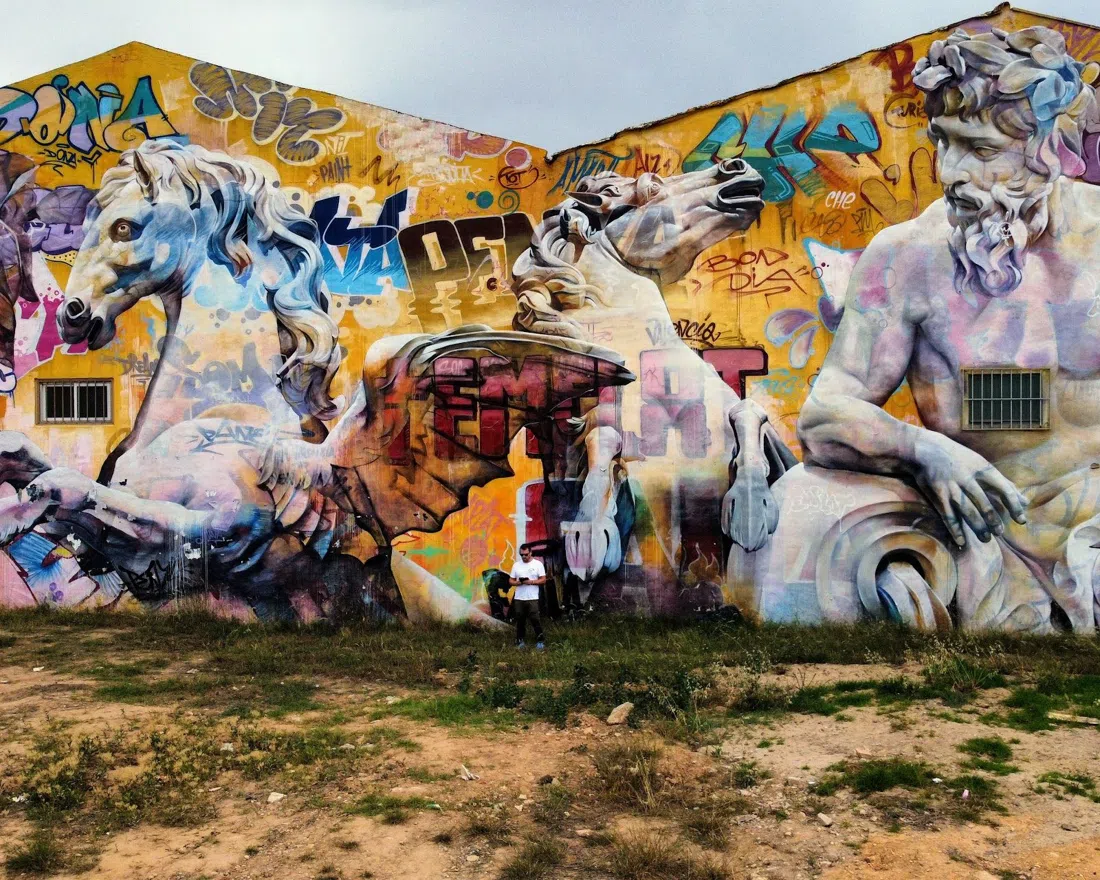
If you only have twenty minutes in El Carmen, spend them at Portal de Valldigna and Callejón de Frígola (El Carmen) — literal medieval walls, some of the oldest surviving fabric in the city, now doubling as canvas. It's free, it's an easy stop for any group size, and more than any single mural by a named artist, it's the clearest visual for what this entire neighbourhood is actually doing: using stone that predates the art form by six centuries as a live, working gallery.
Context Before the Walk: CCCC and IVAM
Worth doing before you head outside rather than after: Centre del Carme Cultura Contemporània (CCCC) (El Carmen), a former convent turned contemporary art space right in the neighbourhood, self-guided, welcoming to groups, and free to enter. It's open Tuesday to Sunday, 10:00–20:00, through 2026. Its "Principios" exhibition specifically traced the origins of the artists you're about to see on the walls outside — Escif, Deih, David de Limón, Julieta XLF, PichiAvo among them — which makes it a genuine primer rather than a museum detour tacked onto the itinerary. Give it 45 minutes to an hour.

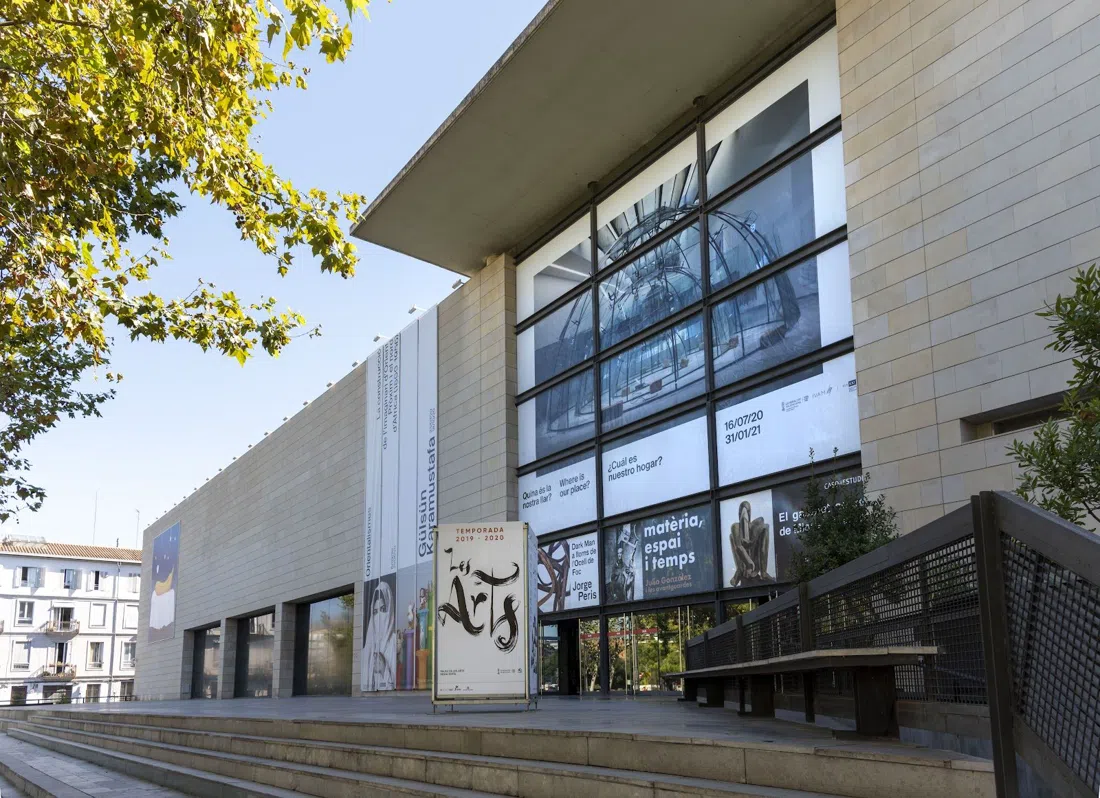
For readers who want gallery context beyond El Carmen's specific muralists, IVAM (Institut Valencià d'Art Modern) (Valencia, a short walk from El Carmen) is confirmed open Tuesday to Sunday, 10:00–19:00, in 2026, with an active exhibition program and standard museum ticketing — a modest entry fee, with concessions worth checking at the door. It's not a street-art venue, but as a bookend to an outdoor walk — somewhere quiet and air-conditioned to sit with modern art after an hour in the sun — it earns its place on a longer itinerary.
Walking It Yourself, or Booking a Guide
El Carmen's murals are free and outdoors, so nothing here requires a booking. But if you want the artist context, the ninja-spotting turned into an actual game, or simply don't want to spend an hour getting lost trying to find a wall that may or may not still be there, three operators cover different versions of the same walk.
Rent Your Bike Valencia (meeting at Pelican Bike, Carrer de l'Herba 4, on the edge of El Carmen) runs a Graffiti & Street Art Tour by bike, from around €35pp for two hours, in small groups that comfortably scale up to 10–12 people — a solid option for a larger party that wants ground covered efficiently. It's also the only operator offering the David de Limón graffiti workshop as an add-on, from around €135pp combining the workshop with the tour, and it's the one worth the upsell if your group wants a hands-on session rather than a walk-by.
For readers who'd rather stay on foot without a bike or workshop attached, Valencia Walking Tour (El Carmen) runs a straightforward Street Art Tour, capped around ten people, for roughly €33–42pp over two hours, with private group bookings available on request. It's the least complicated option on this list — no gear, no upsell, just a guided walk through the neighbourhood's key walls.
For couples or a small group of friends wanting a more personalised pace, Valencia with Koen — Street Art Experience is a private-format tour with pricing on request for group rates. Its built-in wine-and-tapas stop is worth flagging specifically: it's the natural bridge between the murals and the bar half of an evening, so if you're planning to turn the walk into a full afternoon-into-evening out, this is the operator built for that arc.
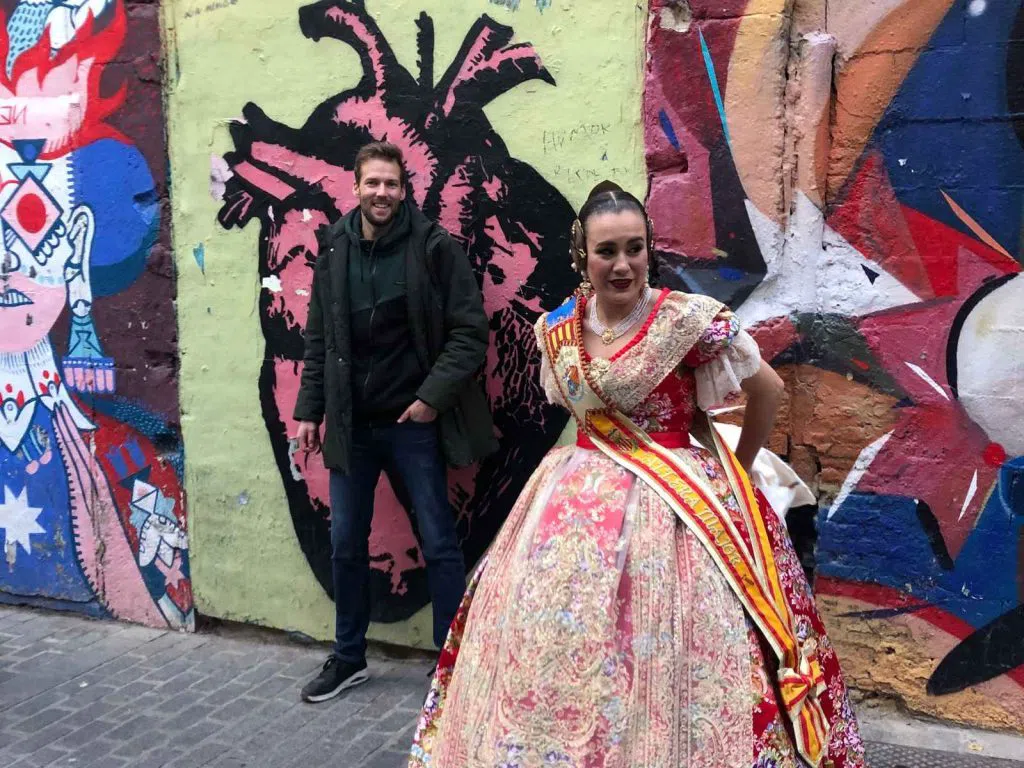
From Murals to Mojitos: El Carmen After Dark
El Carmen doesn't empty out when the light goes — the same lanes that hold the murals fill with bars by early evening, and turning a walking tour into a proper night out here is easy. Café de las Horas (El Carmen), open daily 10:00–01:30, is the classic first stop, right on the neighbourhood's doorstep — cocktails run roughly €8–12, and while it doesn't take reservations, it welcomes groups at the bar or in the lounge seating without much fuss.
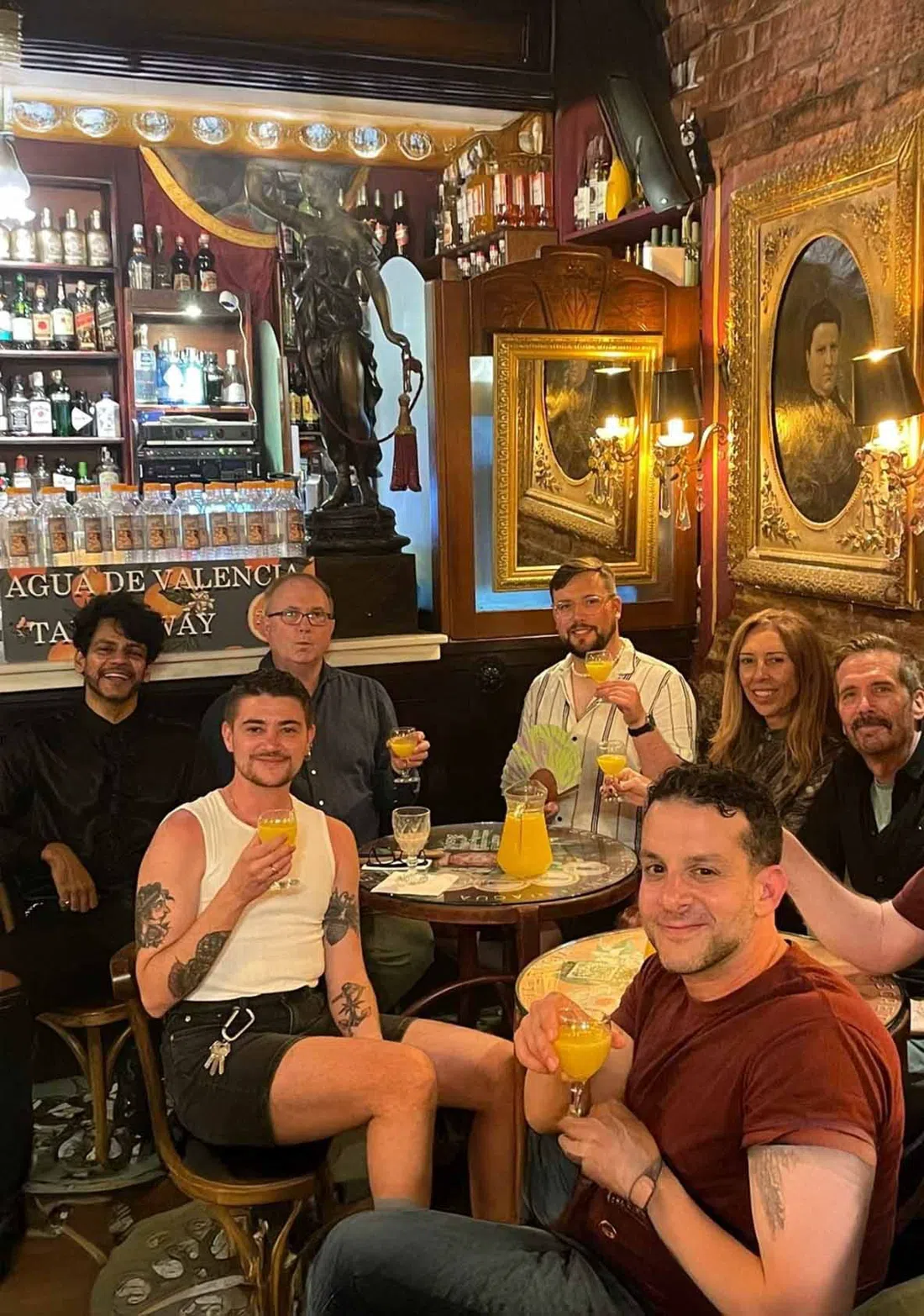
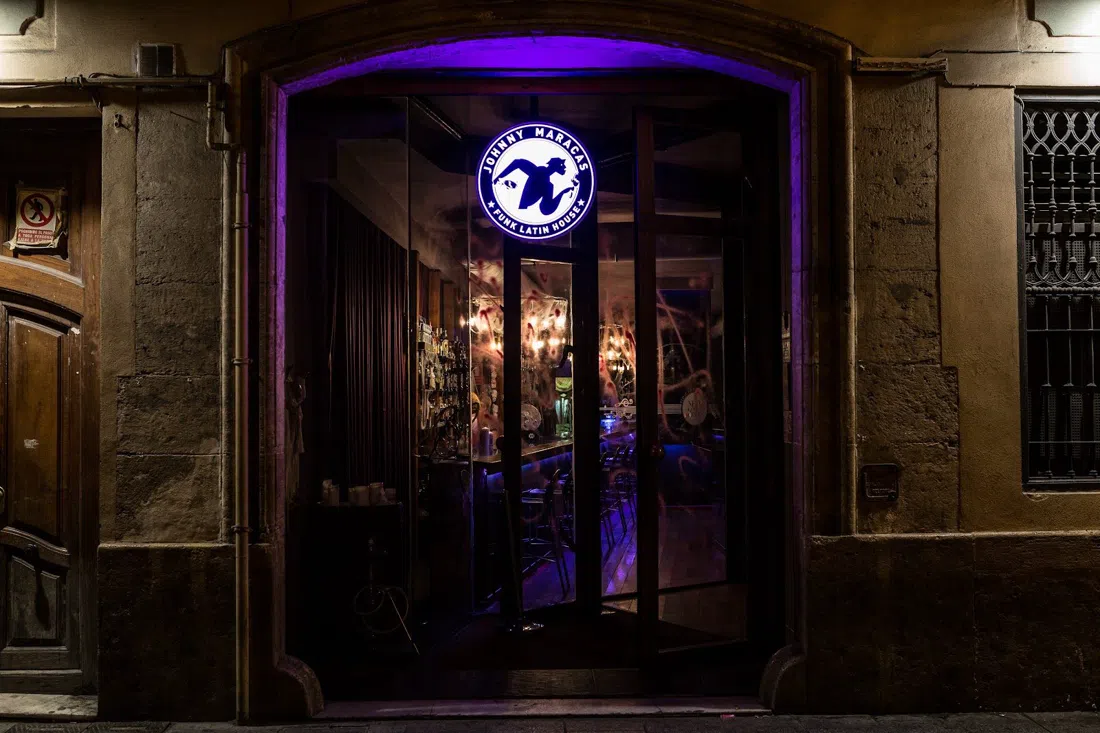
From there, Johnny Maracas (El Carmen) has been running for 33 years and is still one of the district's defining nightlife stops — cocktails €10–20. Be honest with yourself about what kind of night you want: it's built for groups standing and dancing, there are no reservations, and queues do form, so it suits a party ready to wait a bit and be on its feet rather than a quiet couple's nightcap.
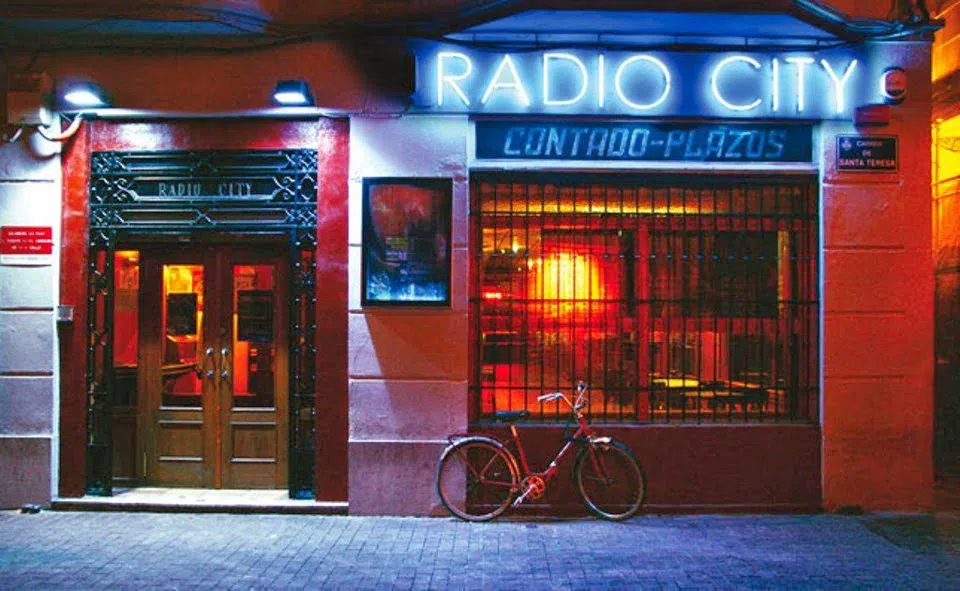
For something with more history and less queue, Radio City (El Carmen) is a standing-room bar with a live-music room attached, little to no cover most nights, and drinks in the €4–8 range. It's long been the artists' hangout in the neighbourhood, which makes it a fitting place to end a mural walk — you're finishing the evening in roughly the same rooms the people who painted the walls outside have been drinking in for years.
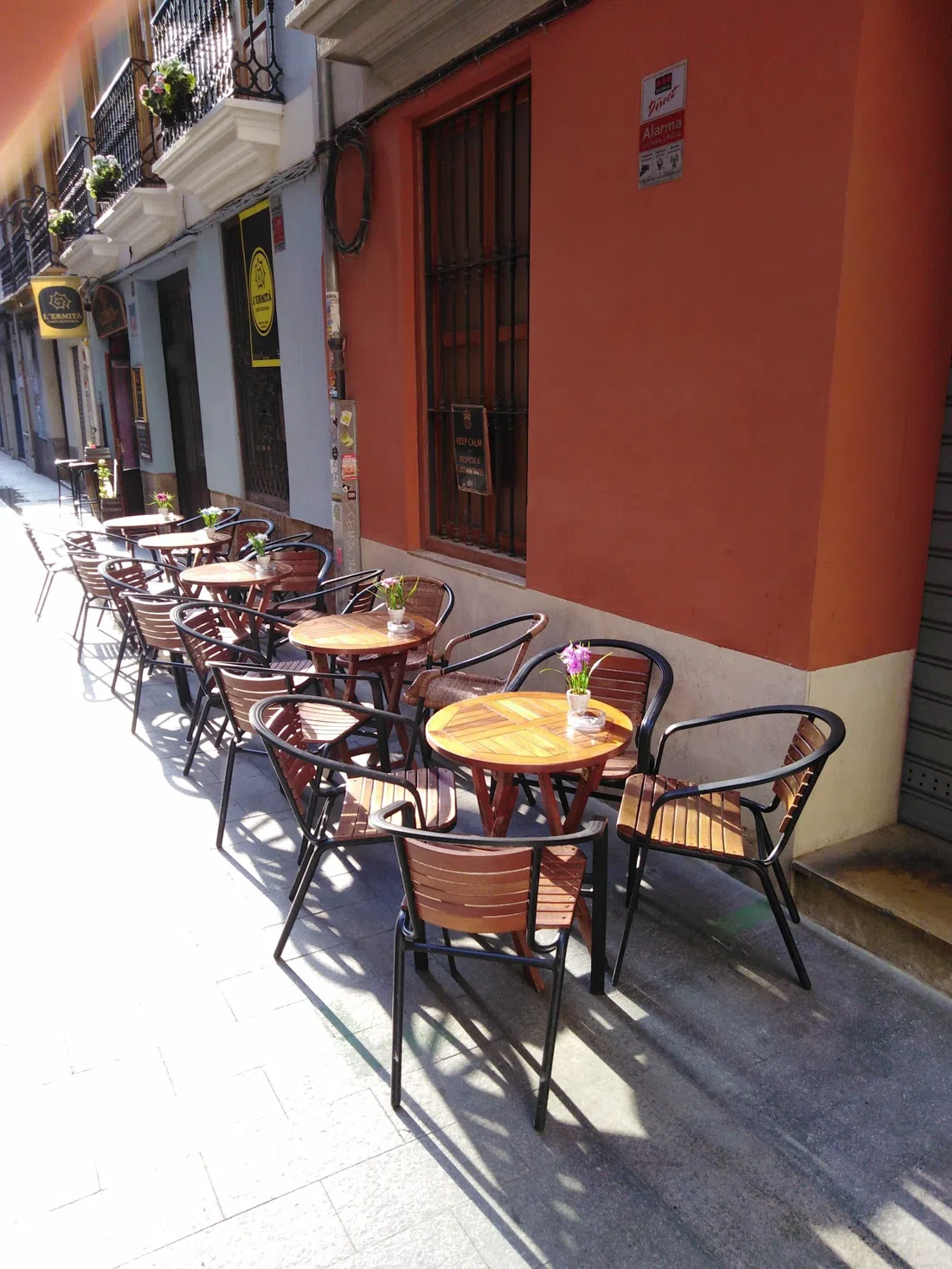
If loud isn't what you're after, L'Ermita Café Cultural (El Carmen) is the quieter alternative — beers and wine at €2–5, casual, low-key, itself a small community art space rather than a bar built for a crowd. It's the better call for a debrief after the walk with two or three people rather than a group night out.
The Practical Bit
Getting there: El Carmen sits inside Valencia's old town, within easy walking distance of the Cathedral and Plaça de l'Ajuntament. There's no need for a taxi or metro once you're in the neighbourhood — most of the stops on this walk are five to ten minutes apart on foot, and the appeal of the area is largely in the walking itself. If you're staying elsewhere in the city, sort accommodation through Valencia hotel search and plan on El Carmen being a there-and-back trip rather than somewhere you need to be based.
Cash: most bars here take cards, but El Carmen still has enough small, older-school places that a bit of cash in pocket avoids any awkwardness — nothing on this list requires it, but it's a reasonable habit in the old town generally.
Timing: late afternoon gives the best light for photographing murals without harsh shadows in the narrow lanes, and it sets you up to walk straight into the early-evening bar crawl without a gap to fill. If you're doing CCCC or IVAM first, start there in the morning and save the outdoor walk for when the heat of the day has eased.
Budget: the core experience — the murals themselves, plus CCCC — costs nothing. A guided walking tour adds roughly €33–42pp; the bike tour with the David de Limón workshop runs from around €135pp if you want to go further than looking. An evening of bars afterward, drink for drink, is as cheap or as expensive as you make it — Radio City and L'Ermita sit at €2–8 a drink, Café de las Horas and Johnny Maracas closer to €8–20.
For the rest of the city beyond this one neighbourhood, the Valencia guide covers where else to spend the trip.