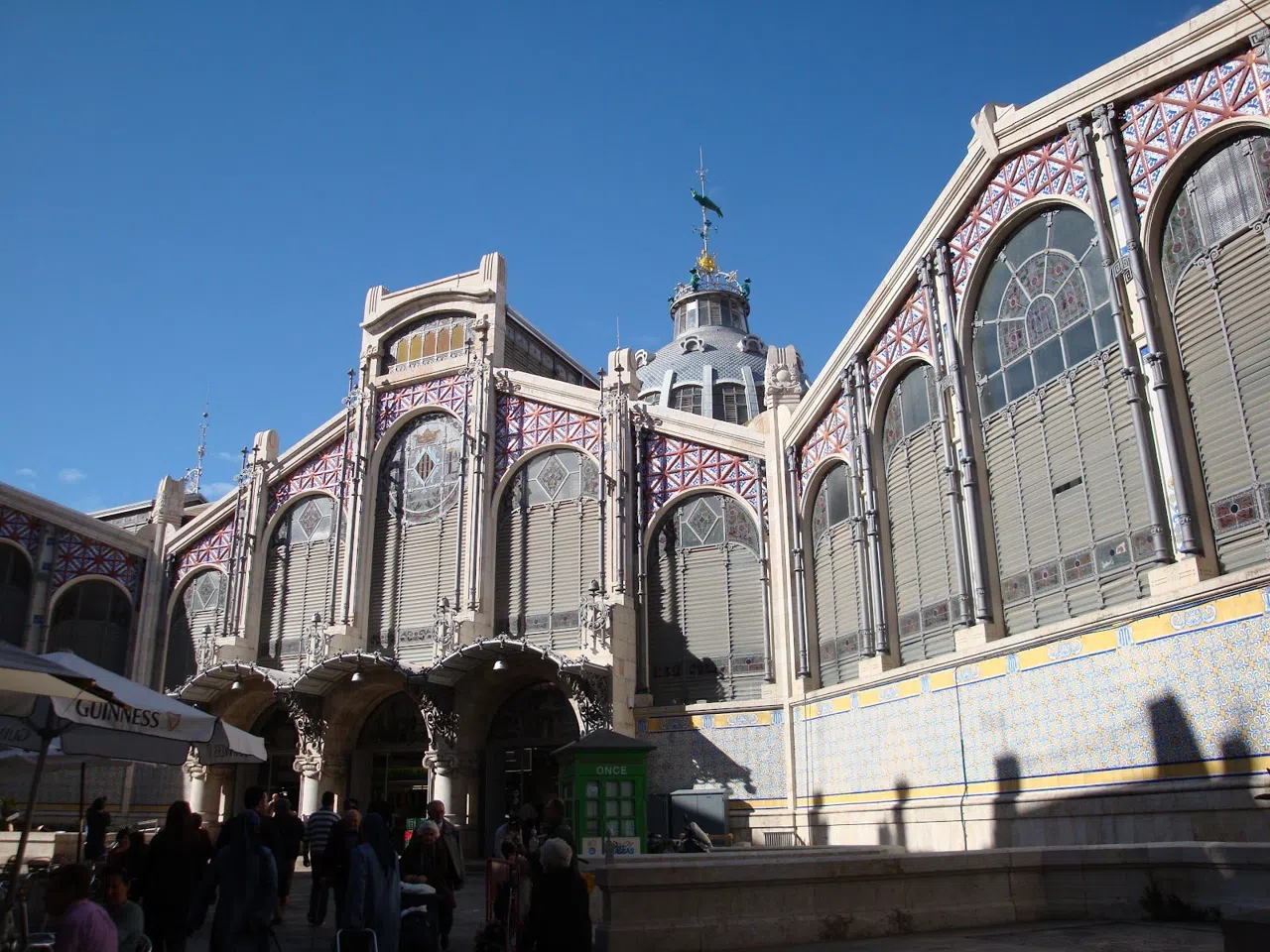
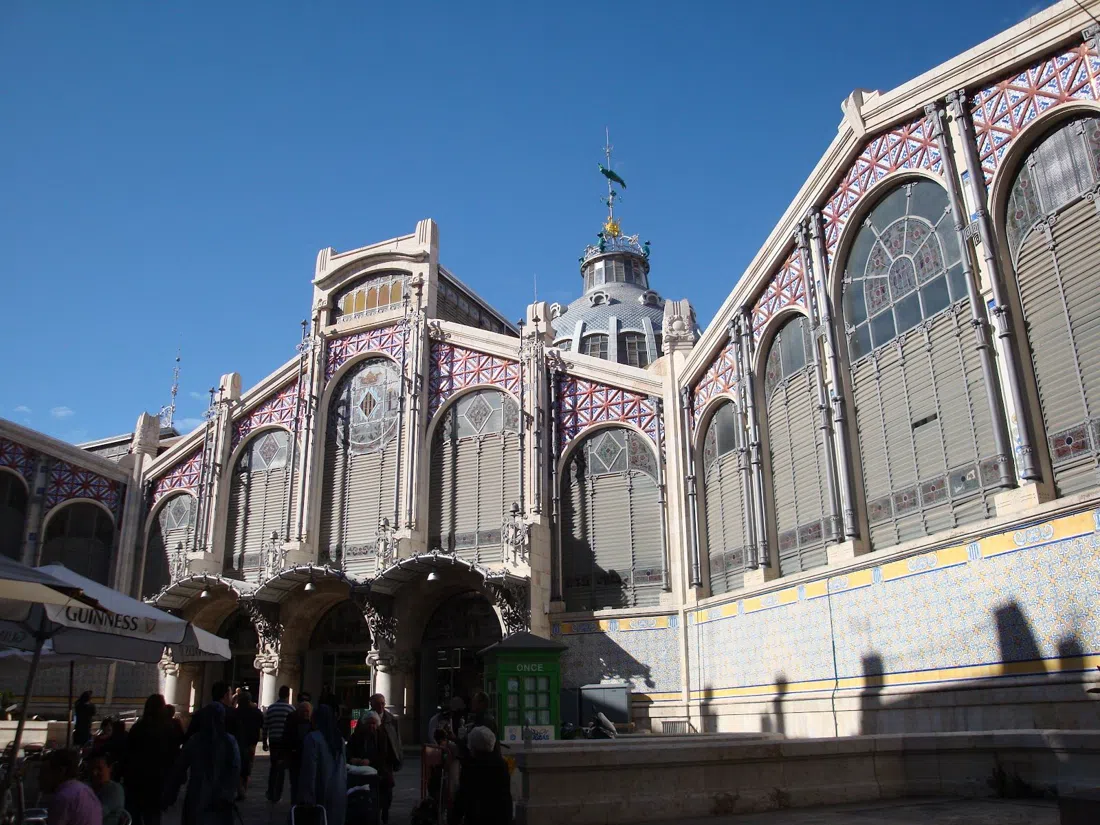
The dome goes up first, a cupola of iron ribs and glass catching the early light before you've even crossed Plaça del Mercat, and inside it the noise arrives all at once — crates dragged over tile, a knife tapping a chopping block, someone calling out that the first tomatoes of the week have just come in. By eight in the morning the trolleys are already three deep at the best stalls, and the vendors behind them are, more often than not, the grandchildren of the people who opened those same counters in 1928.
That's the thing worth understanding about the Mercat Central de València (Plaça del Mercat, Ciutat Vella) before you go looking for a single dish or a single stall: the building and the trade inside it are the same story. Inaugurated on 23 January 1928, it is one of Europe's largest covered markets still doing exactly what it was built to do — around 250 working stalls, open Monday to Saturday, 7:30am to 3pm, no ticket, no reservation, free to walk in. It isn't a museum piece dressed up for visitors. It's where a large slice of Valencia still does its actual shopping, which is precisely why the morning ritual around it has never really changed.
That ritual has a rhythm to it, and it's worth watching rather than just shopping through. The first wave, before eight, is restaurant buyers and market-bar cooks moving fast and knowing exactly which crate they want; by nine it's home cooks with their own trolleys, filling a week's menu one stall at a time; by mid-morning it's almuerzo — Valencia's mid-morning second breakfast, taken standing at a bar with a coffee or a small beer and something savoury, which is exactly what Central Bar and La Pesatería exist to serve. What ends up on a plate across the city that evening, in a restaurant or a home kitchen, was very often chosen here between 7:30am and 10am, by someone who knows the stallholder by name.
Under the dome: what the building is actually doing here
Architects Francesc Guàrdia and Alexandre Soler designed the Mercat Central as a temple to produce, and the Modernista details — the stained glass, the ceramic tile, the weathervane shaped like a partridge above the central dome — were never meant as decoration for its own sake. They were meant to flood a working market with light, because a fish stall or a butcher's counter lives or dies on whether a customer can actually see what they're buying. Nearly a century on, that logic still holds: the light pours down through leaded glass onto ranks of clementines, ñoras drying on strings, and ice-packed hake, and it's still the reason the place photographs so well without anyone having styled it.
The trade-off is that it fills up fast. Come before 11am if you want to move freely — trolleys clog the aisles hard after that, and by early afternoon several of the fish and produce stalls are already breaking down for the day, since trading stops at 3pm sharp. There's no door policy and guided food tours pass through constantly, so a group of eight wandering the aisles draws no attention at all; it's the individual counters, not the hall itself, where space runs out.
The counters that have stayed in the family
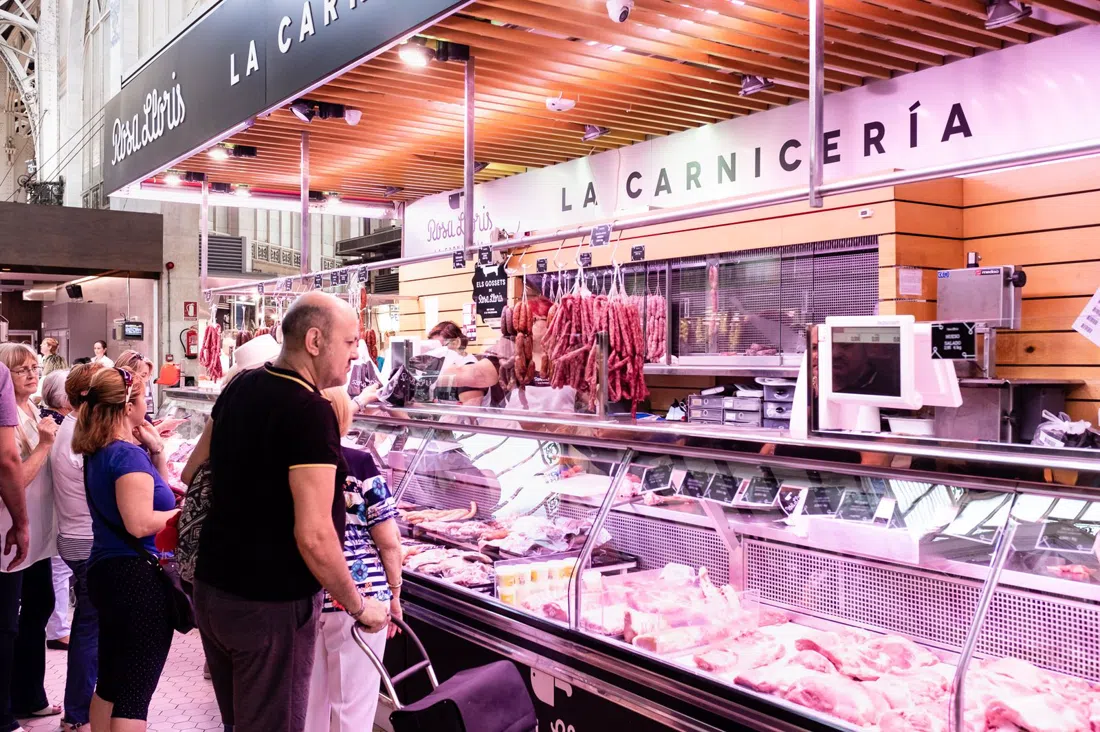
Ask any stallholder how long they've been trading and the answer tends to come with a name attached — a grandfather, a mother, a shop that moved in on opening day and simply never left. Rosa Lloris (interior counter, ground floor) is the clearest version of that story: a butcher's business founded in the Carmen barrio in 1925, three years before the market itself opened, which then moved onto this counter at the 1928 inauguration and has been run by the same family ever since — third generation now behind the block. It's counter service only, no seating, but the staff will talk a large or catering order through cut by cut if you ask, which is worth doing if you actually want to understand what you're looking at rather than just point.
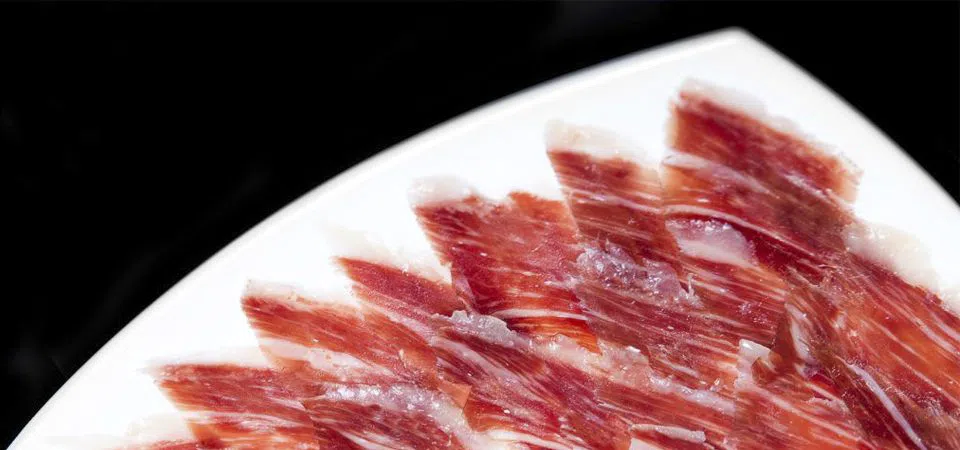
A few aisles over, Charcutería Lázaro Fernández has been slicing ham and cutting cheese inside the market for close to ninety years, and it's the stall to watch if you want the visual every food-hall piece needs: a leg of bellota ham on a jamonera, hand-carved to order and sold by the 100g at gourmet prices that reflect the acorn-fed pig behind them, not market inflation. There's no dedicated group area, but for smaller parties they'll put together a tasting board on request — worth arranging a few minutes ahead if you're four or more, since it's still a working counter with a queue behind you.
Neither stall performs "heritage" for the cameras. They just keep showing up, which is a more honest definition of the word than most guides bother to check.
Where the produce becomes the plate, ten feet away
The single clearest link between the market's produce and what Valencia actually eats is Central Bar by Ricard Camarena (inside the market, ground floor), the almuerzo counter run by the Michelin-starred chef whose flagship restaurant sits elsewhere in the city. Central Bar takes what's sold at the stalls a few metres away and turns it into that day's tapas — bocadillos at €5-6, oysters and small plates at €3-8, mains under €35 — served standing at a market-floor bar with no reservations for groups and no seating to speak of. Peak almuerzo hours, roughly 10am to 1pm, are properly busy; it's a counter built for elbow-room dining, not a lingering lunch, and it suits solo diners and pairs far better than large parties who want to sit together.
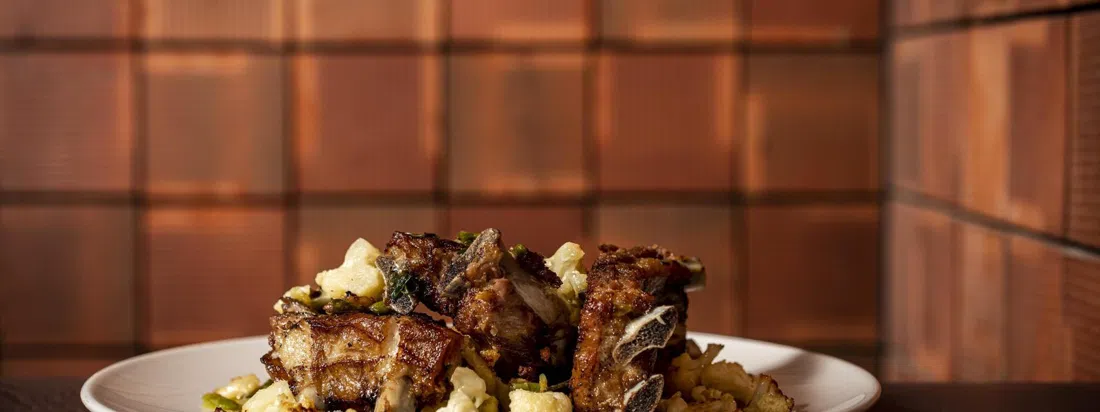
For a straight seafood stop, La Pesatería (interior counter) is the market's go-to oyster bar — stand-up, informal, fine for a loose group of friends but not bookable, and busiest before 1pm same as everywhere else selling fish here. Oysters and tapas run €3-8, and pairing it with Central Bar a few stalls down makes a genuine graze-the-market lunch: a plate here, a plate there, standing the whole way through, which is exactly how a lot of Valencians actually eat almuerzo before a working day.
The stops that give the market its smell
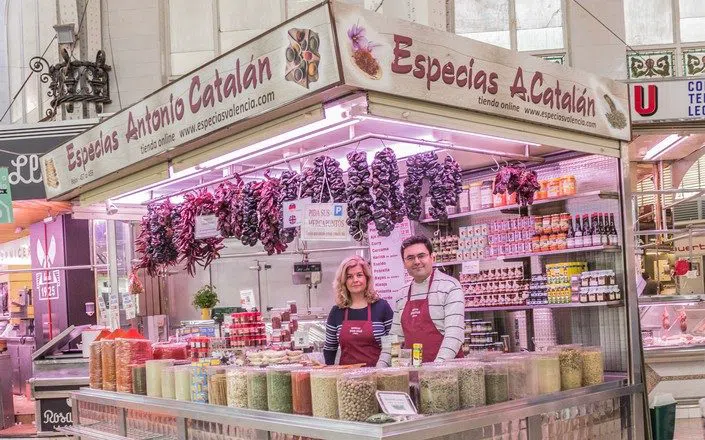
Two counters do more for the sensory experience of the Mercat Central than their footprint suggests. Especias Antonio Catalán (interior stall) is a small, third-generation spice counter selling from a 100g minimum — the saffron threads, smoked paprika and dried ñoras that anchor most Valencian cooking, and the reason the aisles near it smell the way they do. It's a quick stop, no seating, good for a guided tour pausing thirty seconds rather than a browse.
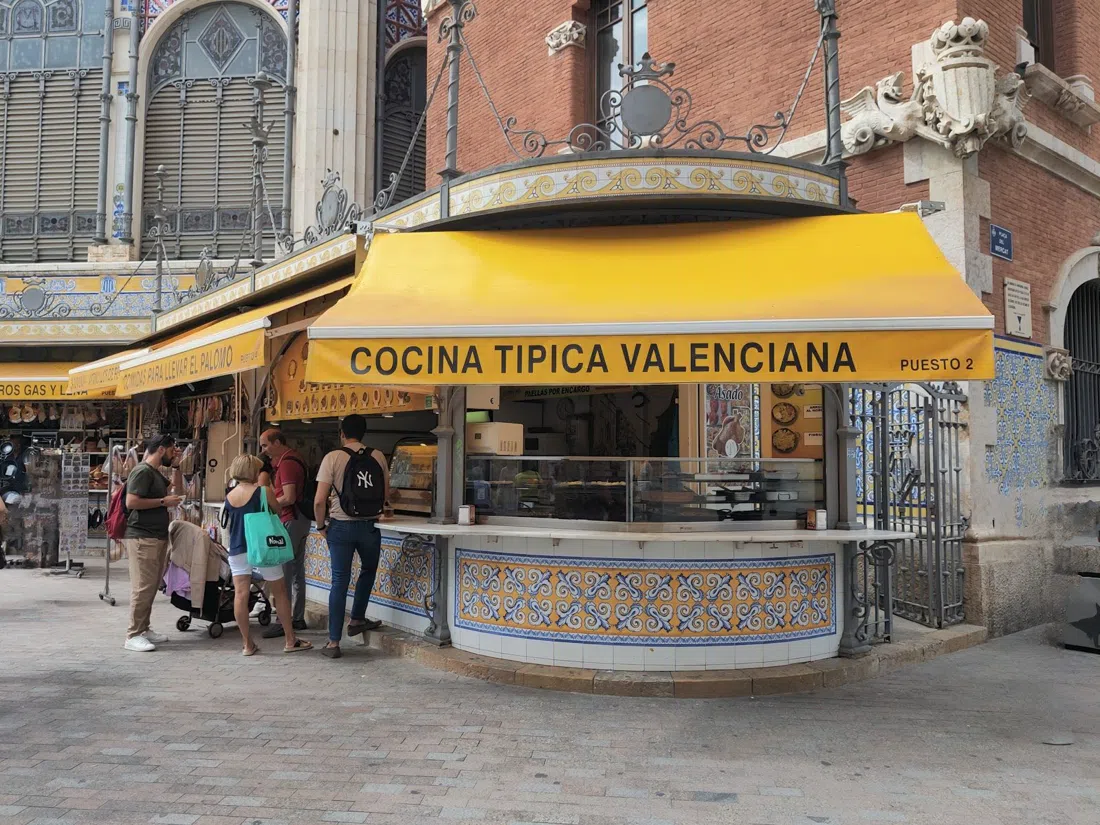
Near the market's exterior door, Frutos Secos Merche has been trading nuts, dried fruit and turrón since 1957 — a grab-and-go counter sold by weight, and close to a mandatory stop for arrop i tallaetes (the pumpkin preserve and candied sweet potato pairing particular to Valencia) and other local sweets that don't travel much beyond the region. It's the easiest stall in the market for a group to hit without disrupting anyone, since there's no counter service to queue for beyond weighing and paying.
Two markets, two different Valencias
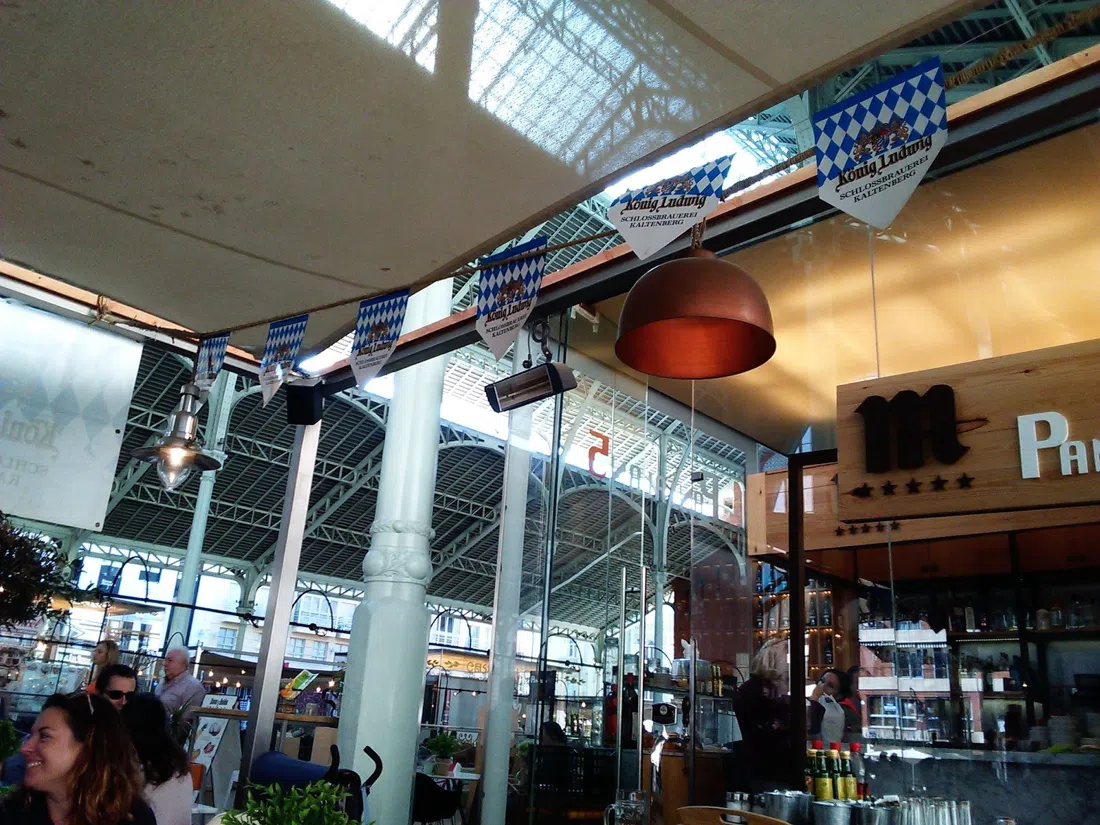
It's worth understanding what the Mercat Central isn't, and the clearest way to see that is against its own comparisons. Mercado de Colón (Eixample), Valencia's other great Modernista market hall, is worth the walk for the architecture alone but tells a different story now — it's a restaurant-format food hall today, boutiques and sit-down dining rather than working produce stalls, easy for groups, no door policy, mid-range prices. It sharpens exactly what makes the Mercat Central distinct: Colón sells you a nice afternoon; the Mercat Central sells you dinner, via a stallholder who'll remember your face by the third visit.
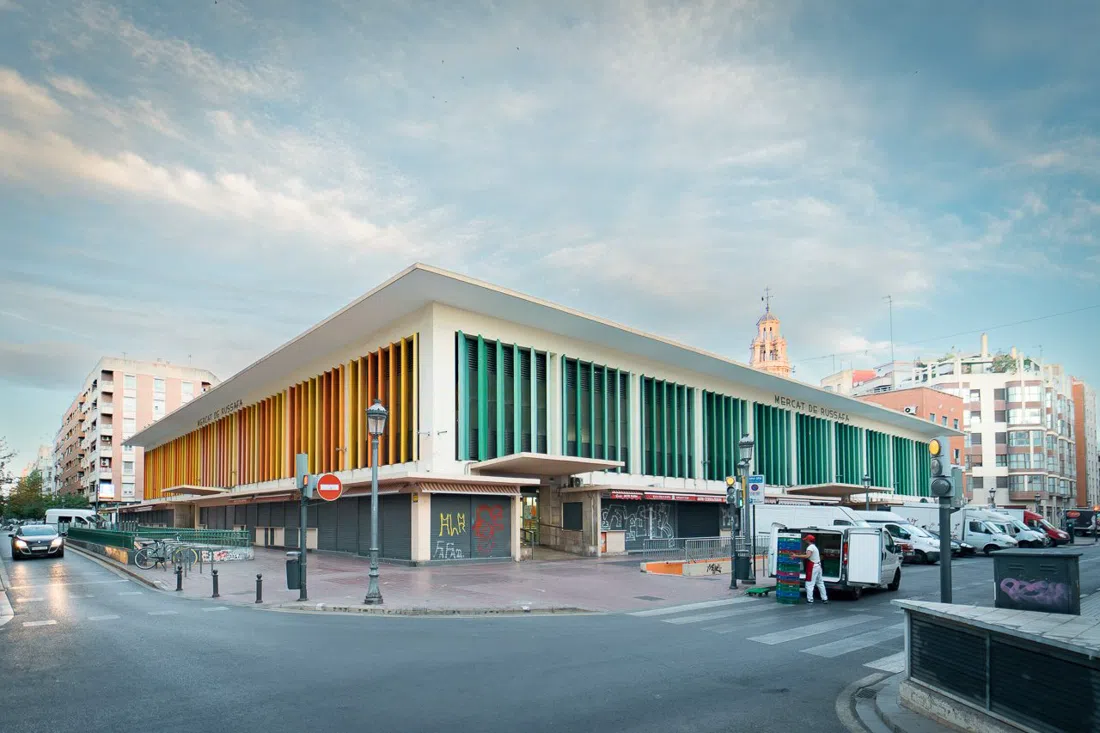
The other comparison runs the opposite direction. Mercat de Russafa (Ruzafa), the neighbourhood's own municipal market, is smaller, far less crowded, and considerably more multicultural in what's sold — Mon-Sat 7:30am-3pm, same hours as the Central, casual, groups welcome, cheap. If the Mercat Central is Valencia performing its own grandeur — the dome, the tile, the century of continuity — Russafa is the version with no performance at all, just a neighbourhood shopping for dinner. Both are honest; they're just honest about different things.
After the market: where the ritual actually ends
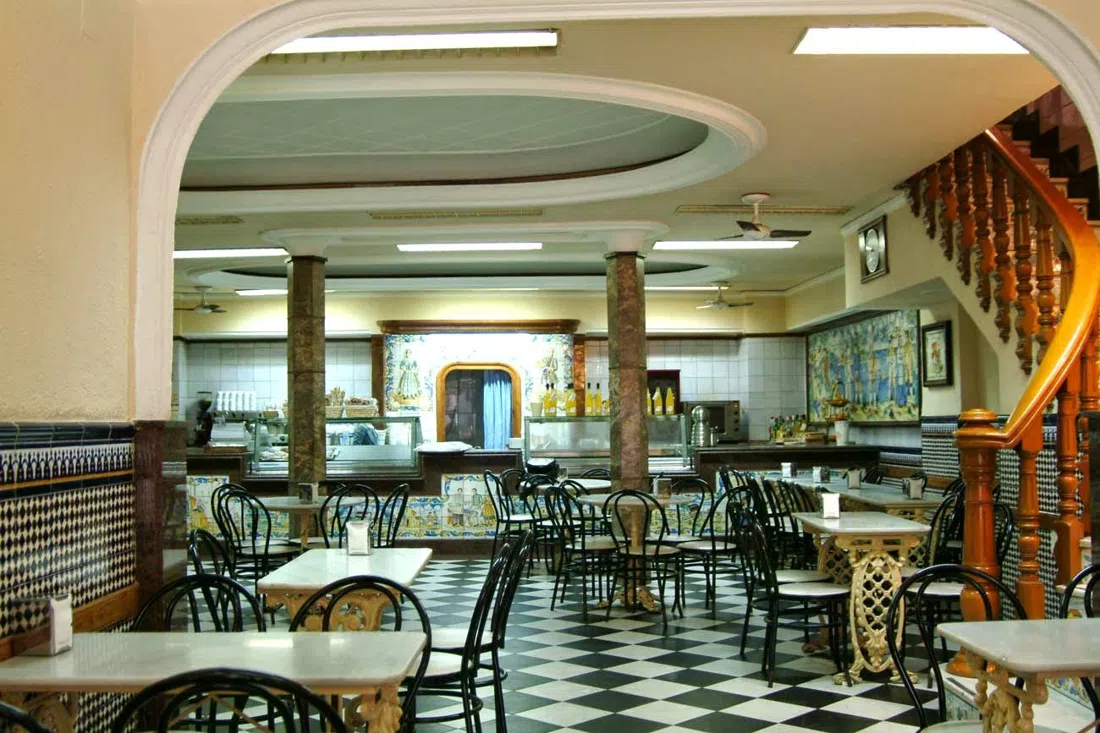
A morning at the Mercat Central has a natural next stop, and it isn't inside the building. Horchatería de Santa Catalina (Plaça de Santa Caterina, a short walk from the market) has been serving horchata since 1830, now run by the fourth generation of the Gargallo family — a sit-down café rather than a counter, happy to take groups, though it queues up at peak times same as the market does. It extends the market's "handed-down for generations" thread past the produce and into the drink that closes out a Valencian morning: a glass of horchata and a fartó, taken sitting down after an hour on your feet under the dome. It's not inside the Mercat Central's story, exactly — but it's where that story goes for the last twenty minutes of the ritual, and skipping it misses the point of the morning as much as skipping the market would.
Planning the visit
Timing. Go early — ideally before 10am, definitely before 11am. The market runs Monday to Saturday, 7:30am to 3pm, and is closed Sundays; some stalls, especially fish, start winding down well before the official close, so a 2pm arrival means half the counters already boxed up. Central Bar and La Pesatería peak between 10am and 1pm, which is also when the aisles are busiest — arrive at opening if you want both an empty market and a seat at the bar.
Cash and card. Most stalls now take cards, but a fair number of the smaller counters — spice sellers, nut stalls — still run more smoothly on cash for small purchases, and having coins on hand speeds things up considerably when you're one of several trolleys deep in a queue.
Budget. Browsing is free. A tasting circuit — a few tapas at Central Bar, oysters at La Pesatería, a slice of ham at Lázaro Fernández, a bag of turrón at Merche — comes to roughly €25-40 per person depending on appetite, before the horchata stop afterwards.
Getting there. The market sits in Ciutat Vella, walkable from most central hotels; if you're basing your stay to be close to it, a Valencia hotel search turns up plenty of options within ten minutes on foot. It's also two minutes from Metro Xàtiva/Àngel Guimerà and served by several EMT bus routes, so there's little reason to drive.
Groups. The market hall itself takes groups easily and guided food tours run through constantly — but book-ahead seating for large parties doesn't really exist at any of the counters above; almuerzo culture here is stand-up and quick-turnover by design, not a sit-down group lunch. Plan accordingly, and split into pairs at the busiest bars.
For more on where to base yourself and what else the city does well beyond its market, the full Valencia guide covers the neighbourhoods this piece only touches on.